
Historical analysis: originally published on November 12, 2026, at 06:50 (UTC+8). The figures below are attributed to sparsitydata’s research, as translated and published by 白话区块链; they are not independently verified here.
Where the fees arise
The valuation question for a token-launch platform is not simply how many tokens it launches, but which activity produces its fees—and whether that activity depends on tokens surviving. Sparsitydata argues that pump.fun’s incentives favor early trading volume over long-lived tokens.
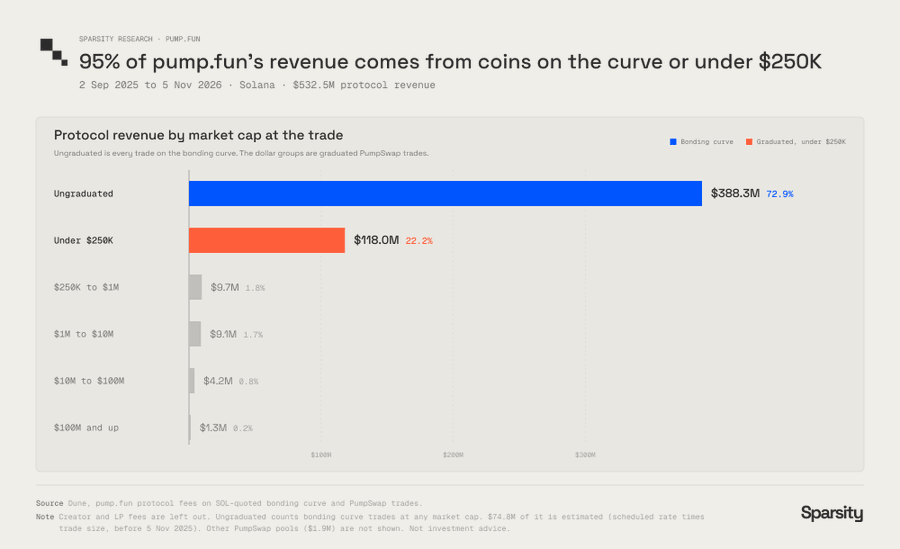
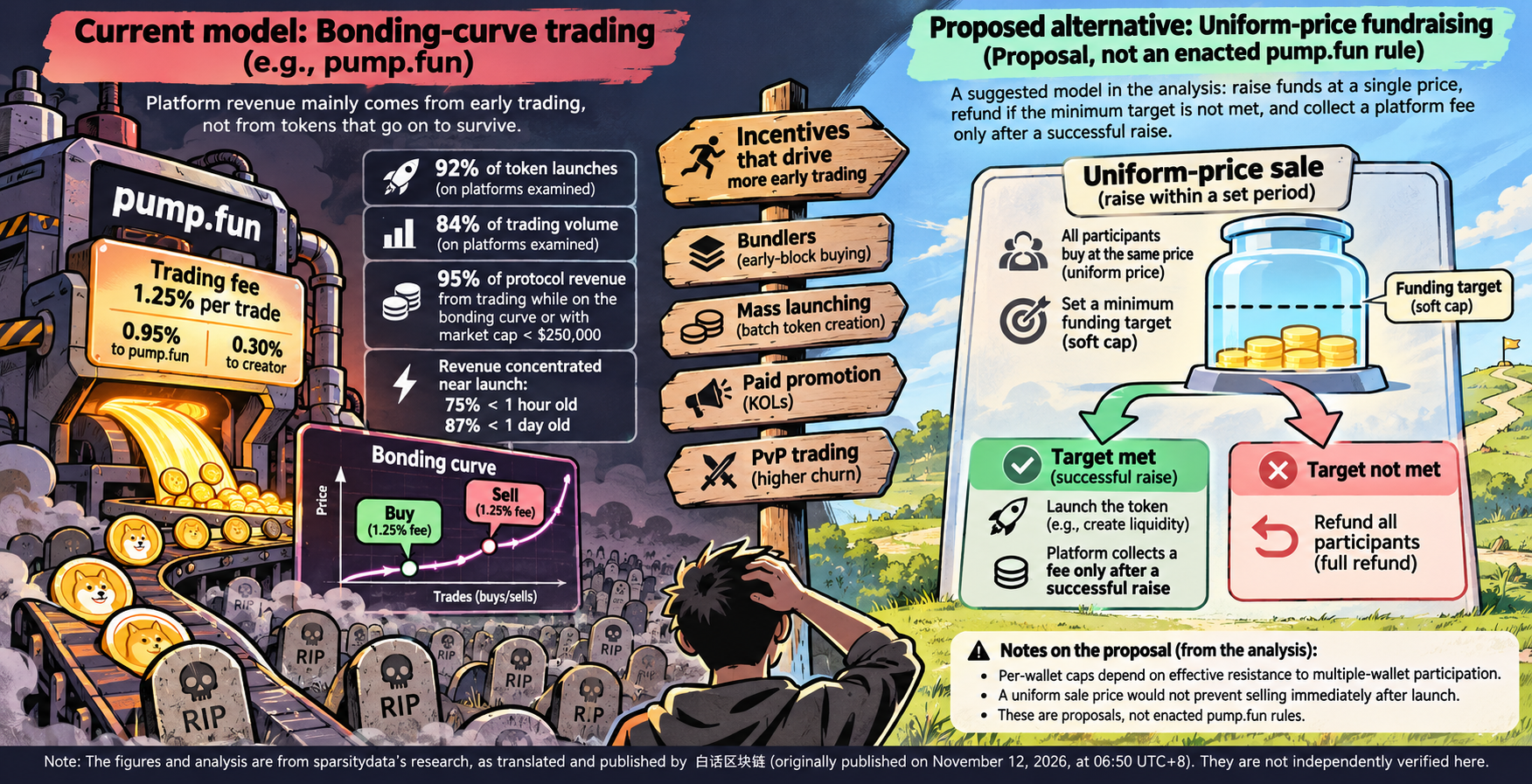
In the 30 days preceding the original report, pump.fun accounted for a reported 92% of token launches and 84% of trading volume across the launch platforms examined. According to the analysis, 95% of its protocol revenue came from trading while tokens were still on the bonding curve or had market capitalizations below $250,000. Bonding-curve trades carried a 1.25% fee per transaction: 0.95% to pump.fun and 0.30% to the token creator. A buy followed by a sell therefore incurred two transaction fees, or 2.5% before accounting for price movement and other costs.
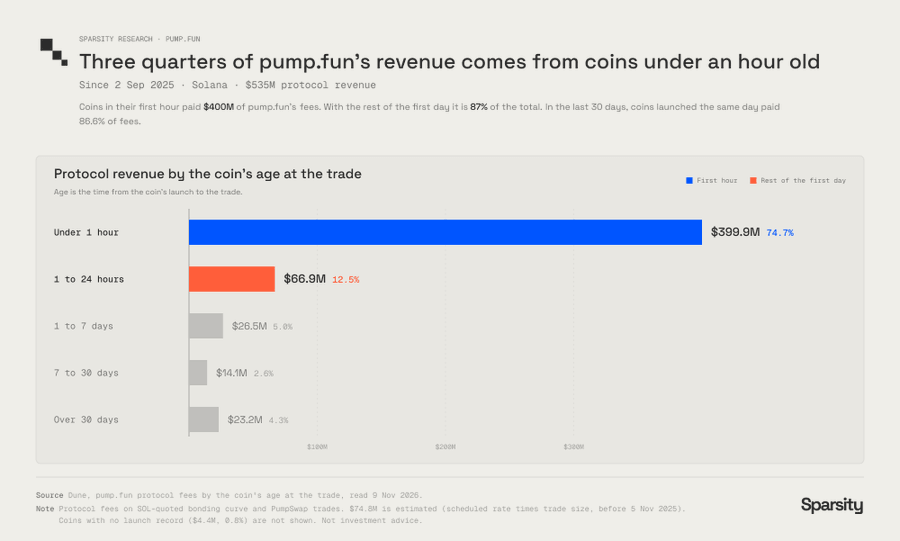
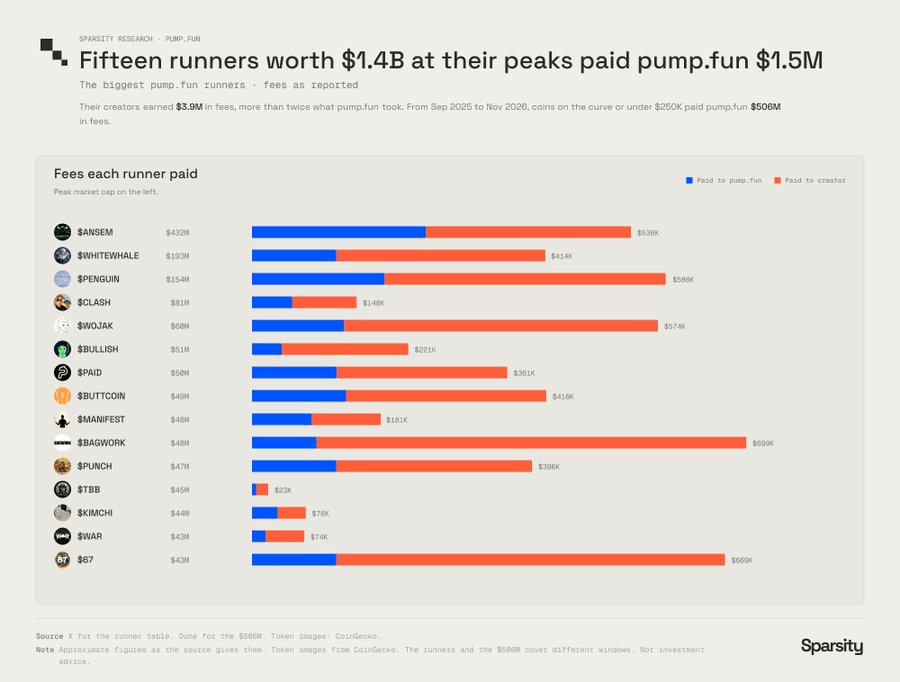
The reported revenue was heavily concentrated near launch: 75% came from tokens less than an hour old, and 87% from tokens less than a day old. The analysis contrasts approximately $1.5 million in cumulative pump.fun revenue from 15 prominent tokens, whose combined peak market capitalizations reached $1.4 billion, with $506 million from tokens traded on the bonding curve or below a $250,000 market capitalization. These are platform-revenue figures, not token-holder returns or a valuation of pump.fun.
Incentives and buyer outcomes
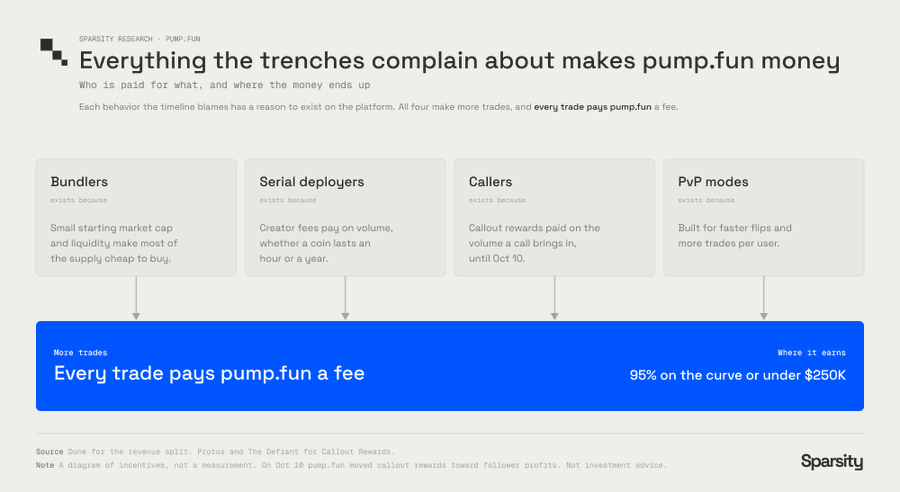
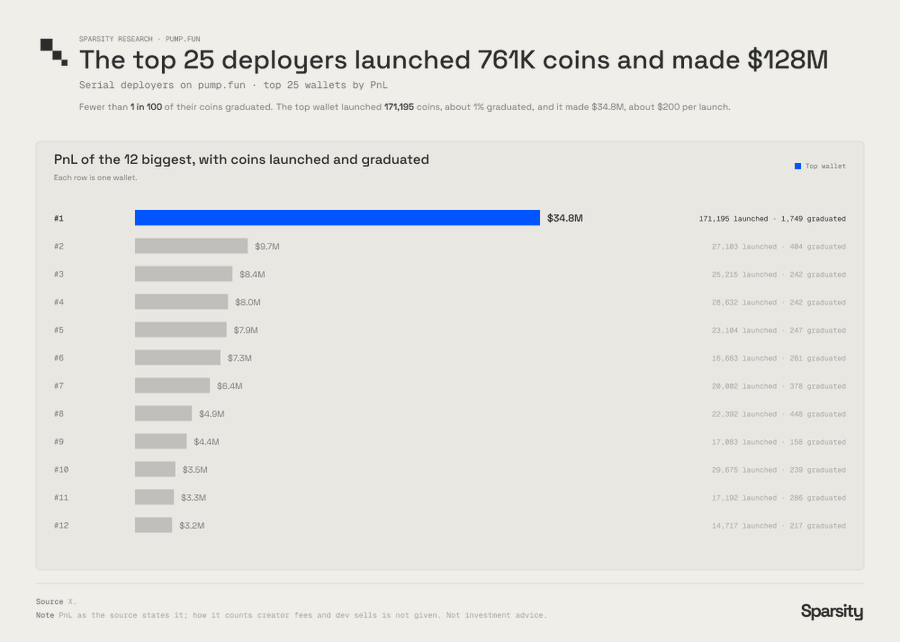
Sparsitydata links the fee structure to repeated launches, early-block buying and paid token promotion. Its analysis says the 25 highest-volume launching addresses created 761,000 tokens, with a graduation rate below 1%, and earned $128 million. Those figures describe the addresses in the study; they do not establish the profitability of every token creator.
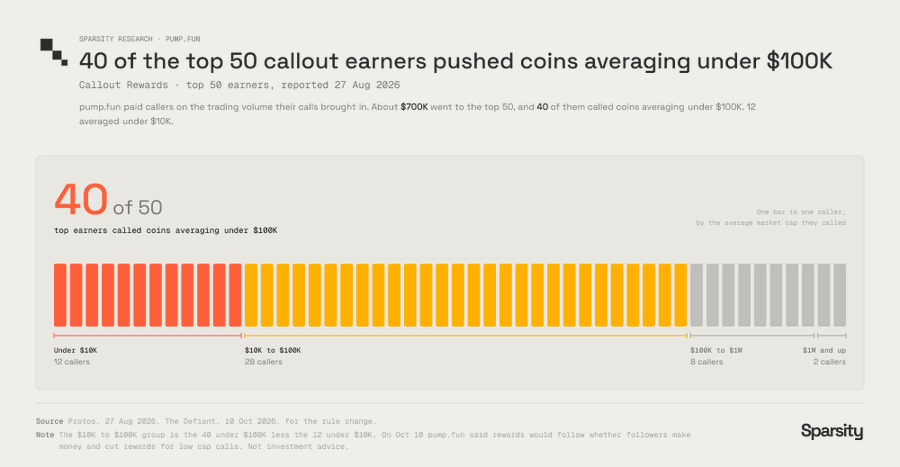
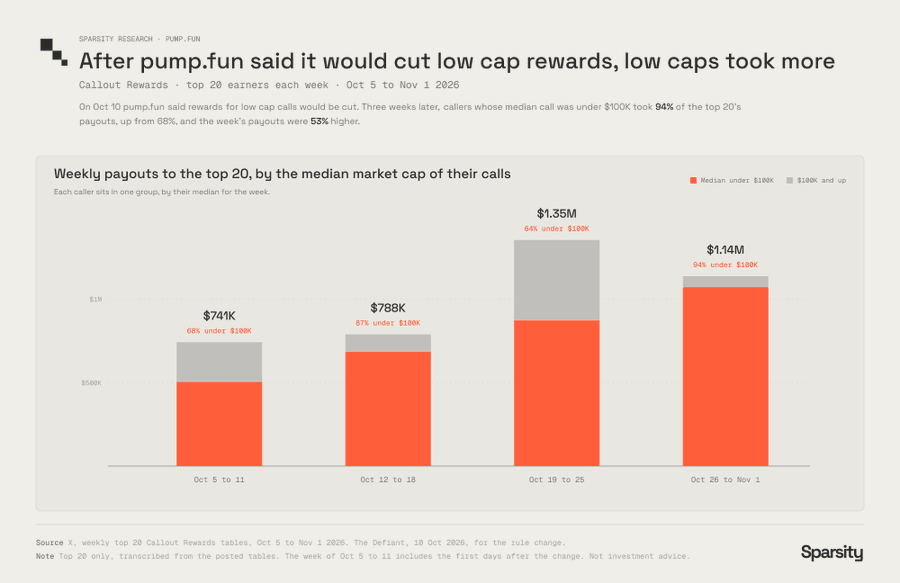
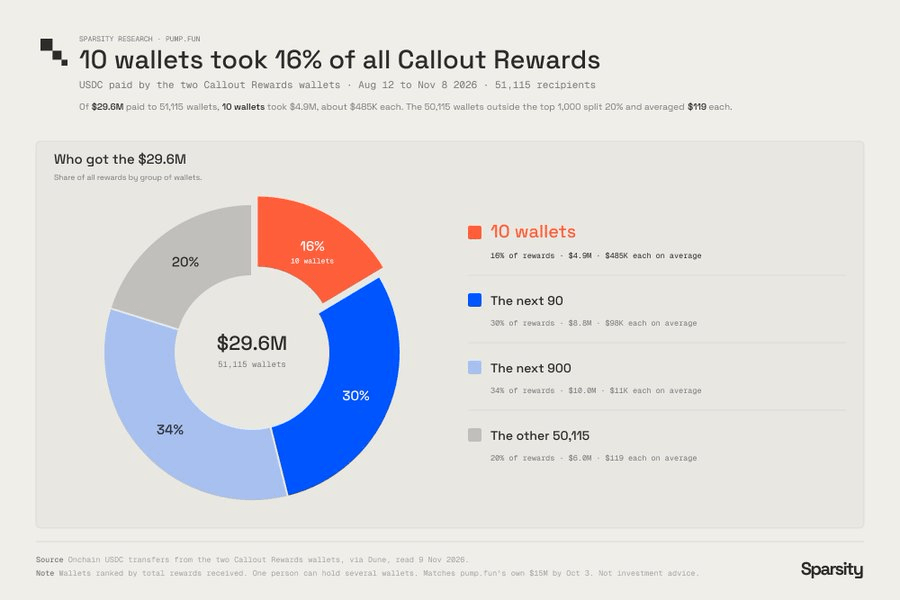
The report says pump.fun paid $29.6 million in promotion rewards to 51,115 wallets from August through the reporting period. It also describes an October 10 change intended to tie rewards to whether followers profited and to reduce the weight assigned to very-low-cap tokens. According to the author, in the three weeks afterward, the share of top-20 promoters’ earnings going to promoters whose median promoted token had a market capitalization below $100,000 rose from 68% to 94%, while the weekly reward pool increased 53%. That observation does not, by itself, establish why the distribution changed.
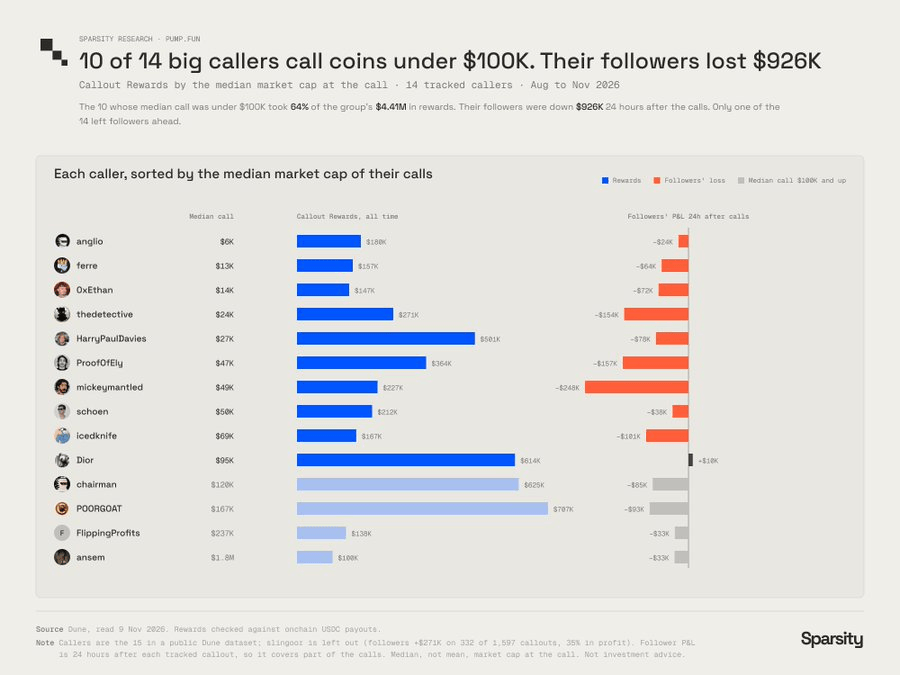
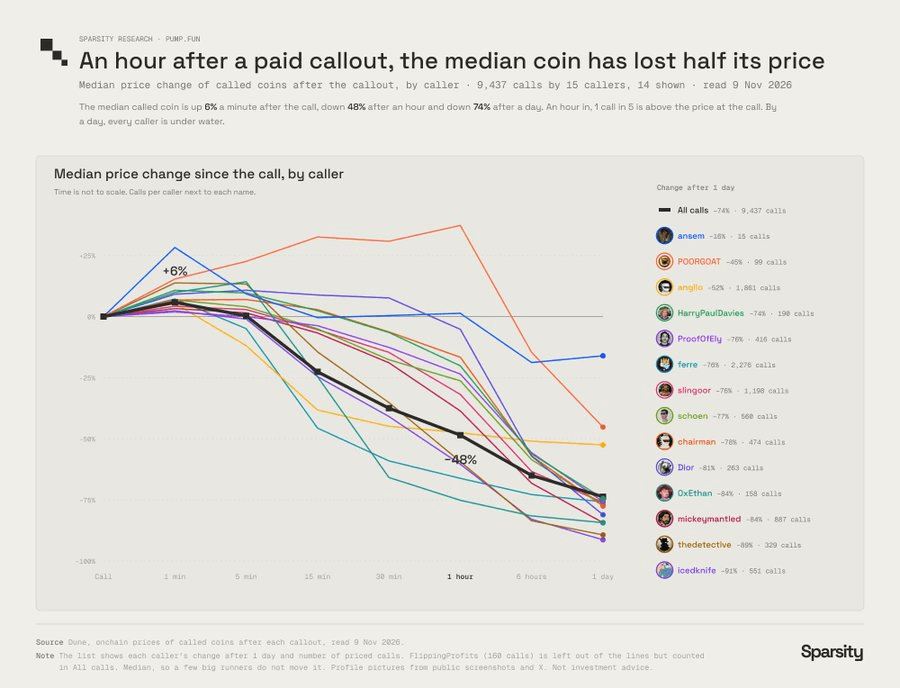
In a separate sample of 14 promoters tracked by the author, followers of the 10 whose promoted tokens had median market capitalizations below $100,000 reportedly lost a combined $926,000 within one day. Across the promoted tokens in that study, the median price change was +6% after one minute, −48% after one hour and −74% after 24 hours. The source does not establish that those outcomes apply to all promotions.
More launches, fewer large tokens
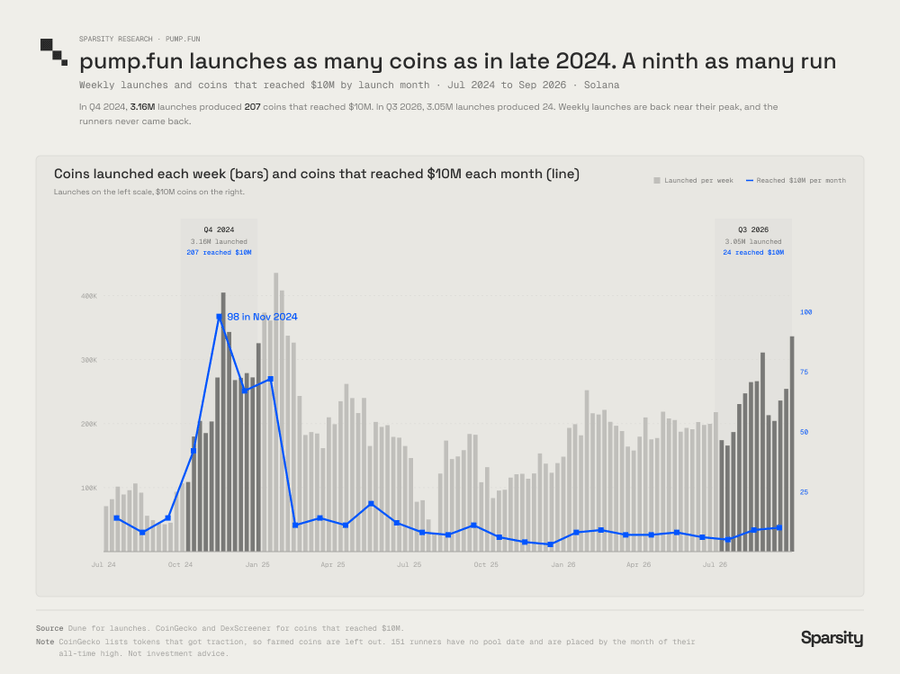
The analysis compares 3.16 million launches in the fourth quarter of 2024, which produced 207 tokens exceeding a $10 million market capitalization, with 3.05 million launches in the third quarter of 2026, which produced 24. That is roughly 6.5 versus 0.8 such tokens per 100,000 launches, respectively. It also reports that combined monthly bonding-curve and PumpSwap volume fell from $25 billion–$30 billion in the first quarter of 2026 to approximately $13.8 billion in October.
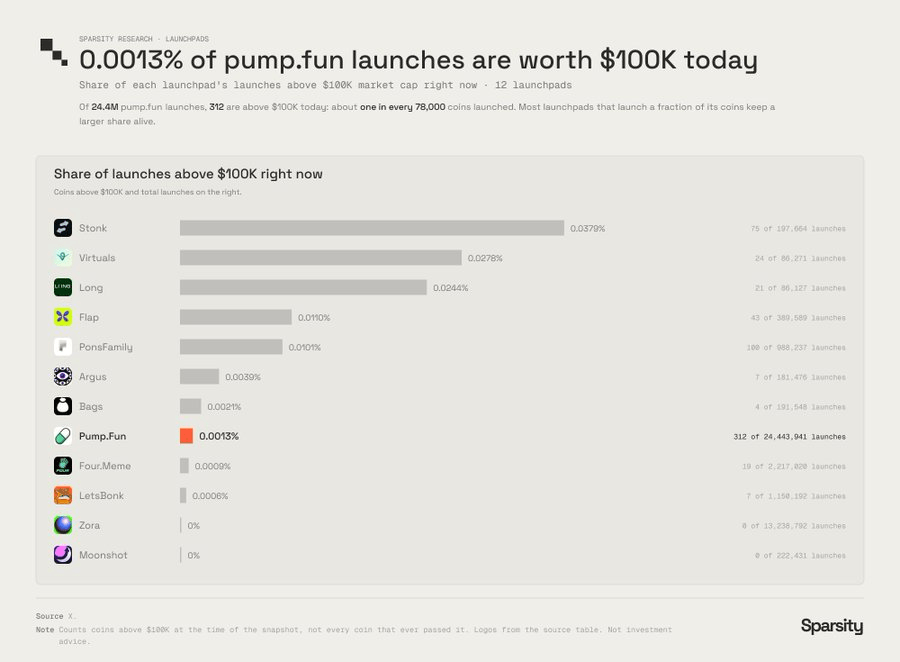
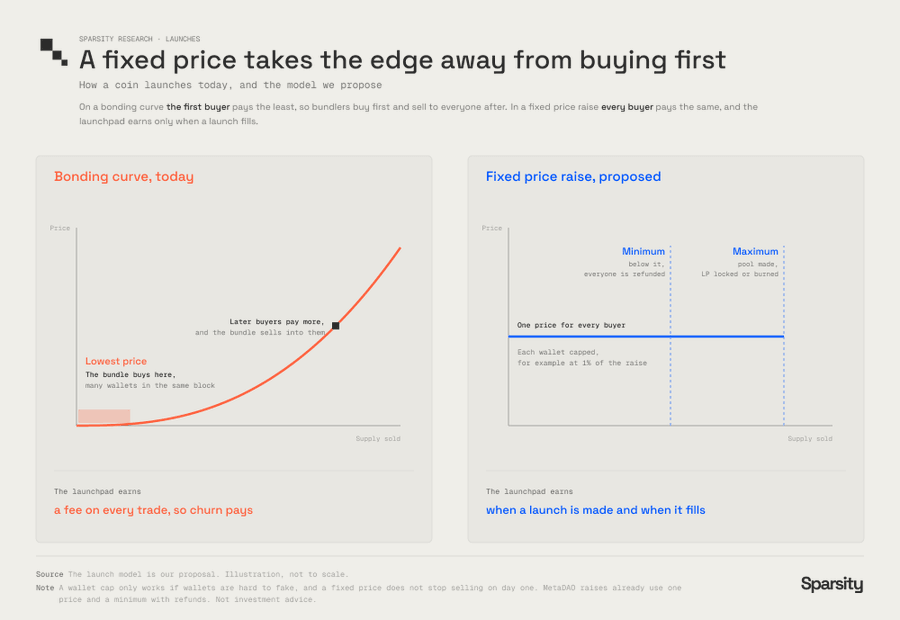
Of 24.4 million historical launches, the author counted 312 tokens still above a $100,000 market capitalization at the time of the analysis—about 0.0013% of launches. This is a snapshot based on a current-market-cap threshold, not a measured probability that any future token will survive.
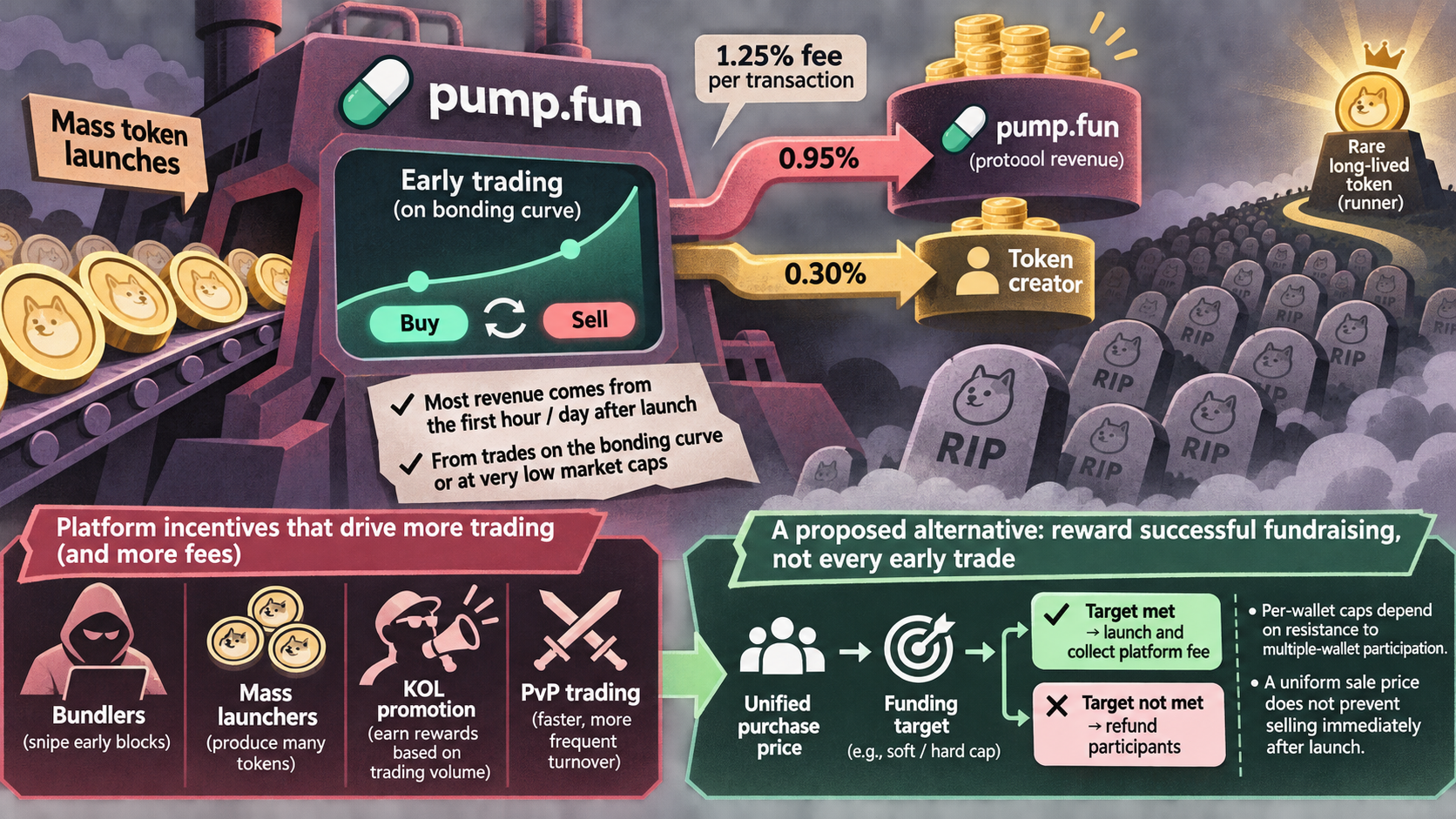
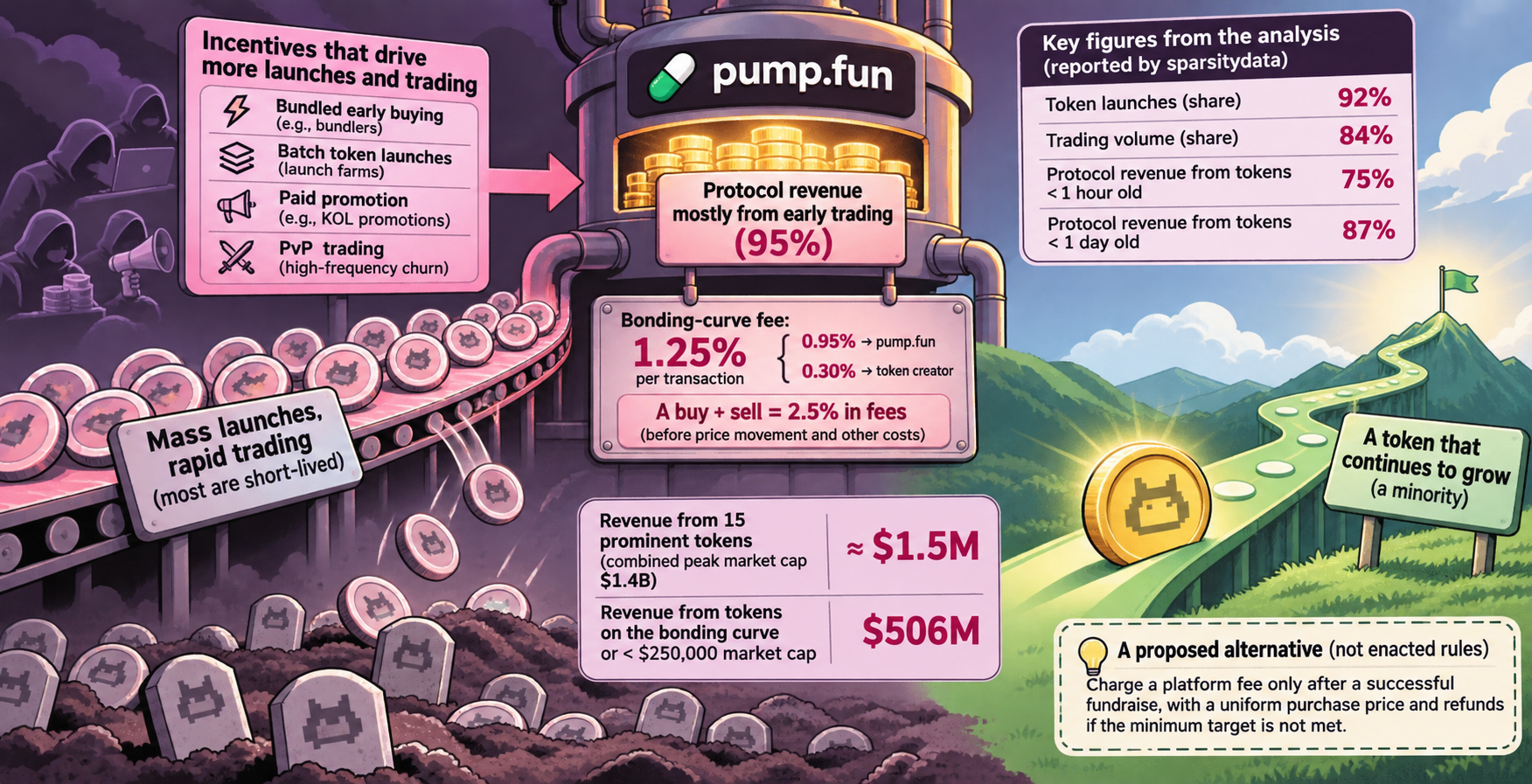
Sparsitydata proposes moving platform compensation toward successful fundraising rather than charging for every early trade. One proposed alternative would offer participants a uniform purchase price, refund them if a minimum funding target were missed, and collect a platform fee only after a successful raise. The author also notes limitations: per-wallet caps depend on resistance to multiple-wallet participation, and a uniform sale price would not prevent selling immediately after launch. These are proposals, not enacted pump.fun rules. Nor do the reported activity and fee figures alone establish a fair value for the platform or any token.
Source: hellobtc.com (originally published 2026-11-12 06:50 UTC+8)