Historical report: originally published November 12, 2026, at 15:00 (UTC+8). The underlying figures were approximate as of November 9, 2026, according to the source.
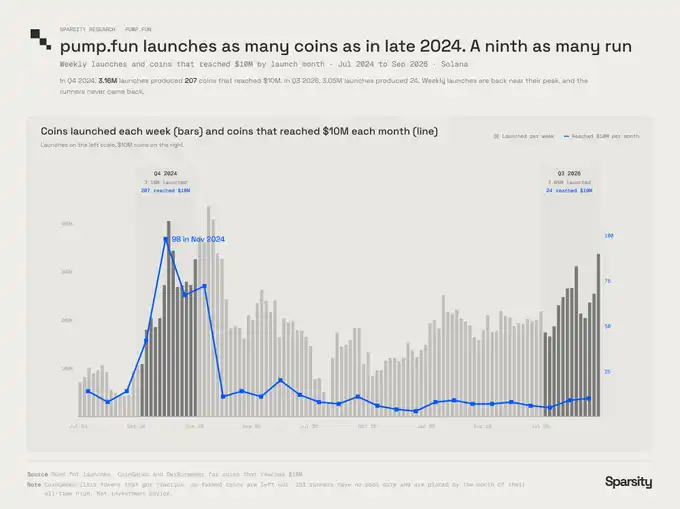
Pump.fun’s launch volume remained high in 2026, but far fewer tokens reached a $10 million market capitalization than during a comparable period in 2024. The valuation question is not whether launch activity generates fees—it does—but whether that activity indicates a durable market for the tokens being launched.
Launches and outcomes
According to on-chain research team Sparsity, Pump.fun launched 3.05 million tokens in Q3 2026, of which 24 reached a $10 million market cap at some point. In Q4 2024, 3.16 million launches produced 207 tokens that reached the same threshold. That is roughly 0.8 versus 6.5 tokens per 100,000 launches, respectively. Reaching a market-cap threshold is not the same as sustaining it.
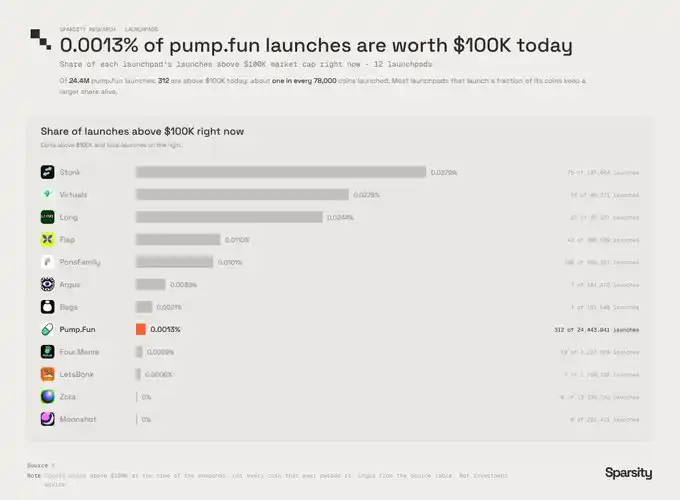
Sparsity also reported that, among 24.4 million tokens ever launched on Pump.fun, 312 still had market caps above $100,000 at its measurement date—about 0.0013%. These figures describe token outcomes, not a valuation of Pump.fun or its token.
Where the fees arise
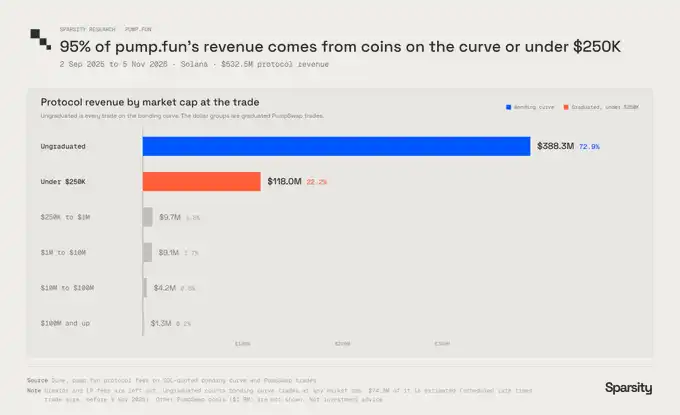
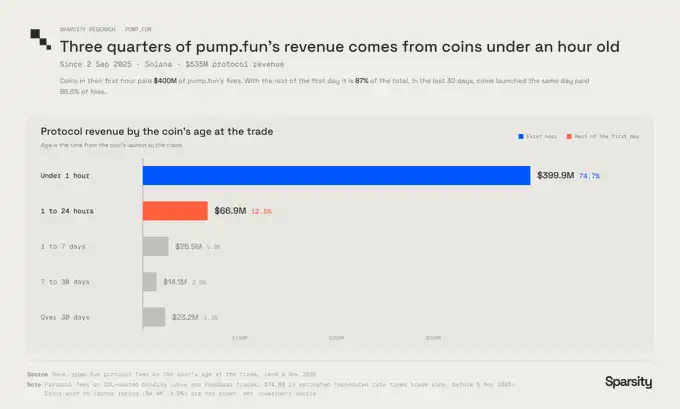
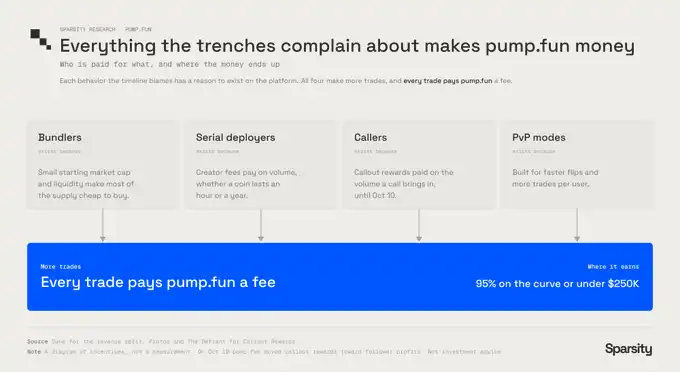
In Sparsity’s analysis, approximately 95% of Pump.fun protocol revenue came from trades in tokens still on the bonding curve or below a $250,000 market cap. During the bonding-curve stage, each buy and sell incurred a 1.25% fee: 0.95% to the platform and 0.30% to the creator. A buy followed by a sell would therefore incur approximately 2.5% in fees even if the price did not move. About three-quarters of the revenue examined by token age came from tokens less than an hour old, and 87% from tokens less than a day old.
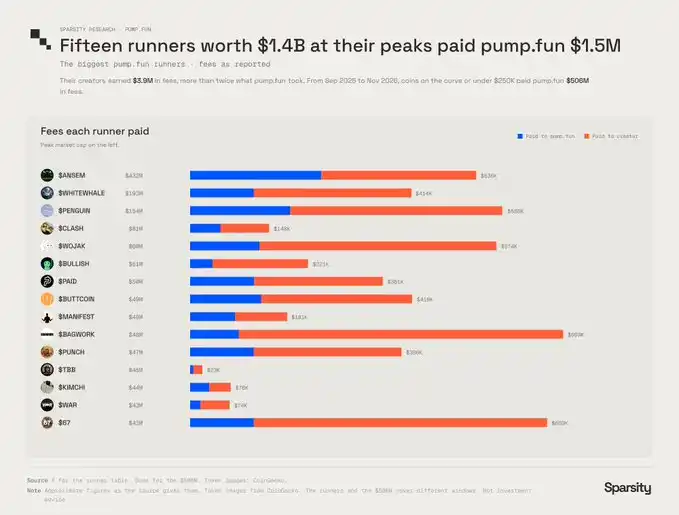
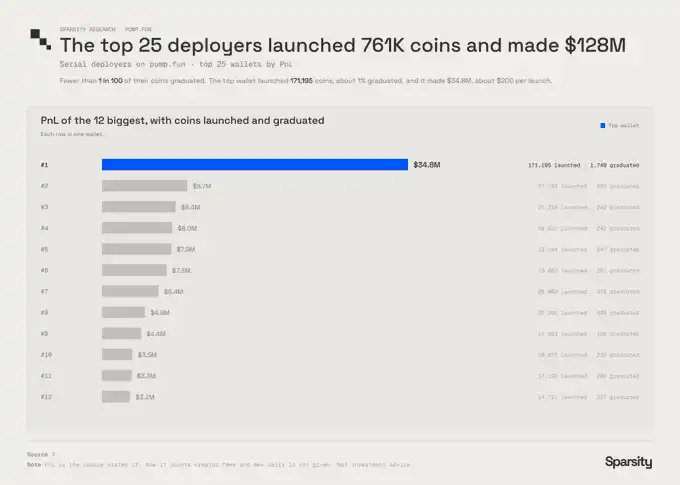
Those are platform and creator fees, not evidence of revenue accruing to a token holder. Sparsity reported that the 25 highest-volume issuing wallets launched a combined 761,000 tokens; fewer than 1% graduated from the bonding curve, while those wallets earned a combined $128 million. The figures illustrate why early trading can pay issuers even when few launches clear that milestone.
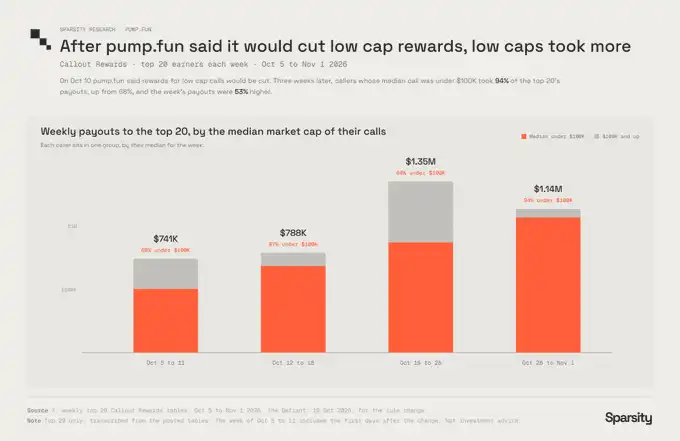
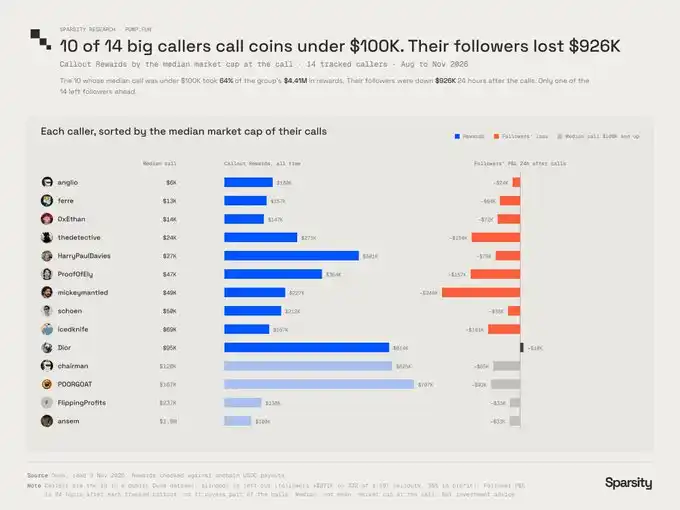
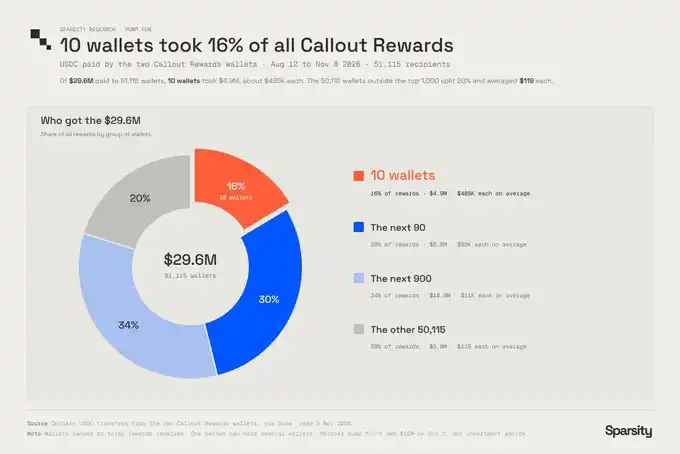
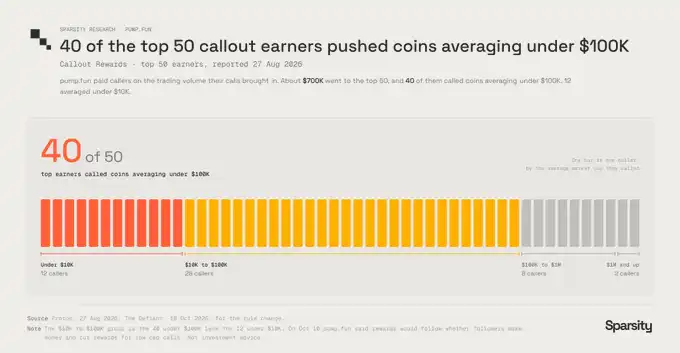
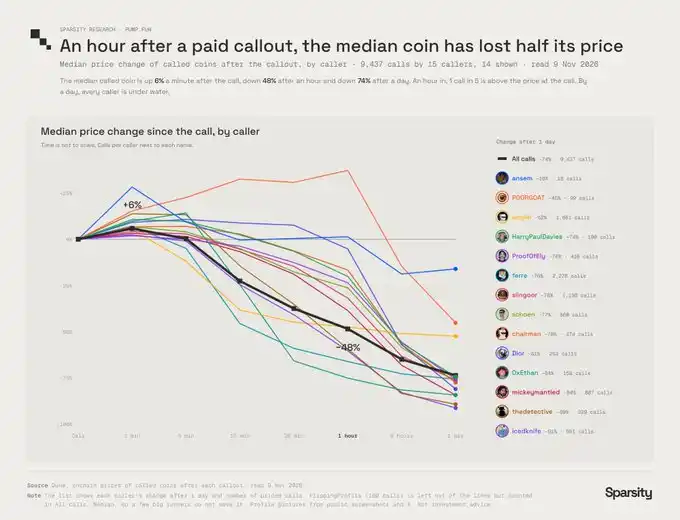
The study identified a similar tension in promotional rewards. Pump.fun said on October 10 that future rewards would consider whether followers made money and would reduce rewards for promoting low-market-cap tokens. Yet Sparsity found that, over the following three weeks, promoters whose featured tokens had a median market cap below $100,000 received 94%, up from 68%, of rewards paid to the top 20 recipients. In the authors’ separate sample of 14 promoters, the median return of featured tokens was up 6% after one minute, then down 48% after one hour and down 74% after one day. The sample does not establish every follower’s trading result.
A proposed change—not a current rule
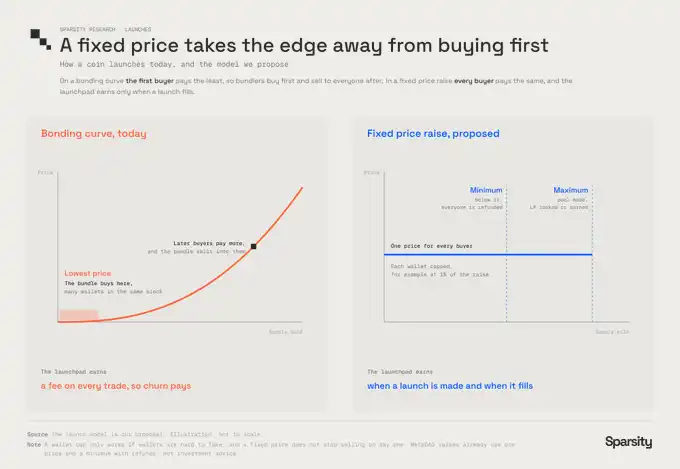
The authors proposed replacing bonding-curve launches with a fixed-price fundraising process: buyers would subscribe at the same price, receive refunds if a minimum was not met, and have a liquidity pool created by contract if fundraising filled. The platform would charge only after a successful raise. This would move its proposed revenue trigger from individual trades to completed fundraising; it would not guarantee lasting token demand. The authors acknowledged that multiple wallets could circumvent per-wallet limits and that buyers could still sell immediately after launch.
For valuation analysis, the distinction is between fee-generating launch activity, sustained token demand, and any value that reaches token holders. Sparsity’s figures document the first two unevenly; they do not, by themselves, supply a fair-value estimate or establish token-holder value accrual.
Source: theblockbeats.info (originally published 2026-11-12 15:00 UTC+8)