
How much can Bitcoin’s limited supply tell us about its value? In an interview conducted by Zhou Zhou for Foresight News, economist Fu Peng argued that scarcity matters, but it does not establish how much large investment portfolios can allocate to the asset—or what price those portfolios will support.
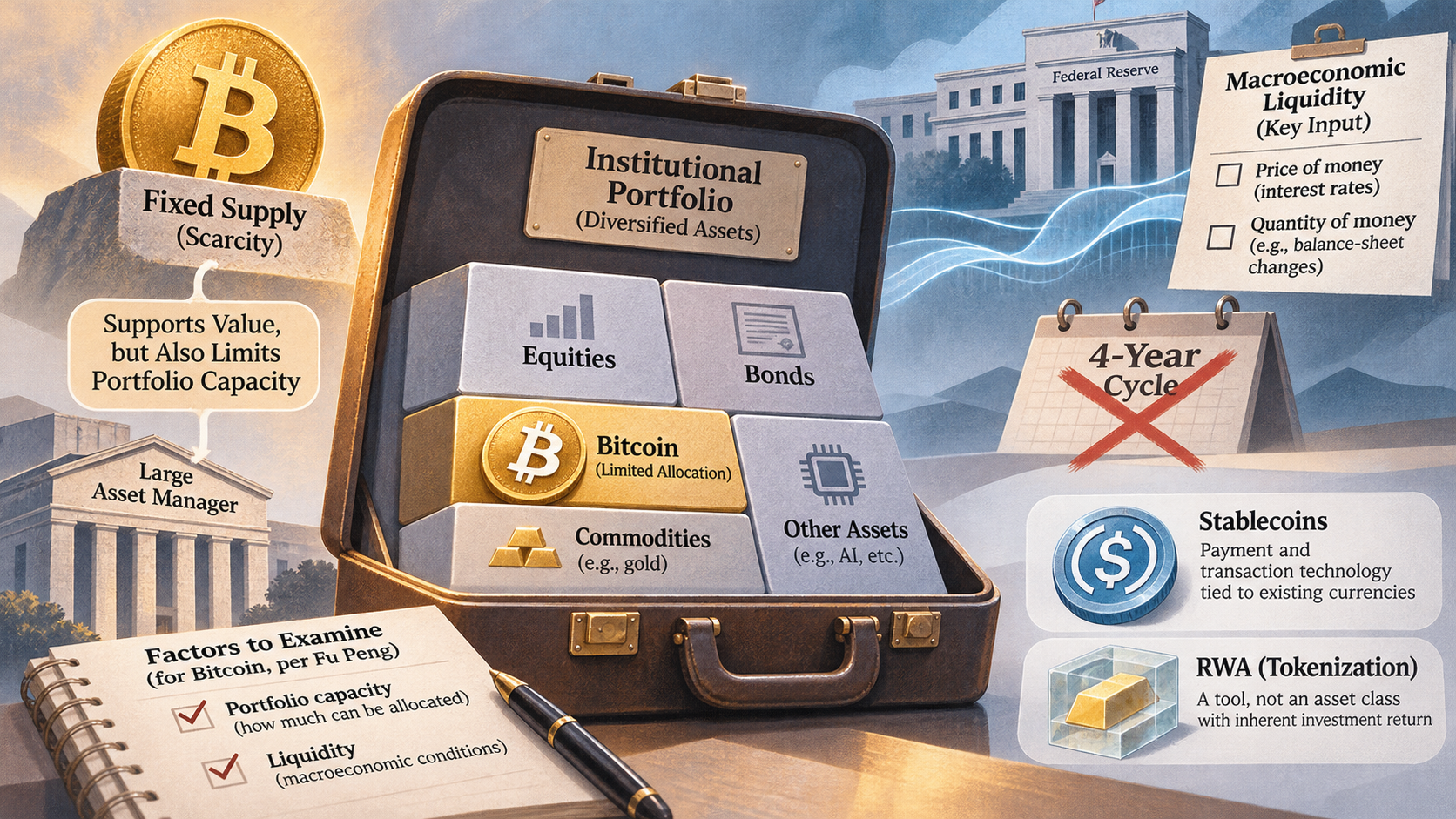
Scarcity is not a valuation target
Fu said Bitcoin’s fixed supply can help sustain its value while also limiting the scale of institutional allocations. A large asset manager, in his view, cannot keep increasing a position without eventually becoming a significant influence on the market it is buying. He rejected the idea that limited supply alone justifies ever-higher price targets and said he did not believe Bitcoin would double again. Those are his judgments, not conclusions demonstrated by a valuation model in the interview.
Fu also argued that Bitcoin’s familiar four-year cycle no longer drives prices as it did in an earlier, smaller market. He did not claim that large holders have no effect; rather, he said their trades are less able to determine prices once Bitcoin is managed as part of broader portfolios.
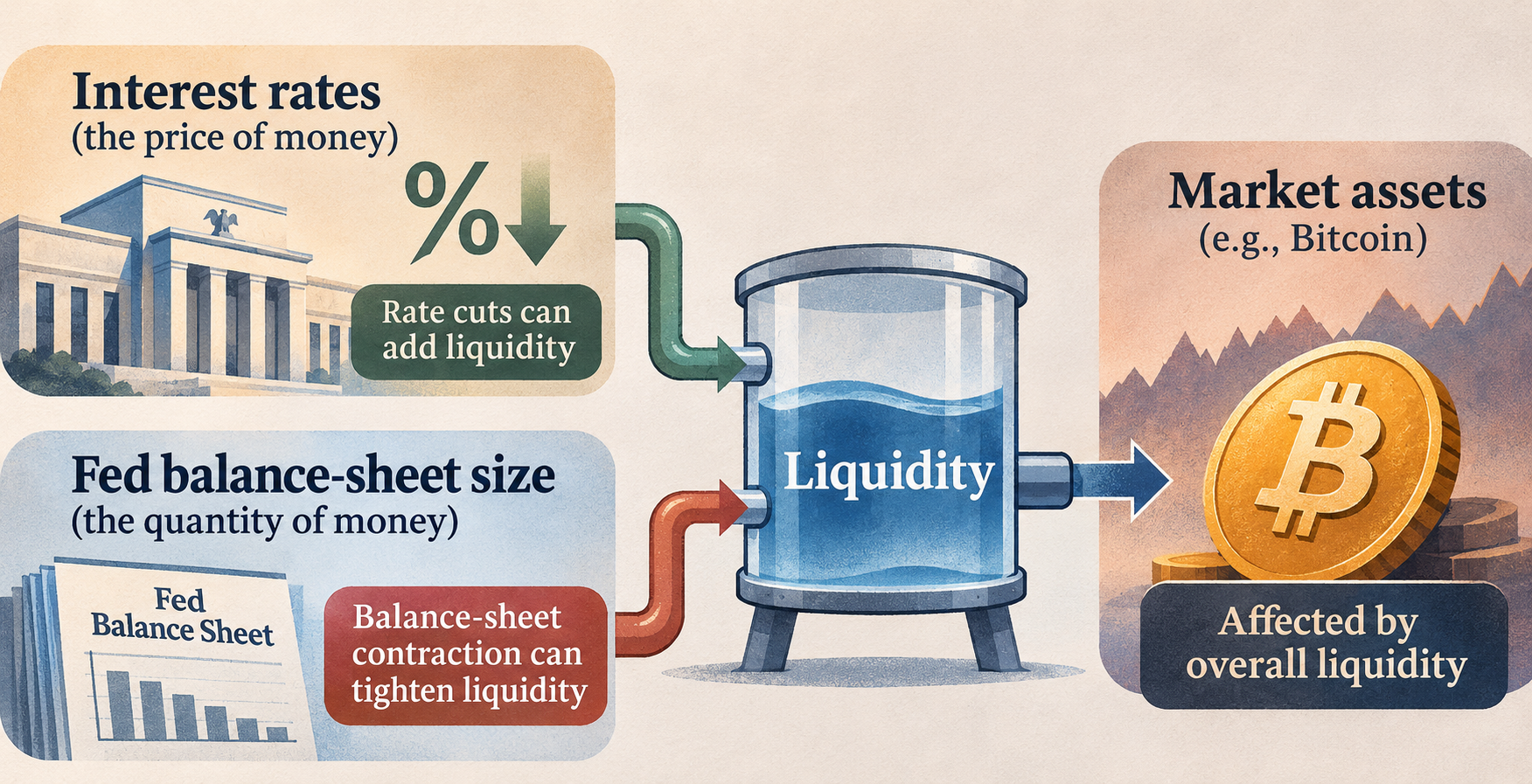
The liquidity inputs he considers important
Fu’s framework places more weight on macroeconomic liquidity as crypto assets become integrated into traditional portfolios. He distinguished the price of money, represented by interest rates, from its quantity. In his account, Federal Reserve balance-sheet contraction can tighten liquidity enough to offset the benefit of rate cuts, putting pressure on assets whose valuations are sensitive to liquidity.
He described tightening as beginning around November of the preceding year—November 2025 relative to the article’s publication—and said he expected the weaker period to end around the end of 2026. The interview supplies his interpretation and forecast, not a dataset establishing either outcome. It likewise provides no fee, revenue or token-holder cash-flow inputs from which to calculate a Bitcoin valuation.
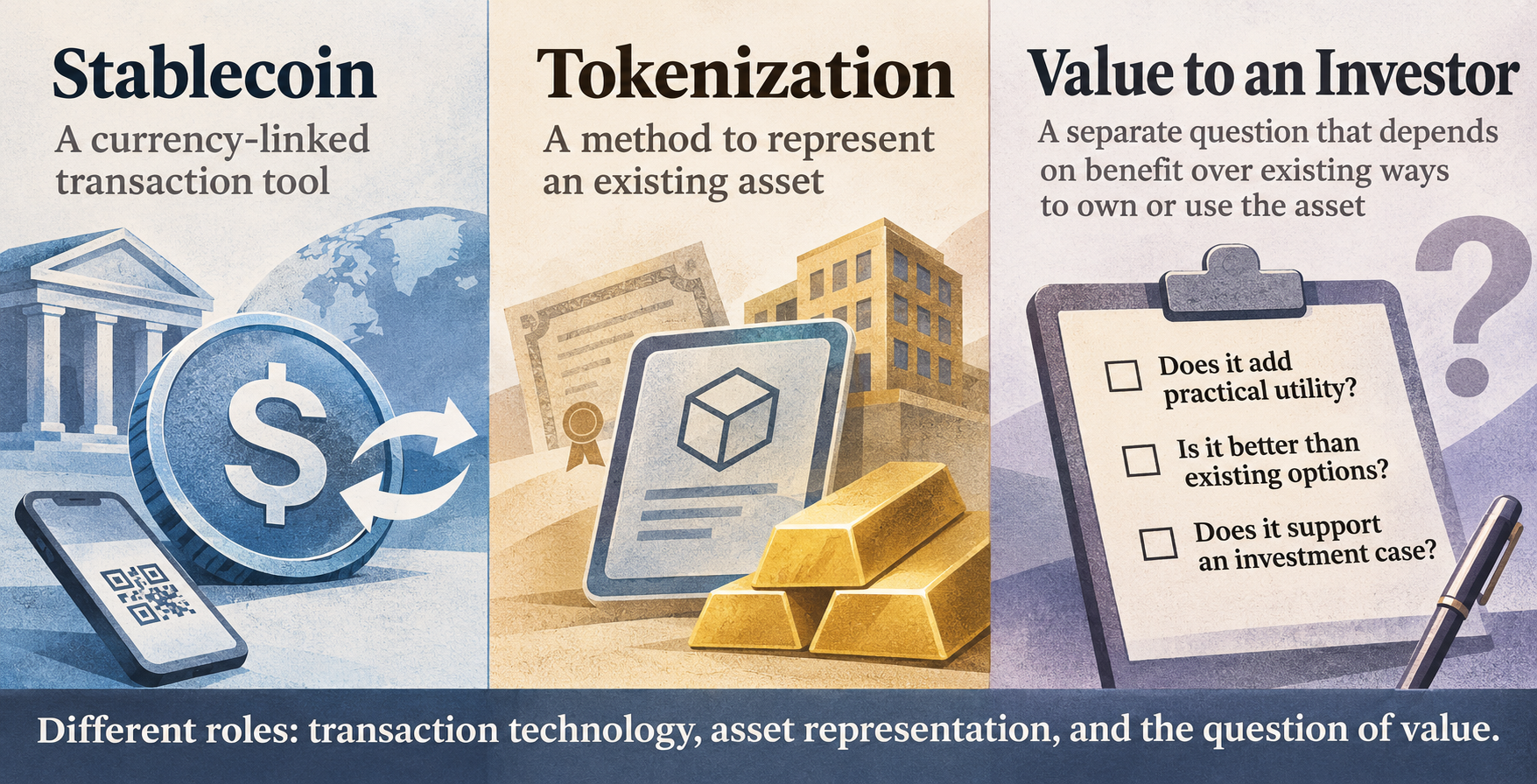
Technology, assets and value accrual
Fu treated stablecoins primarily as payment and transaction technology tied to existing currencies, and real-world asset tokenization as a tool rather than an asset class with an inherent investment return. He questioned what tokenization adds to gold, which he described as already liquid and highly marketized. His test for other tokenized assets was whether they offer a benefit over existing ways to own them.
Across these arguments, the distinction is between a technology’s use, an asset’s market price and a case for its value. Fu’s interview proposes factors to examine—portfolio capacity and liquidity for Bitcoin, practical utility for tokenization—but does not quantify a fair value or show that activity in a protocol accrues to any particular token holder.
Source: chaincatcher.com (originally published 2026-11-13 11:53 UTC+8)