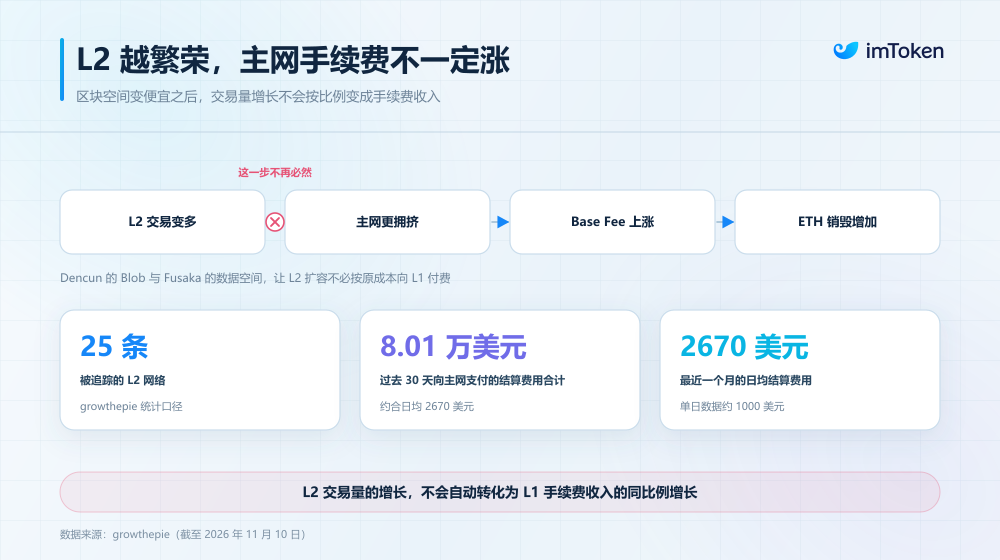
Originally reported on November 12, 2026, at 09:19 (UTC+8). Several projects have reconsidered whether running on a separate Ethereum layer 2 (L2) is worth the cost and complexity. That is a question about application architecture—not, by itself, evidence that ETH should command a higher valuation.
Why some projects are choosing L1
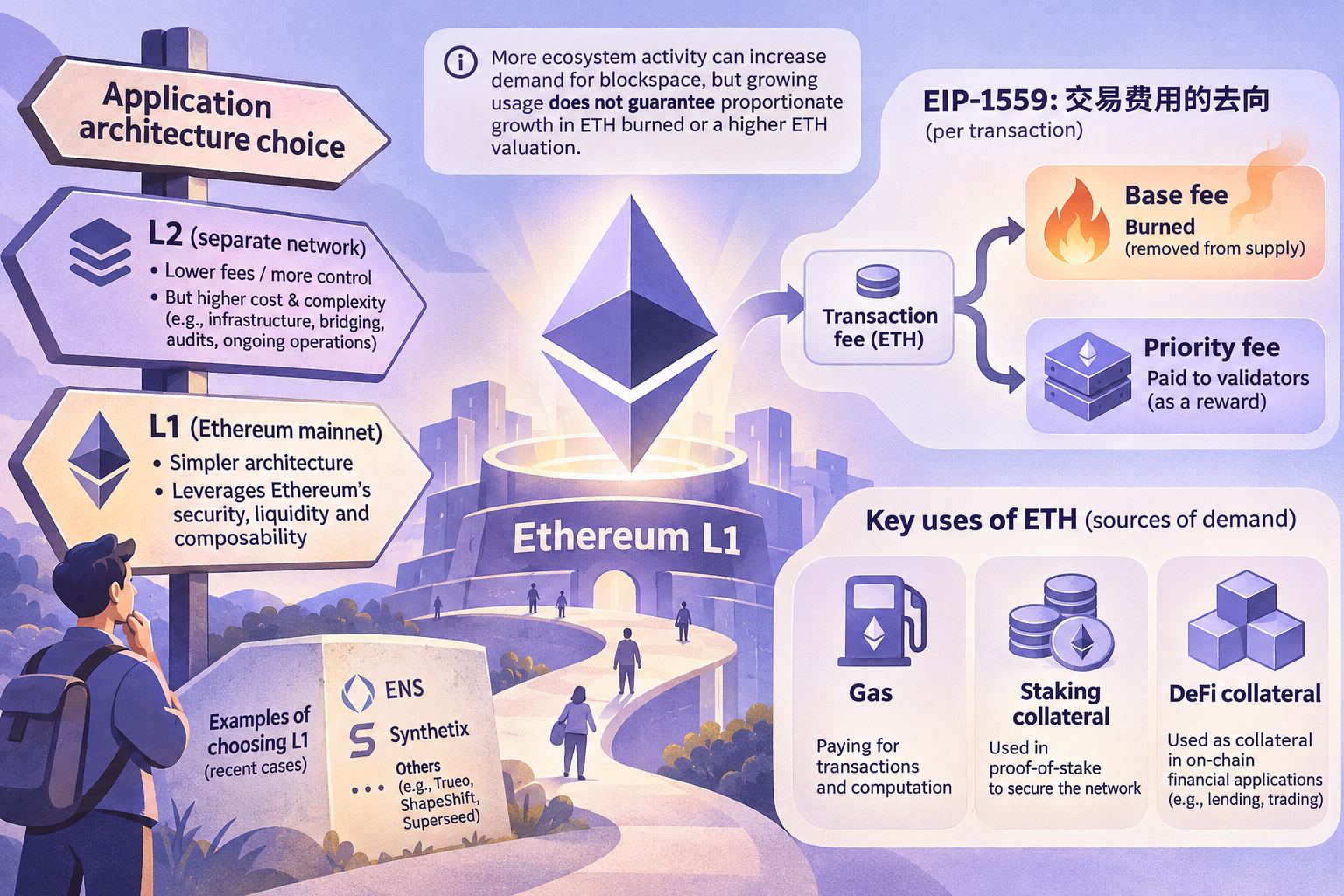
In February 2026, ENS co-founder Nick Johnson announced that ENS would stop developing its planned Namechain rollup and deploy ENSv2 directly on Ethereum’s mainnet. ENS Labs said the average gas cost of an ENS name registration had fallen by approximately 99% over the preceding year, from nearly $5 to less than $0.05, as Ethereum’s gas limit increased. Against that saving, ENS would have had to weigh the infrastructure, bridging, cross-chain resolution, audits and ongoing operations required by a separate L2.
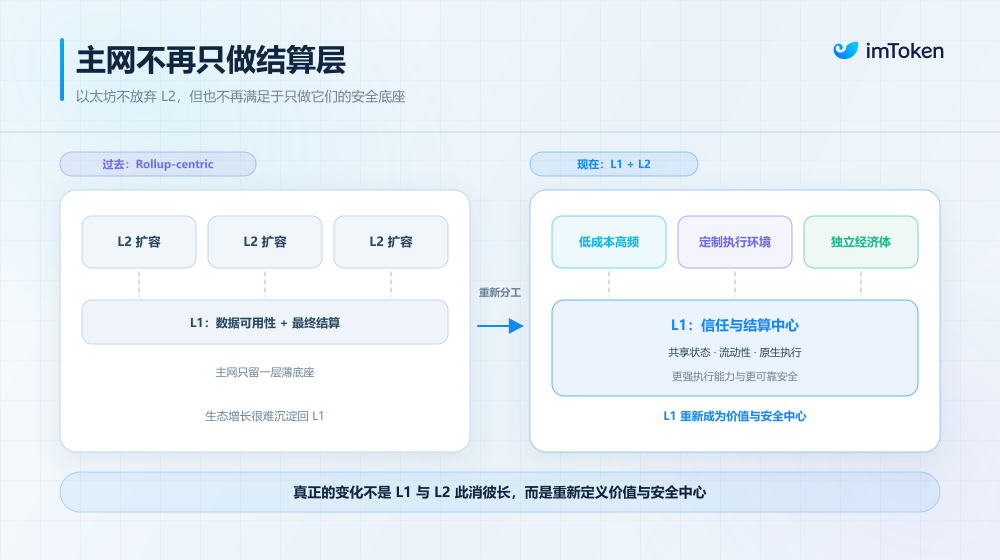
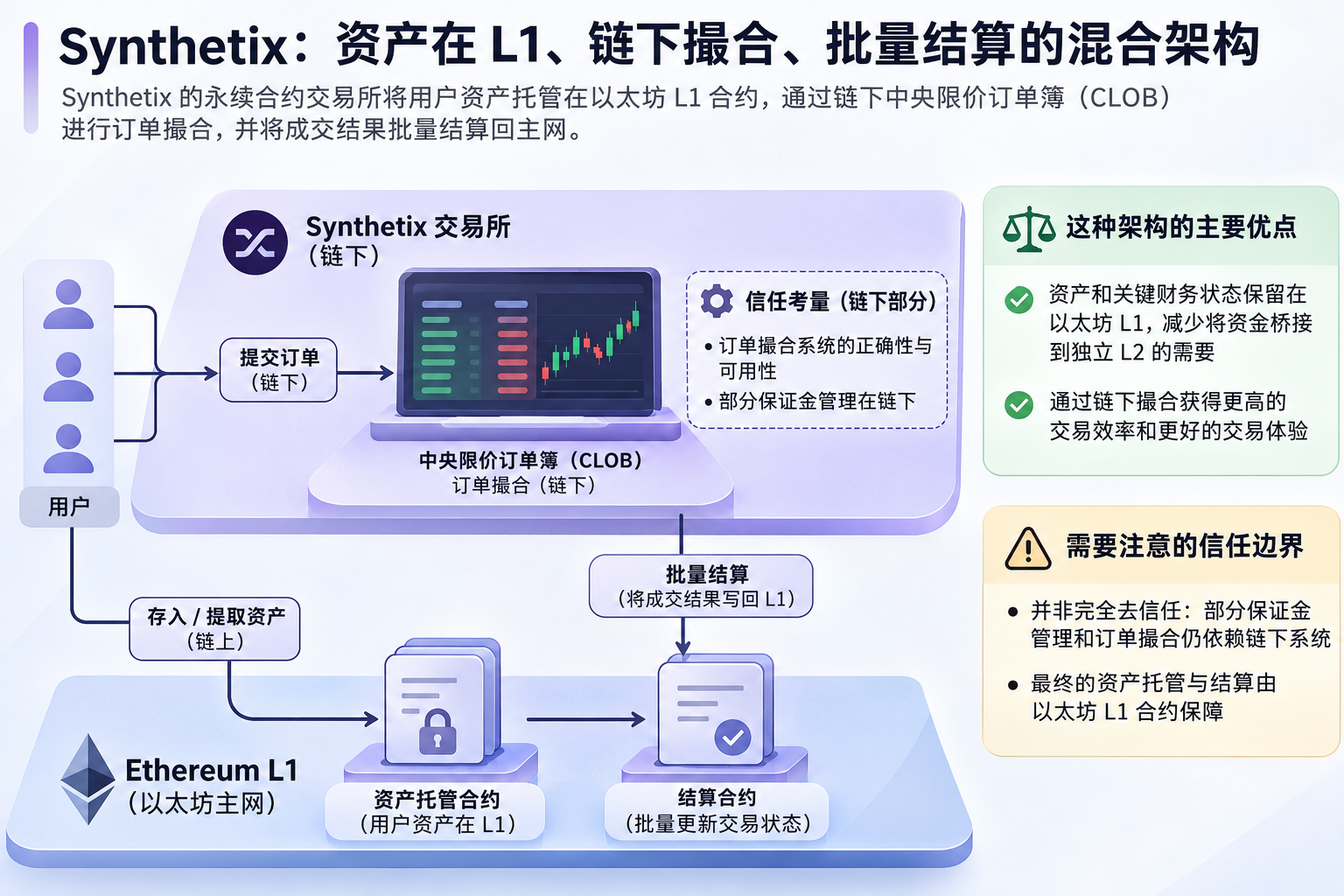
Other decisions reflect different needs. Synthetix launched a new perpetual-futures exchange on Ethereum L1 in December 2025. In 2026, Trueo announced a move of its primary deployment from Base to L1; ShapeShift moved its rFOX staking program from Arbitrum to L1; and Superseed stopped its L2 network while planning to move core products to mainnet. These cases do not establish that every application is better served by L1.
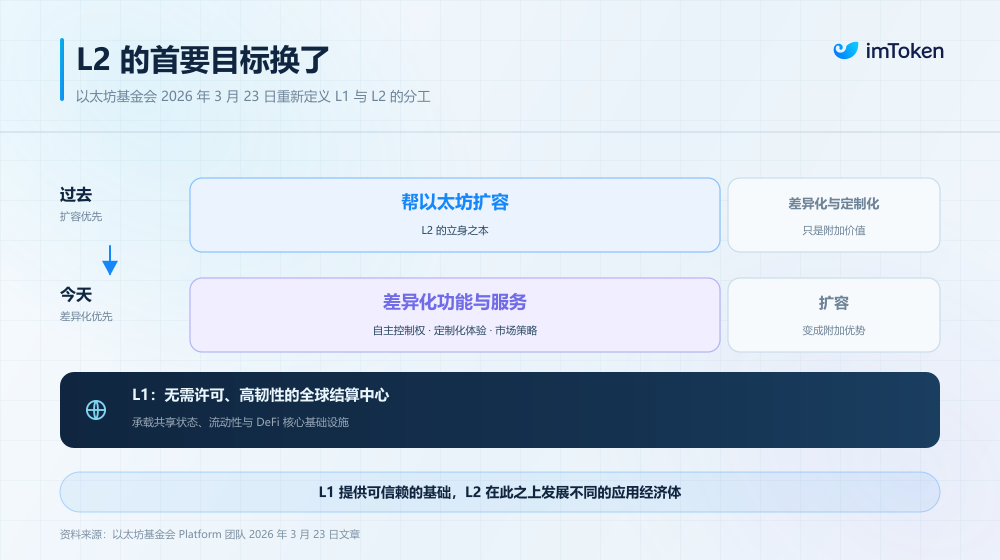
The source also reported pressure on some standalone networks. Blast announced on October 2, 2026, that it would wind down, saying network maintenance costs exceeded its L2 revenue and that it saw no reliable path to economic sustainability. Abstract announced a planned network closure for December 15, 2026. A network’s users and applications, in other words, are not necessarily enough to cover the cost of operating it.
Where execution and assets sit matters
An application need not put every operation on L1 to keep important financial state there. The source describes Synthetix’s exchange as holding user assets in Ethereum L1 contracts, matching orders through an off-chain central limit order book and settling trades in batches on mainnet. That reduces the need to bridge assets to a separate L2, but it does not remove every trust assumption: parts of margin management and the matching system remain off-chain.
Decentralization is another distinction. According to the article’s November 2026 account of ETHBEAT data, only a single-digit number of the L2s it tracked had reached Stage 2, while Base, Arbitrum One and OP Mainnet remained at Stage 1. The source notes that some networks may deliberately retain upgrade or administrative controls. Their security properties should therefore not be treated as identical to Ethereum L1’s.
Activity is not the same as ETH value accrual
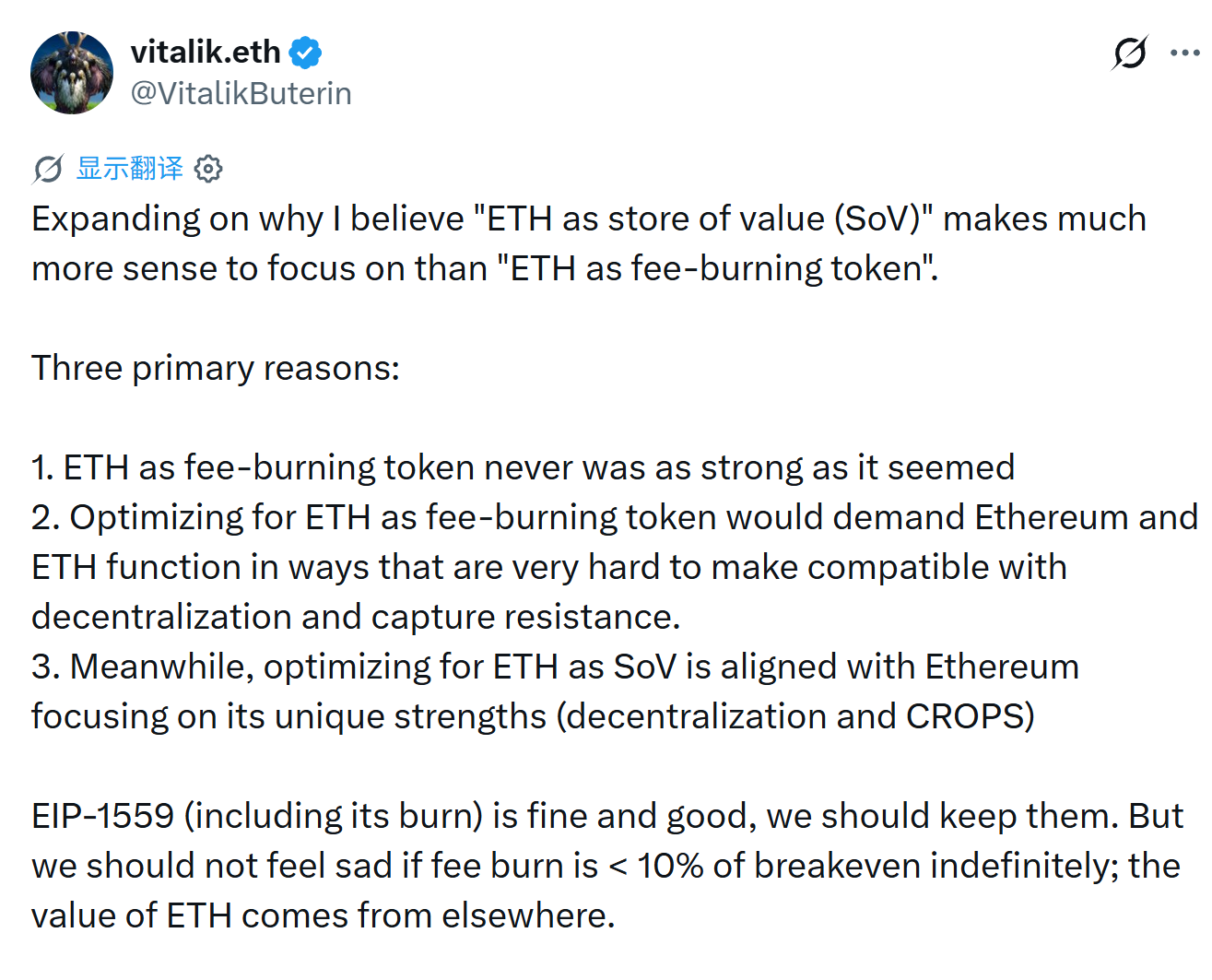
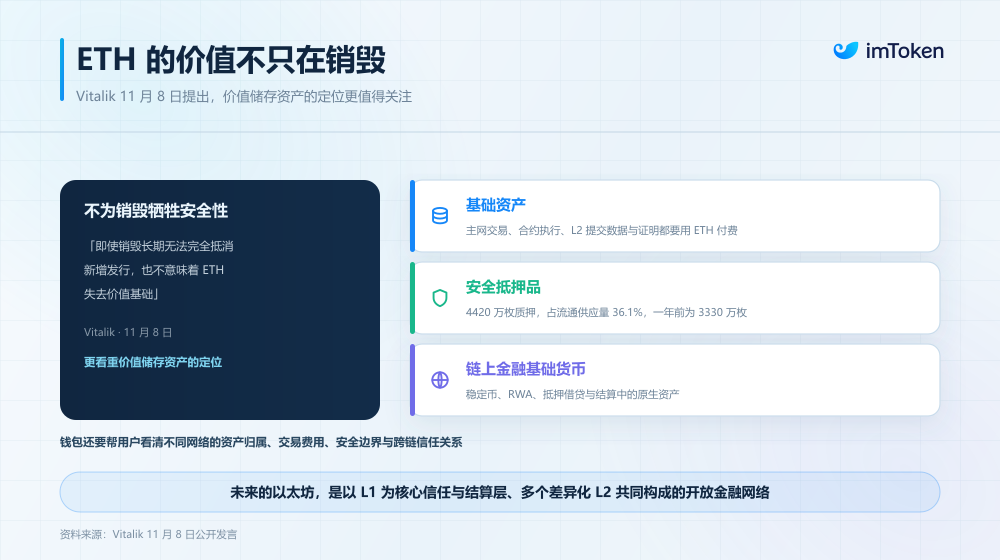
Under EIP-1559, transaction base fees are burned and priority fees go to validators. More activity can increase demand for blockspace, but cheaper L2 data publication and a higher L1 gas limit can lower fees per transaction. Growing ecosystem usage does not guarantee proportionate growth in ETH burned. Nor is fee burn the same measure as protocol revenue or a direct payment to token holders.
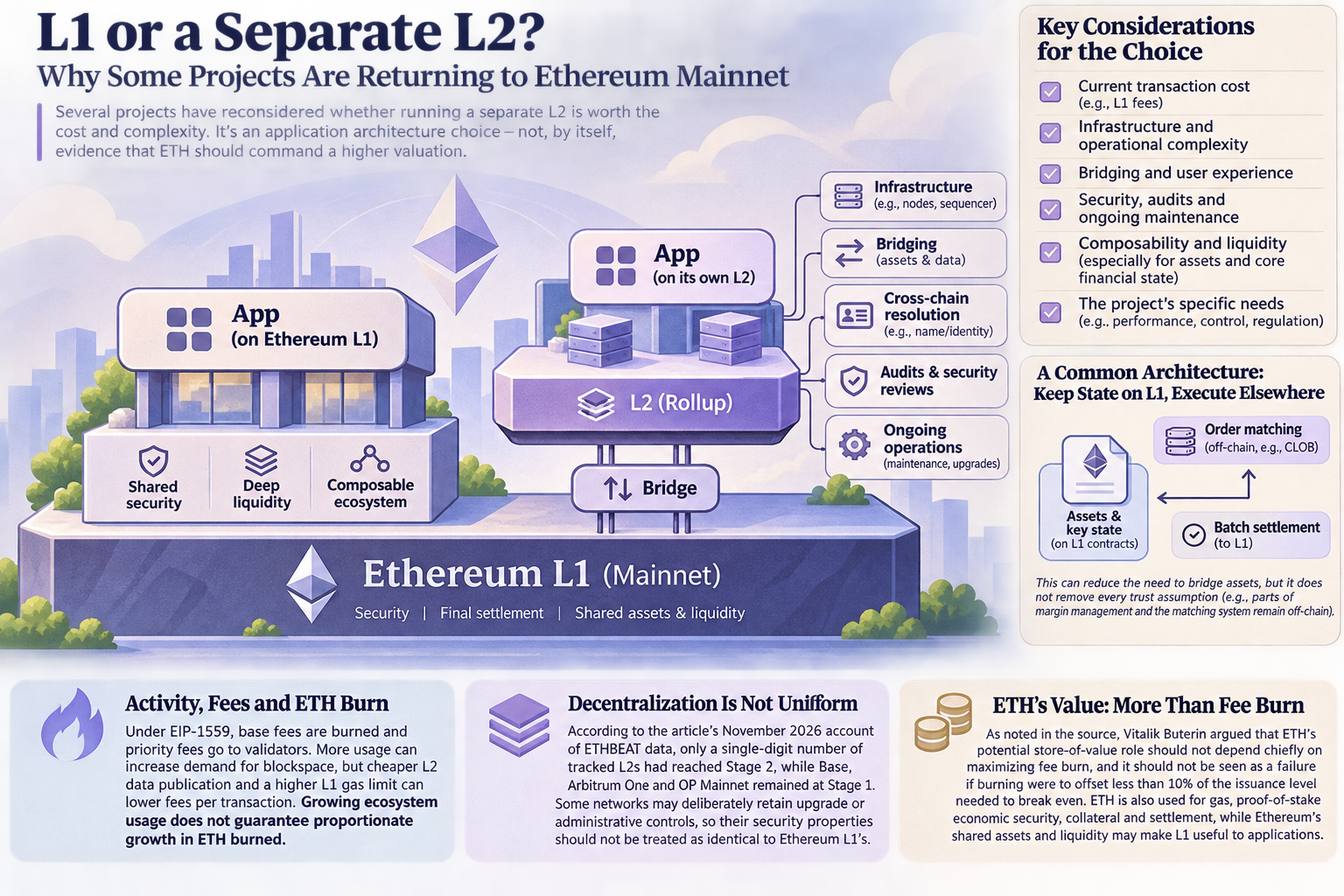
The article attributes a broader argument to Vitalik Buterin: ETH’s potential store-of-value role should not depend chiefly on maximizing fee burn. He did not propose removing EIP-1559. Rather, he argued that holders should not regard it as a failure if burning were to offset less than 10% of the issuance level needed to break even. The source cites the roughly $180 million in fees burned during one day of the 2022 Otherdeed NFT mint as an example of why an exceptional, speculation-driven fee spike is a weak foundation for a long-term valuation assumption.
The resulting valuation question remains open. ETH is used for gas, proof-of-stake economic security, collateral and settlement, while Ethereum’s shared assets and liquidity may make L1 useful to applications. Those roles describe possible sources of demand; this article supplies no model that converts them into a fair value for ETH. Any such model would need explicit assumptions about sustained usage, fees, issuance and how network activity translates into demand for the asset.
Source: techflowpost.com (originally published 2026-11-12 09:19 UTC+8)