
Historical report: published October 30, 2026, at 20:42 (UTC+8). The figures and forecasts below reflect the 1kx research available at that time, as translated by 白话区块链.
The valuation question in 1kx’s report is not simply how much revenue the blockchain industry generates. It is who receives that revenue, what produces it, and whether any of it reaches token holders. Its estimates combine operating data from more than 2,600 on-chain protocols through the third quarter of 2026, disclosures from more than 100 publicly listed companies, and research on private businesses.
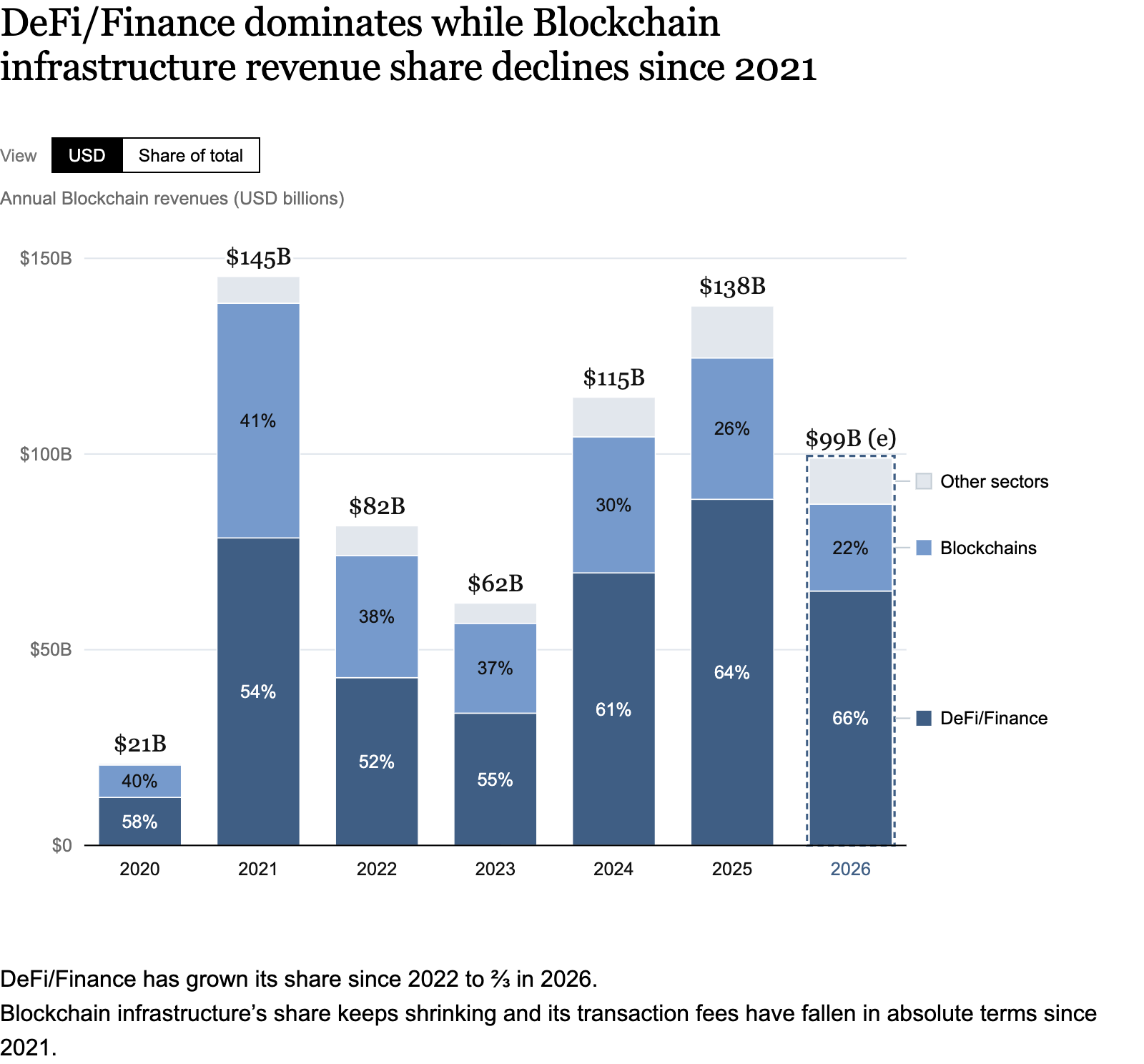
Revenue is broader than on-chain fees
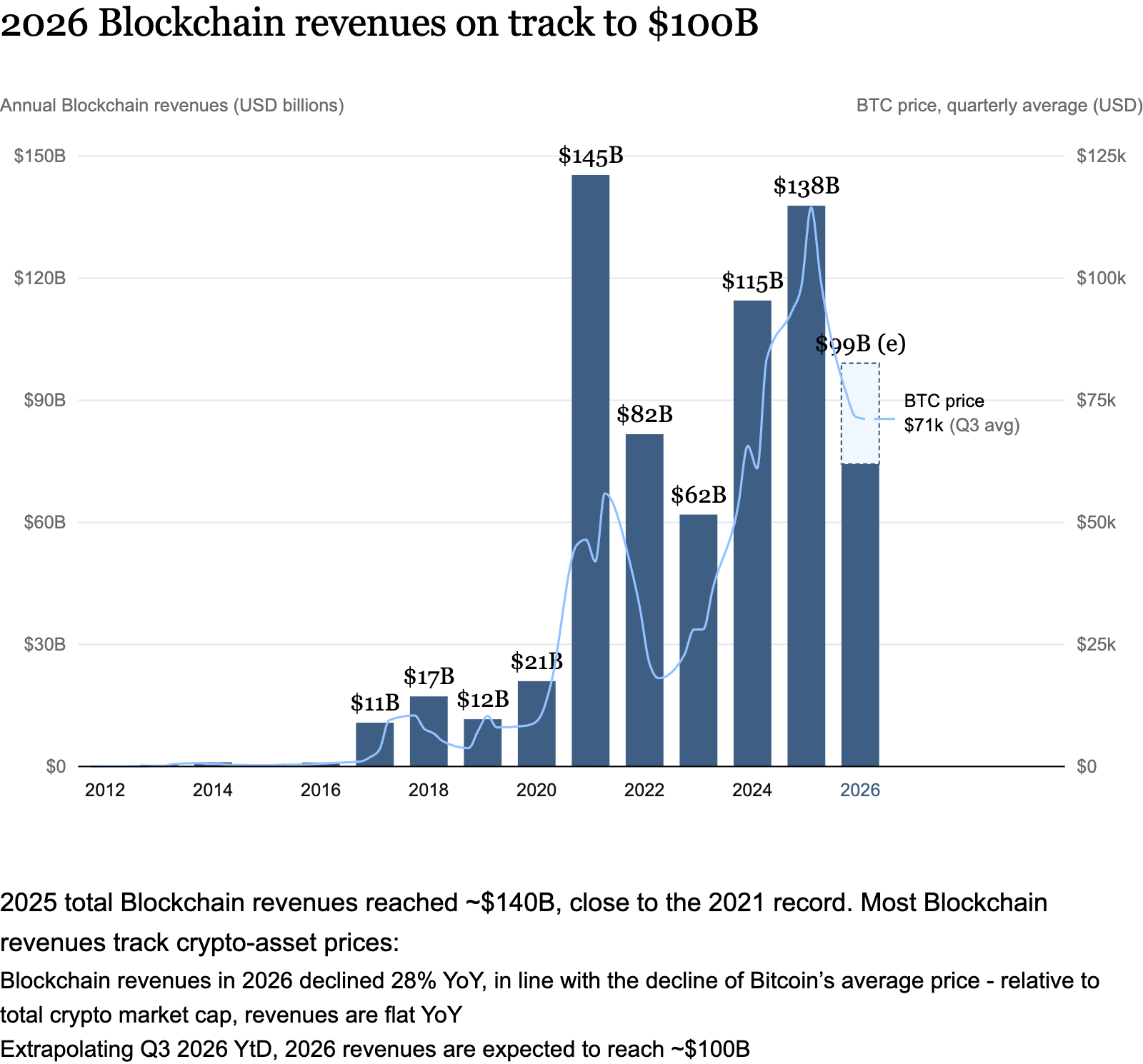
1kx estimates that industry revenue fell 28% year over year in 2026, broadly alongside a 30% decline in the crypto market. Annualizing activity from the first three quarters, it projected approximately $100 billion in full-year revenue, down from roughly $140 billion in 2025. The $100 billion figure was a projection, not a completed-year result.
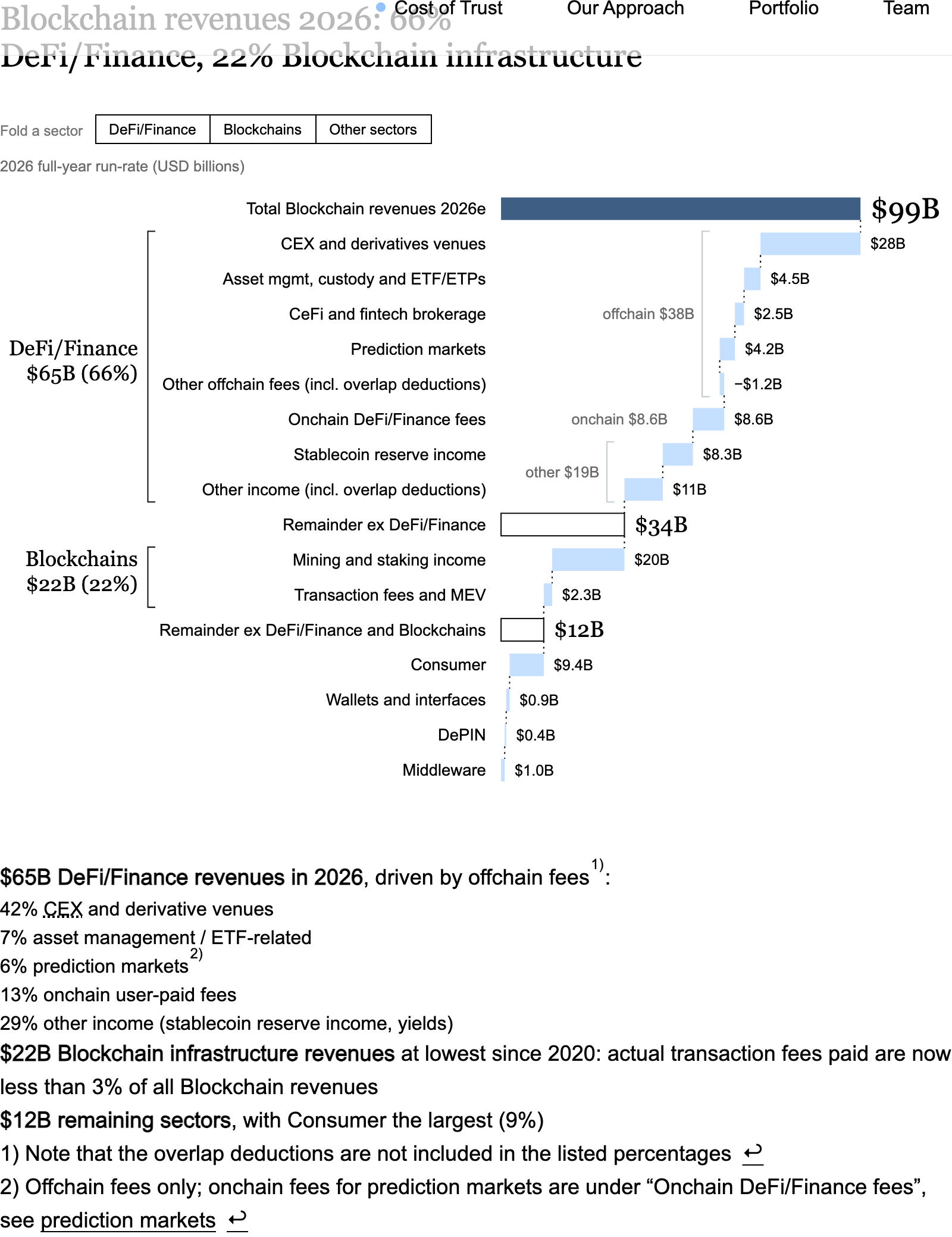
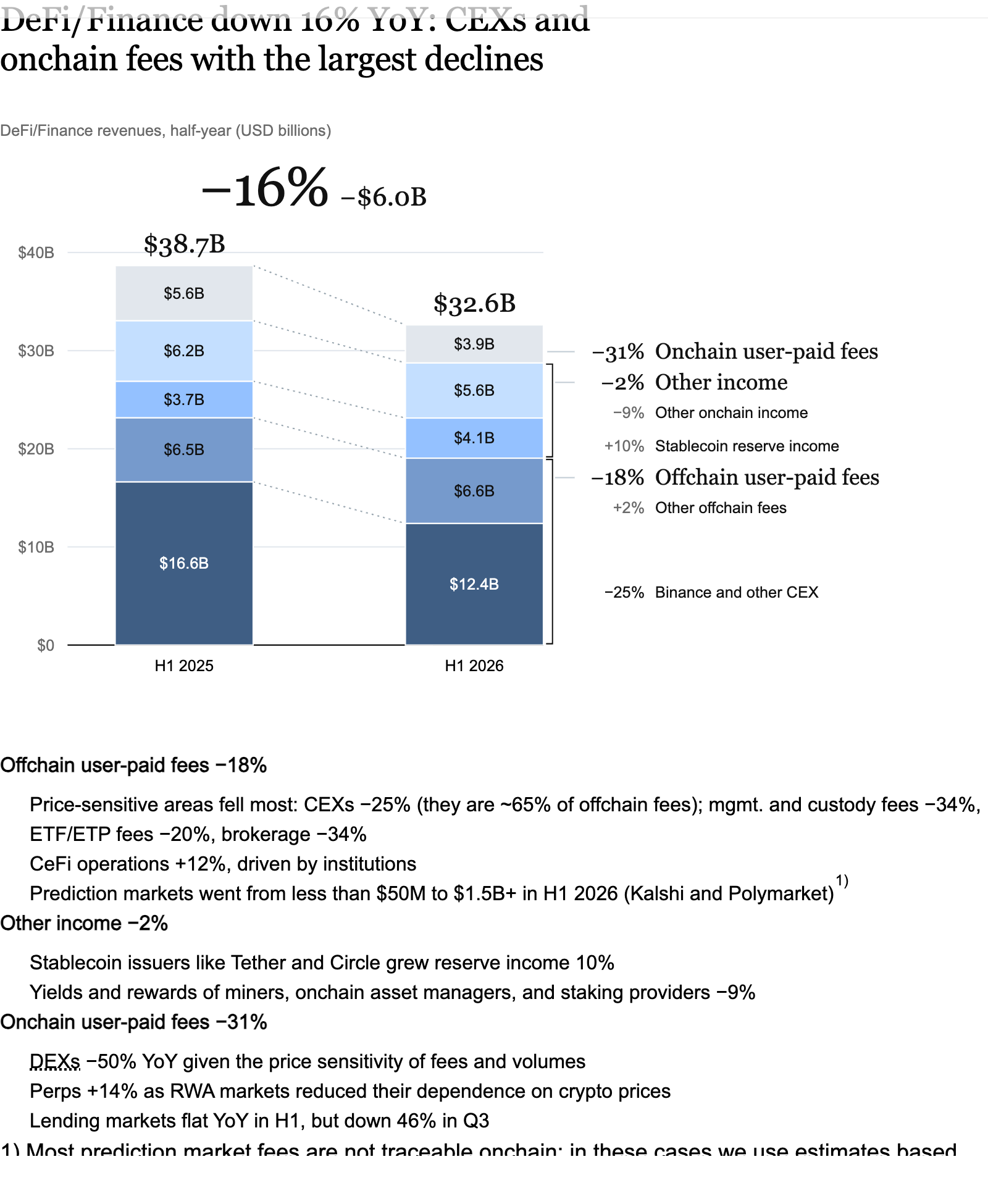
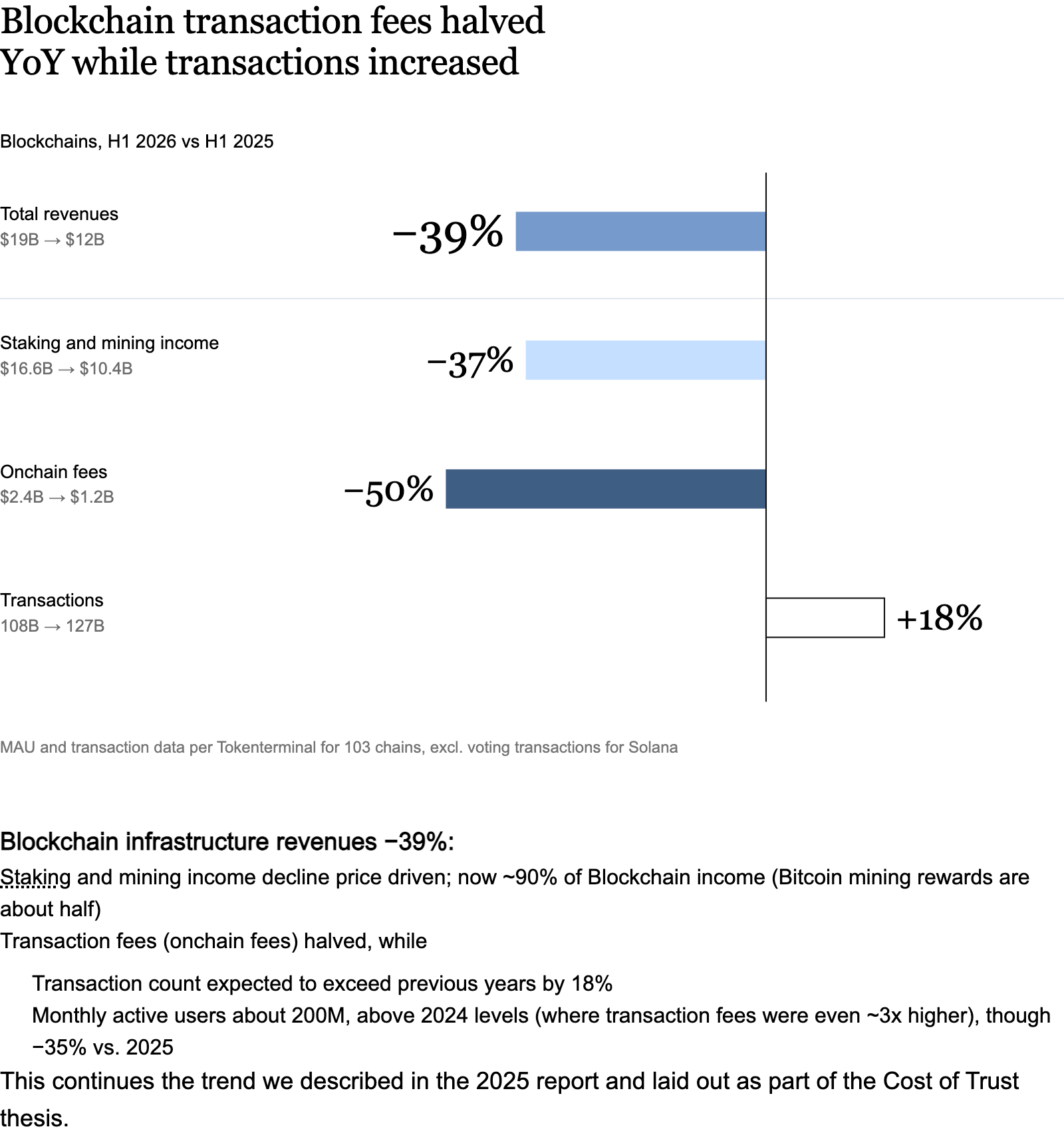
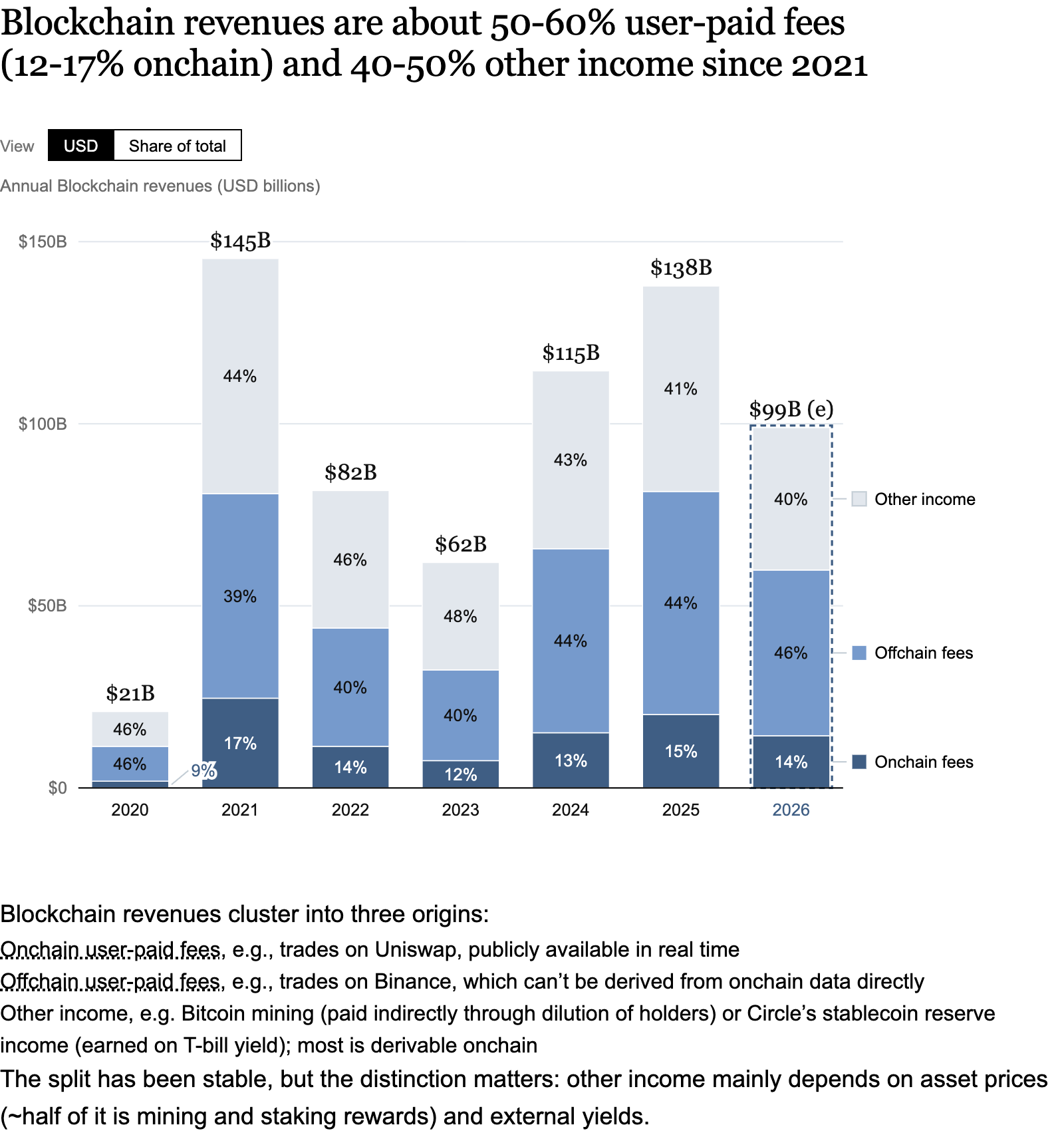
The report’s revenue measure combines three different sources: fees paid directly for on-chain transactions; off-chain service fees, such as centralized-exchange commissions; and other income, including mining and staking rewards and interest on stablecoin reserves. Those streams have different economic drivers. In particular, block rewards are not equivalent to customer fees, while reserve interest depends partly on external interest rates. An industry-wide revenue total therefore cannot be read as protocol revenue—or as cash available to token holders.
Where activity and revenue diverged
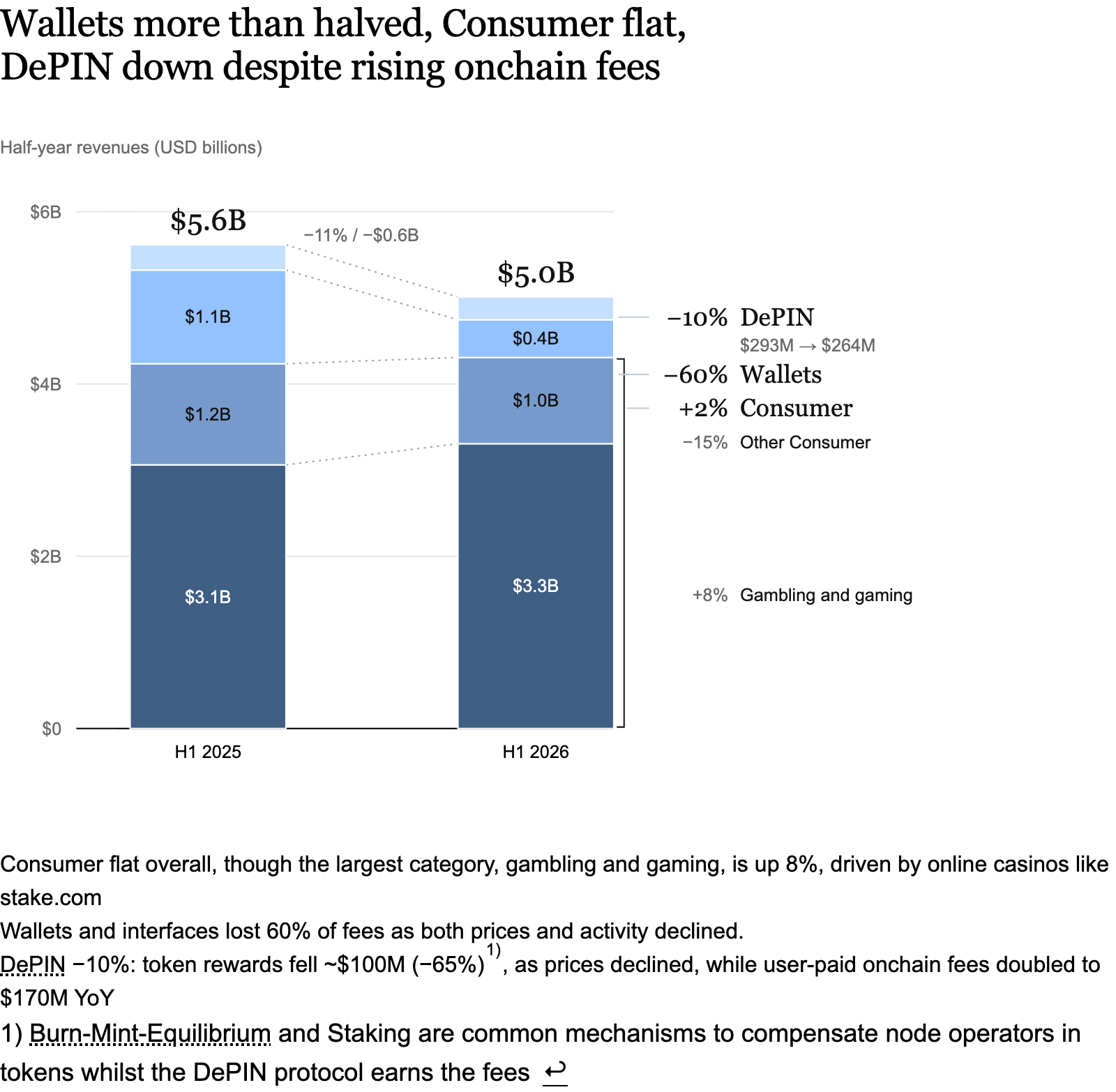
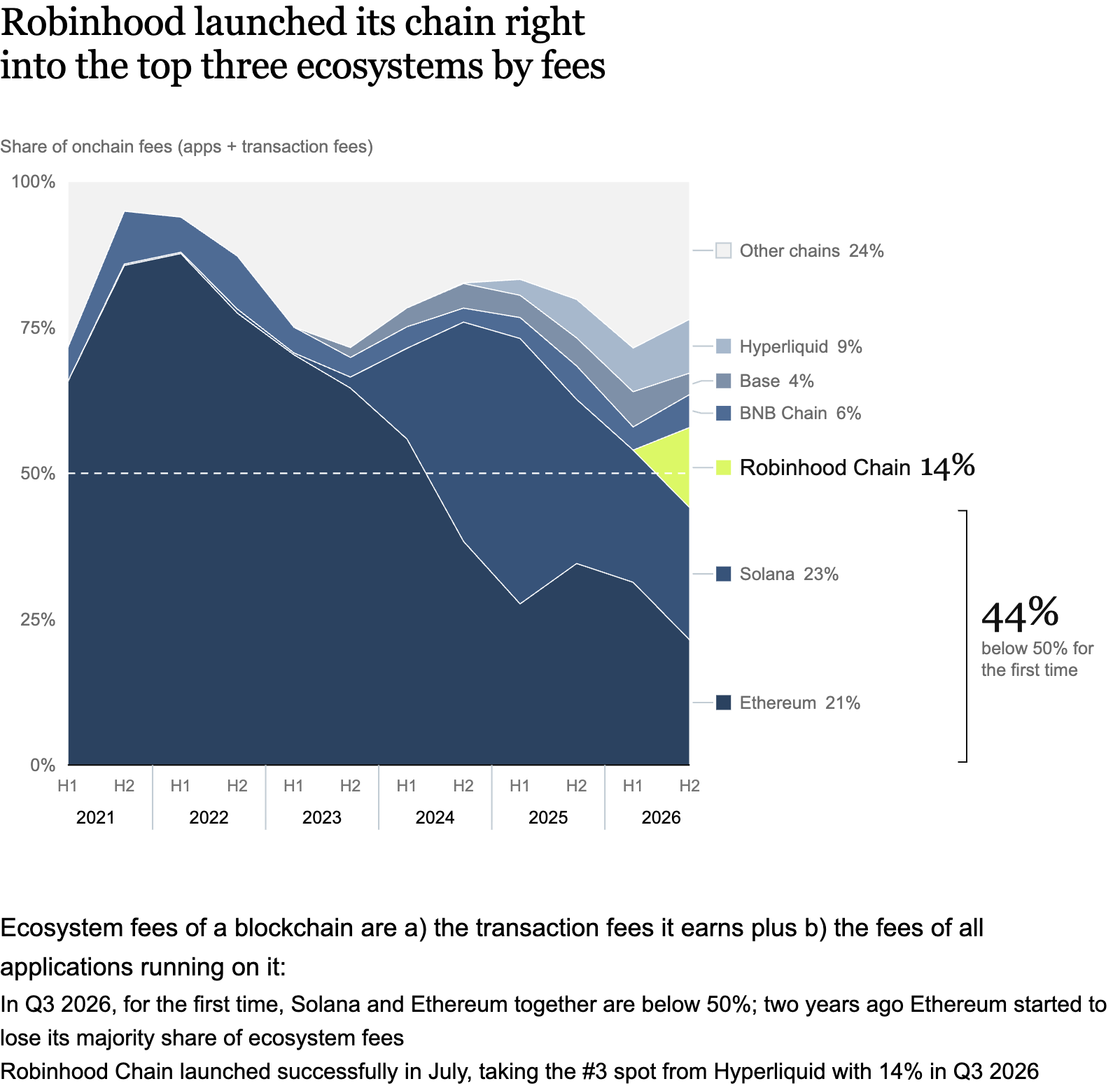
According to 1kx, DeFi and broader financial businesses accounted for 66% of 2026 industry revenue, or about $65 billion, while blockchain infrastructure accounted for 22%, or about $22 billion. Direct gas fees represented less than 3% of industry revenue. The report estimated that transaction counts would rise 18% year over year even as underlying transaction fees halved: more transactions did not translate into more fee revenue.
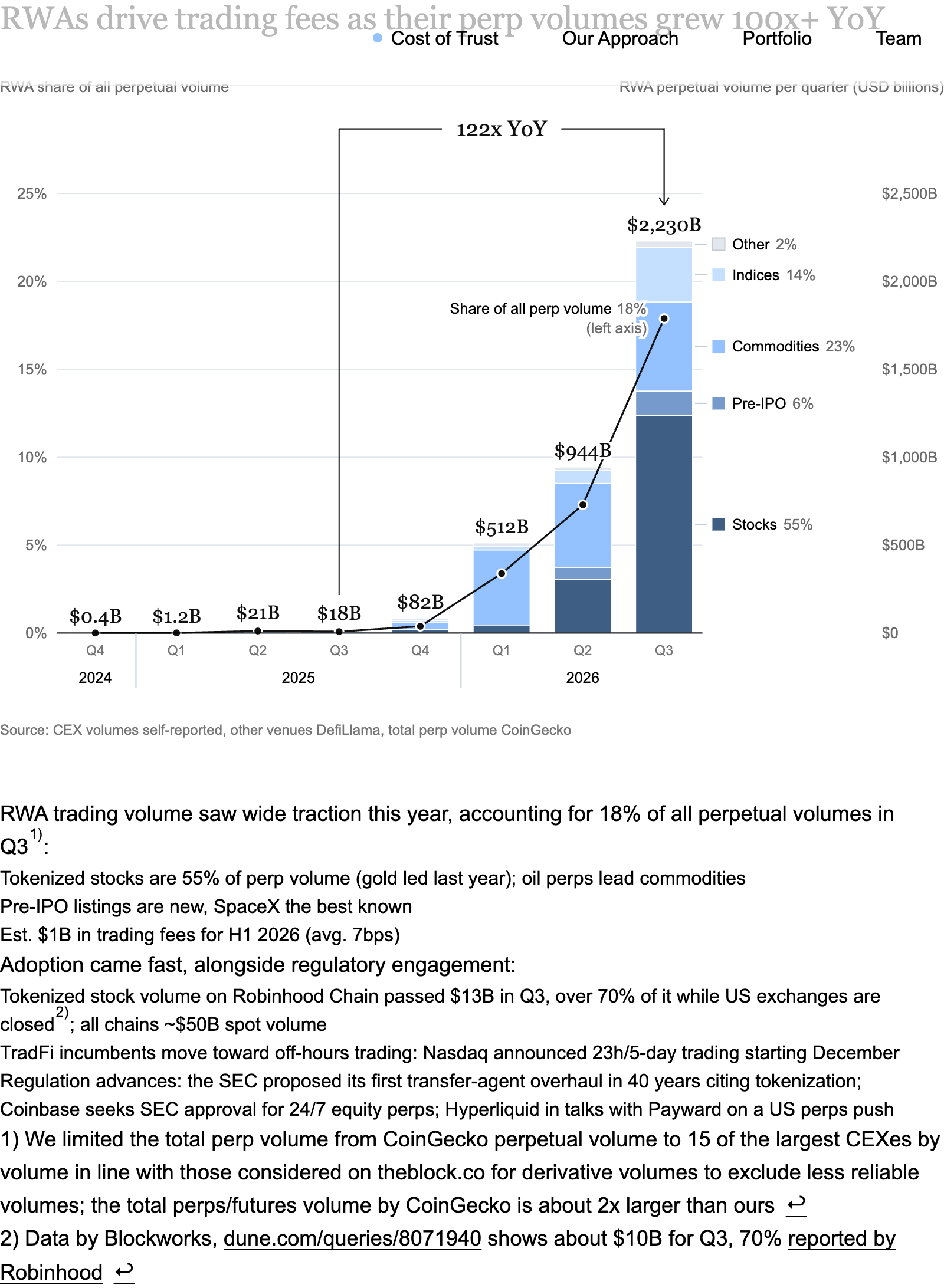
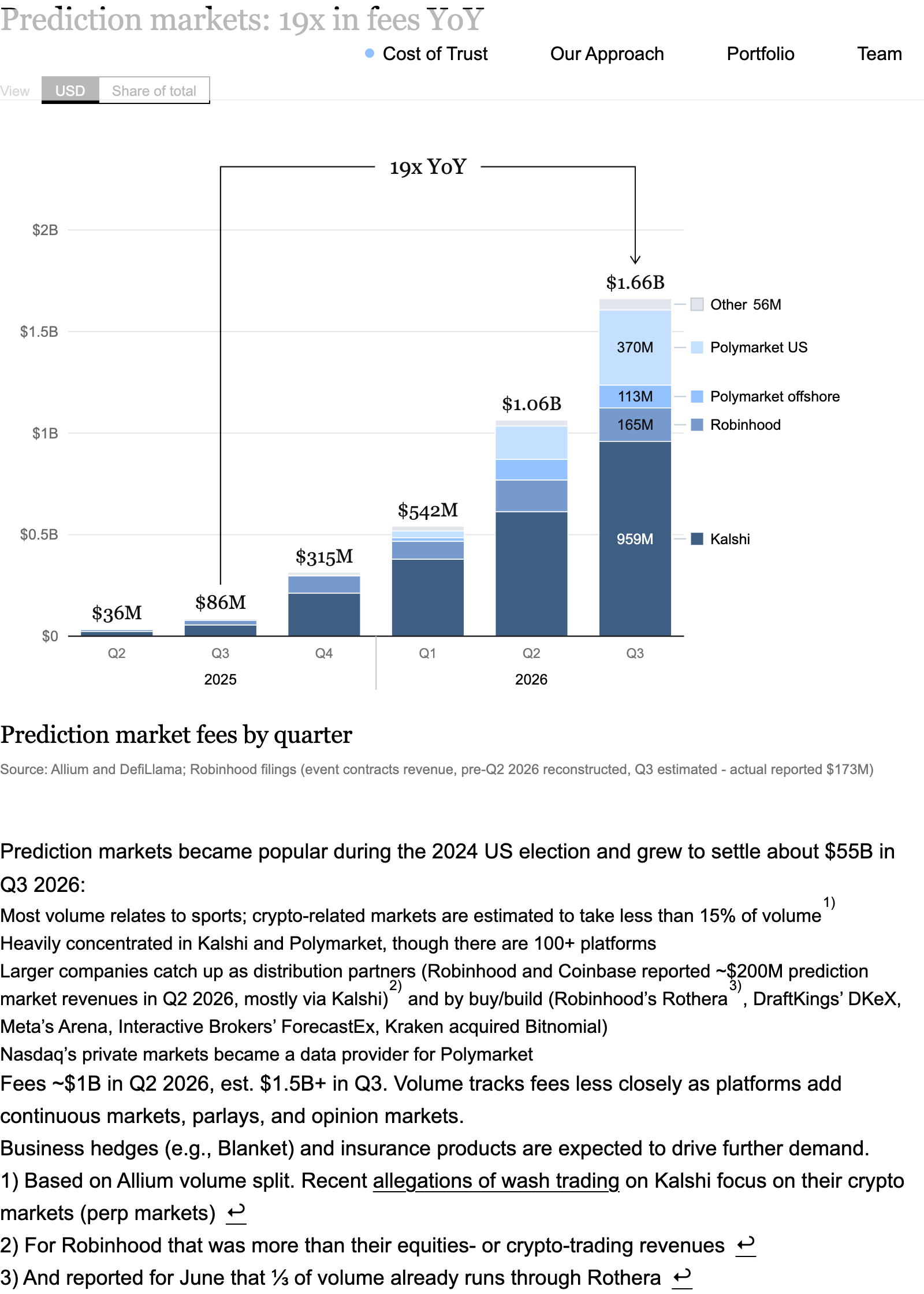
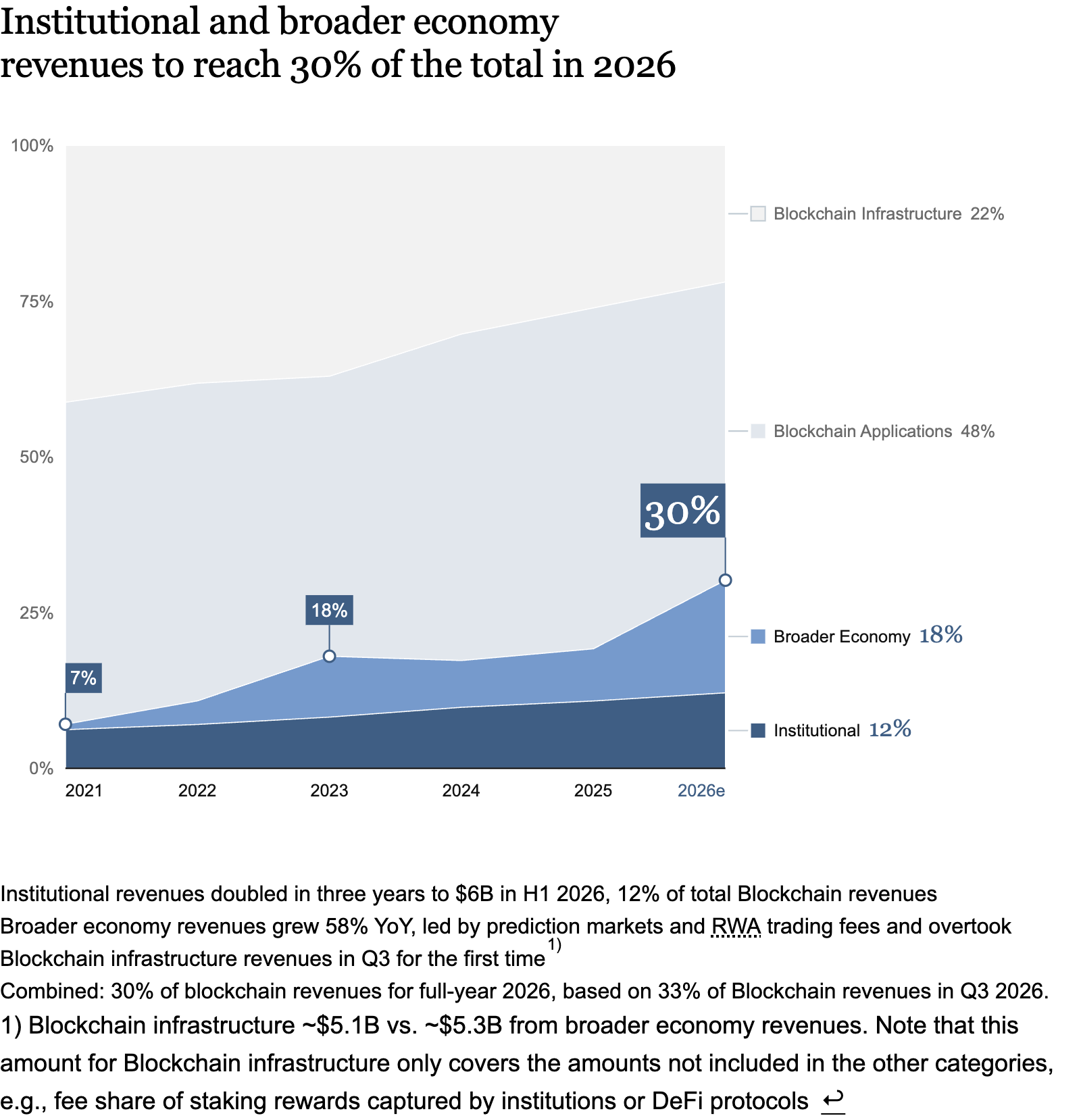
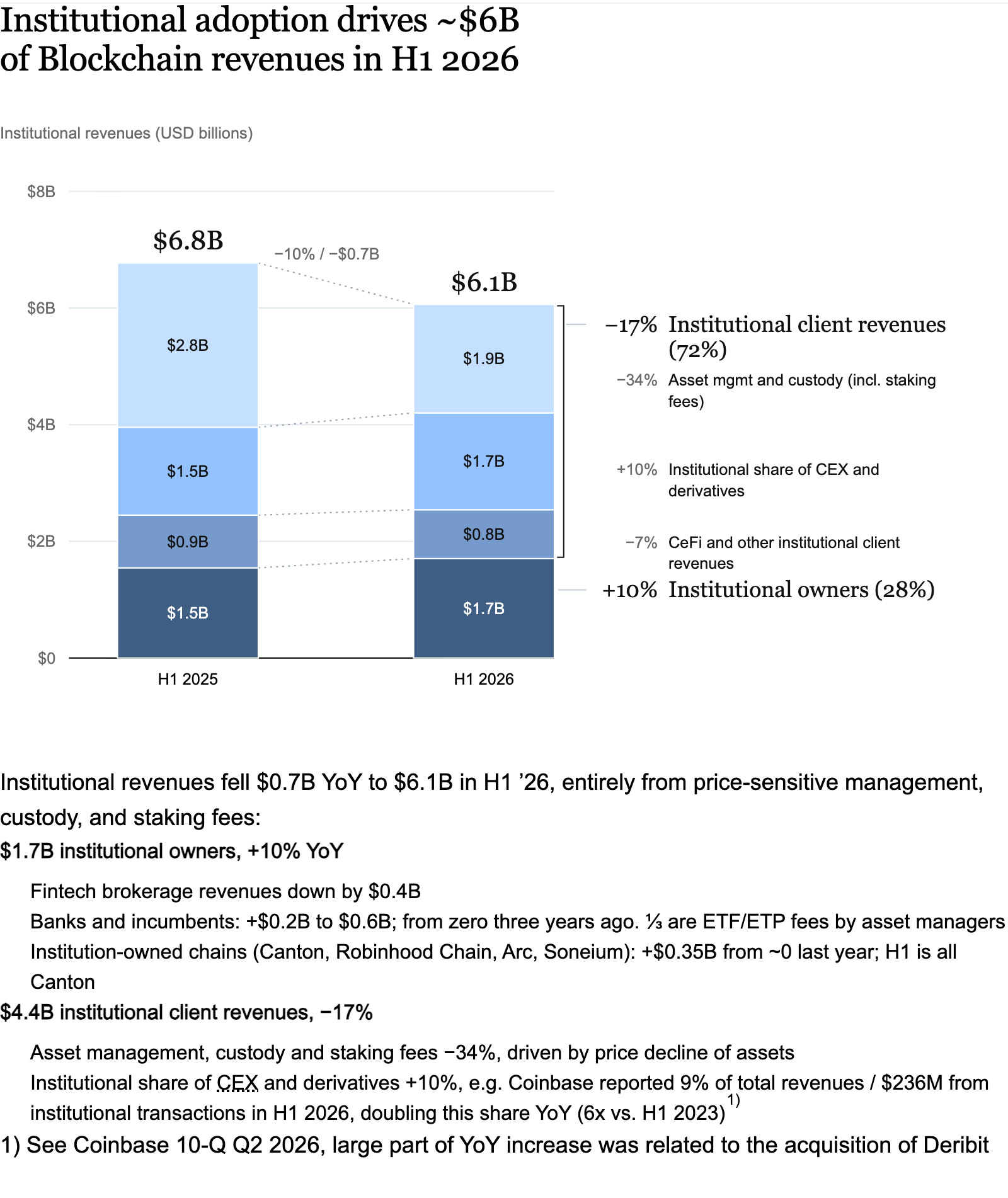
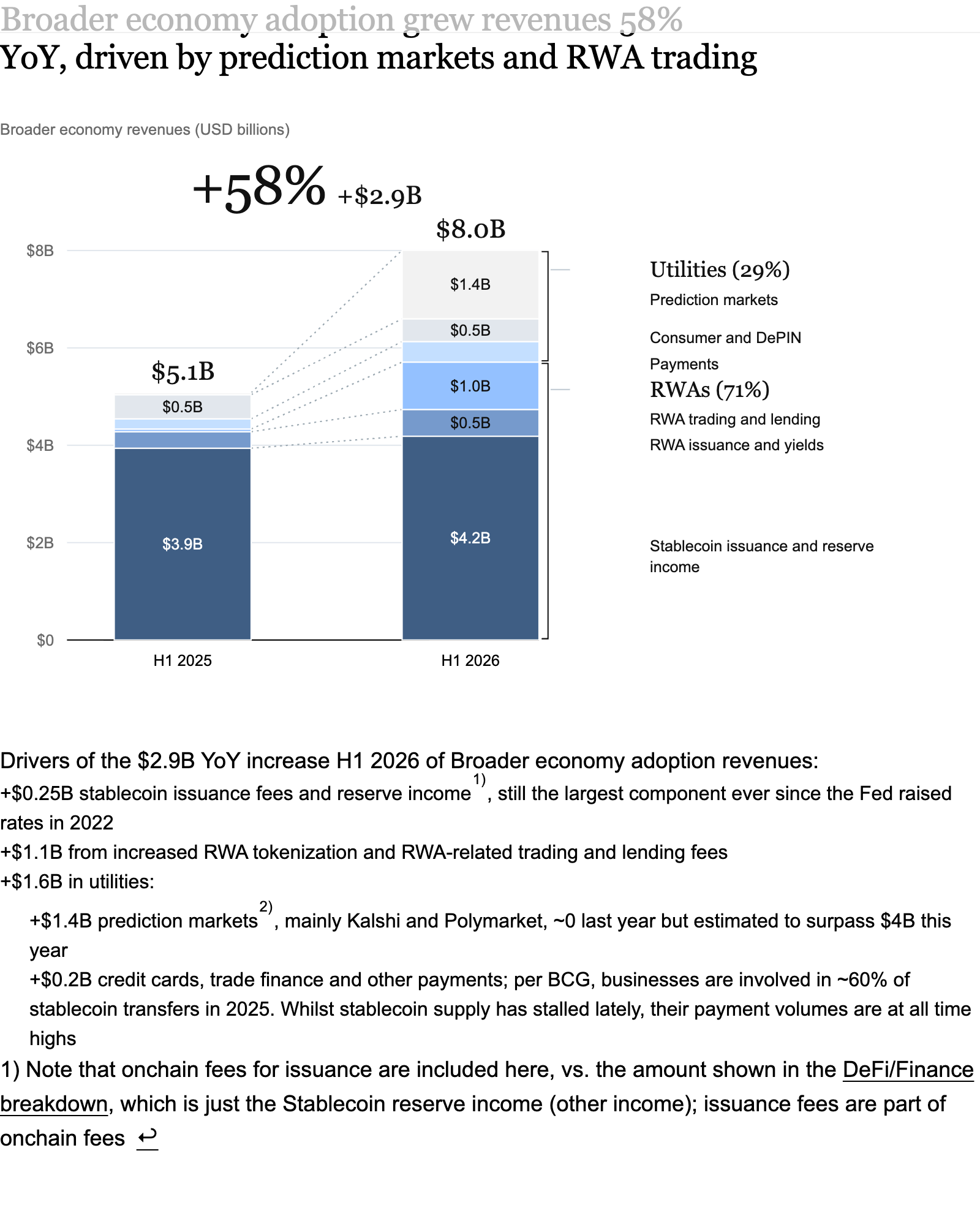
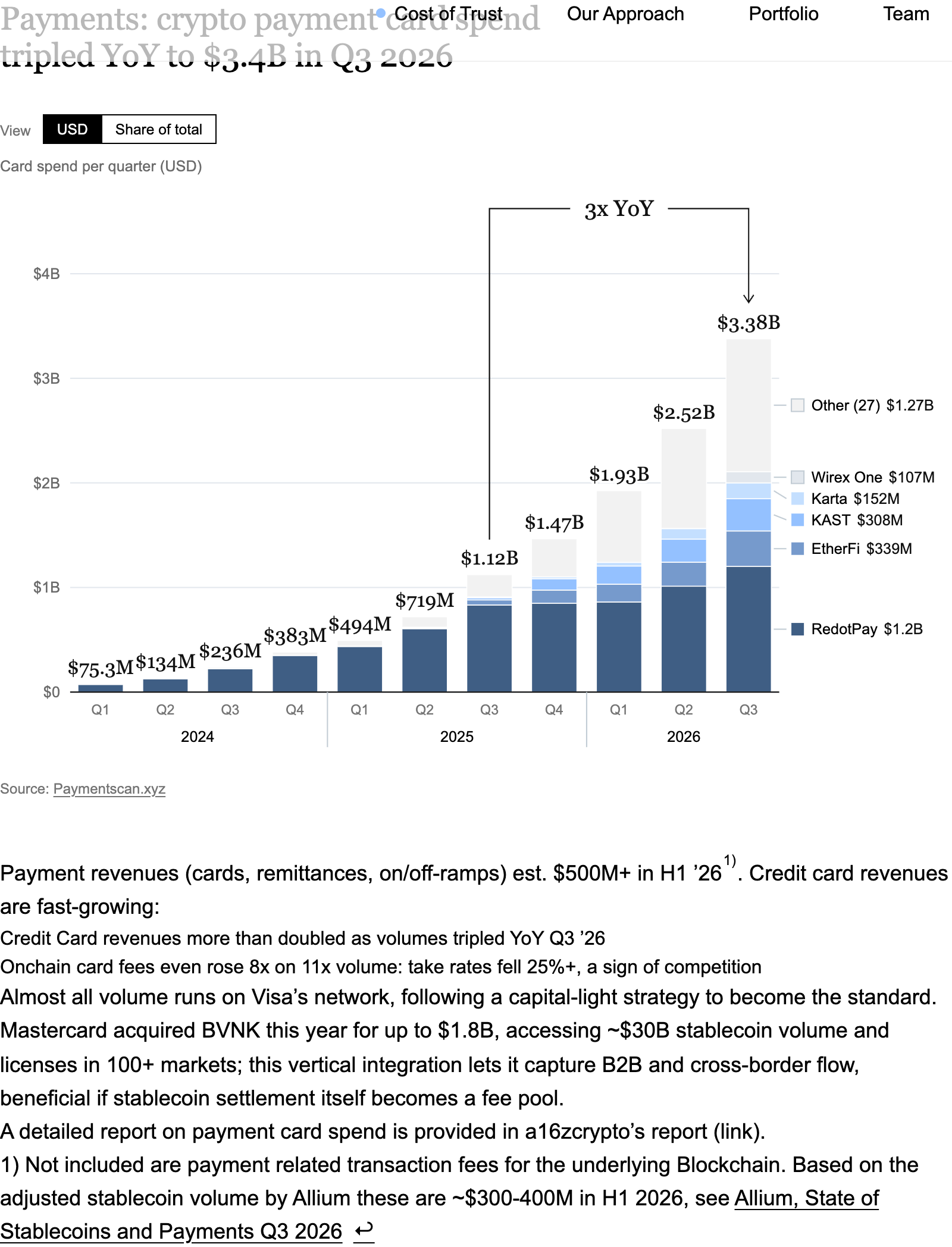
The composition also shifted toward institutional and real-economy uses. 1kx projected that these would account for 30% of 2026 industry revenue: 12% from institutional customers and owners, and 18% from uses including tokenized real-world assets, crypto payments and prediction markets. It estimated third-quarter real-economy-use revenue at approximately $5.3 billion, versus $5.1 billion for infrastructure. These are the report’s category estimates, not a measure of token-holder distributions.
Revenue capture is the valuation test
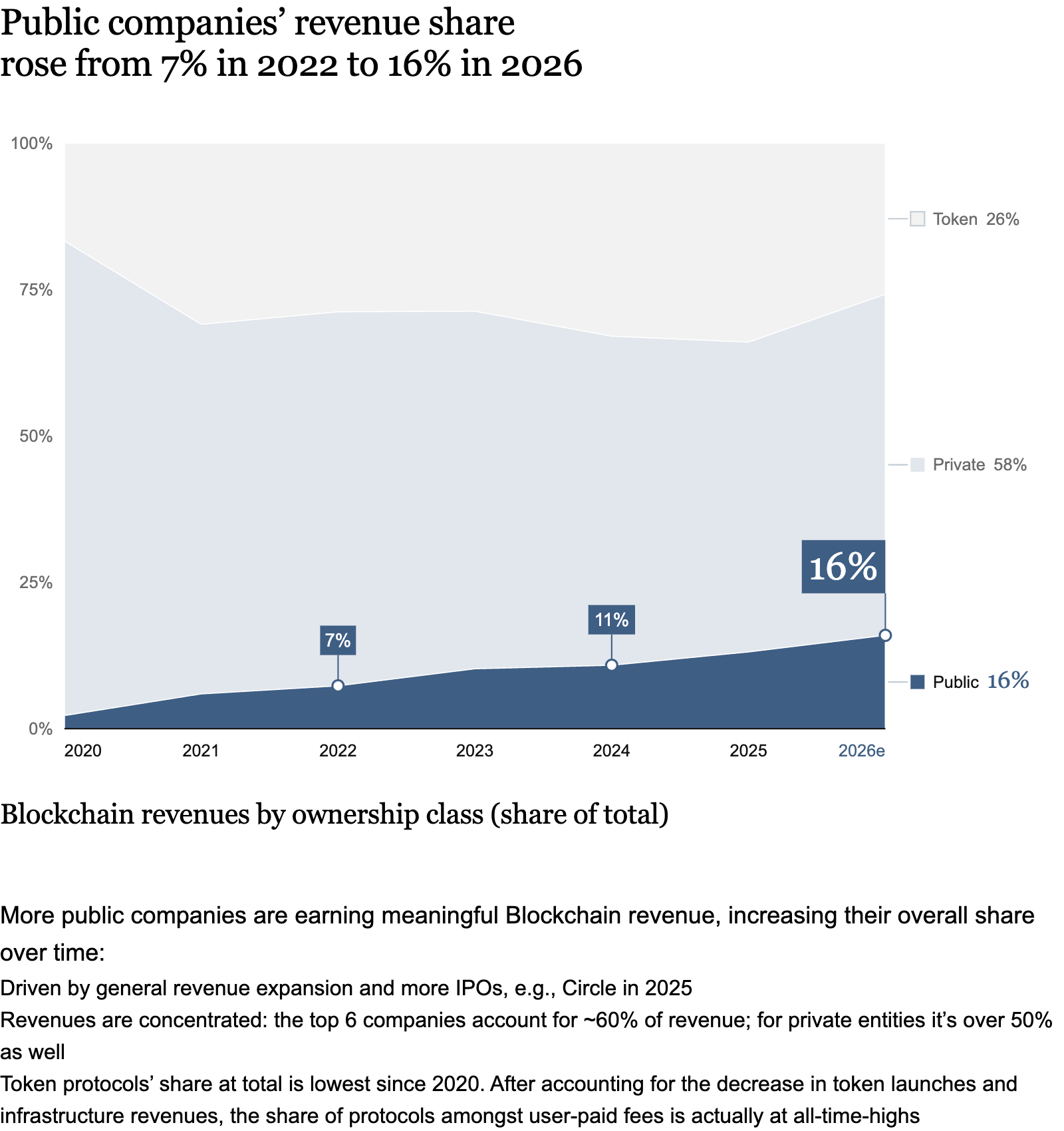
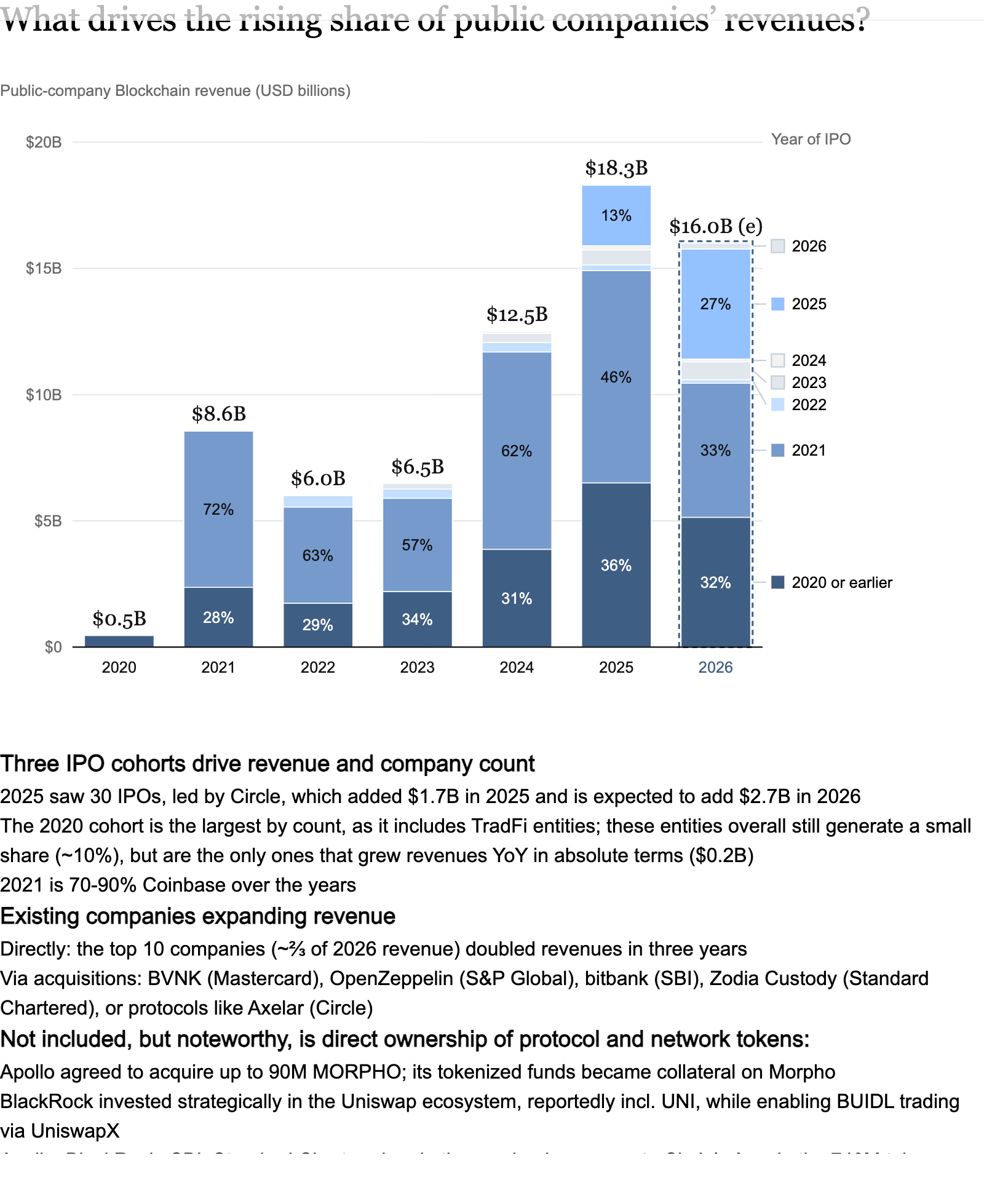
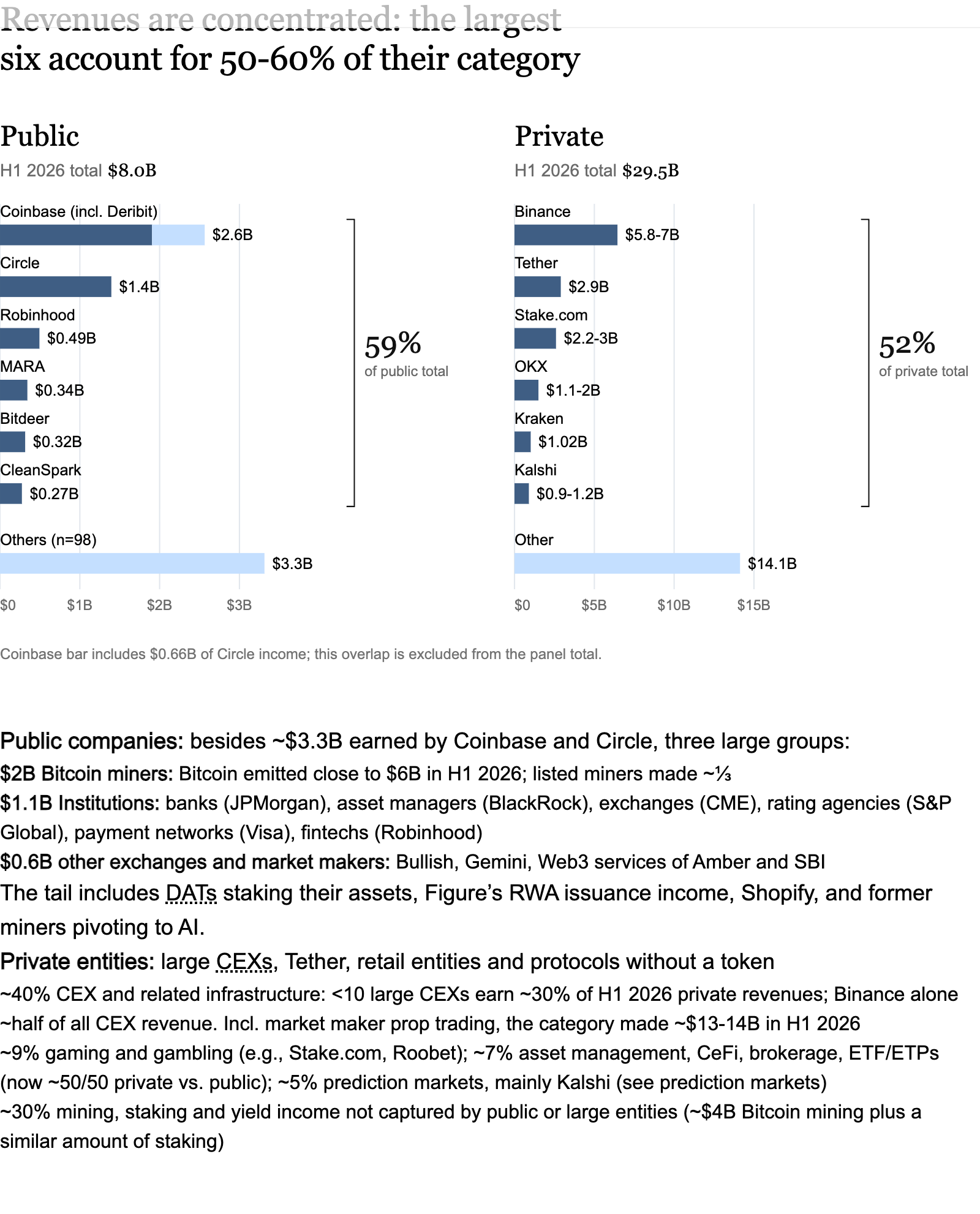
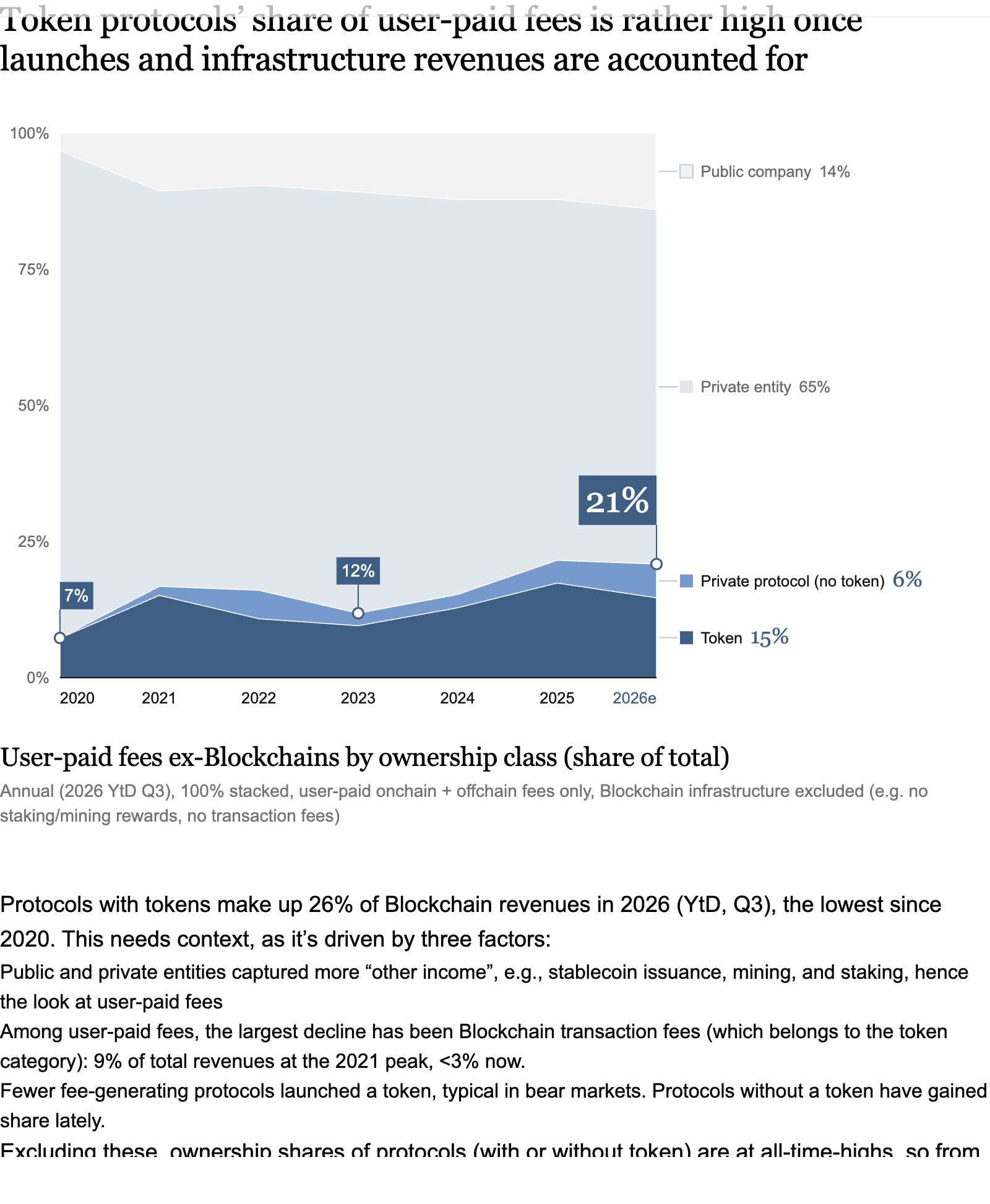
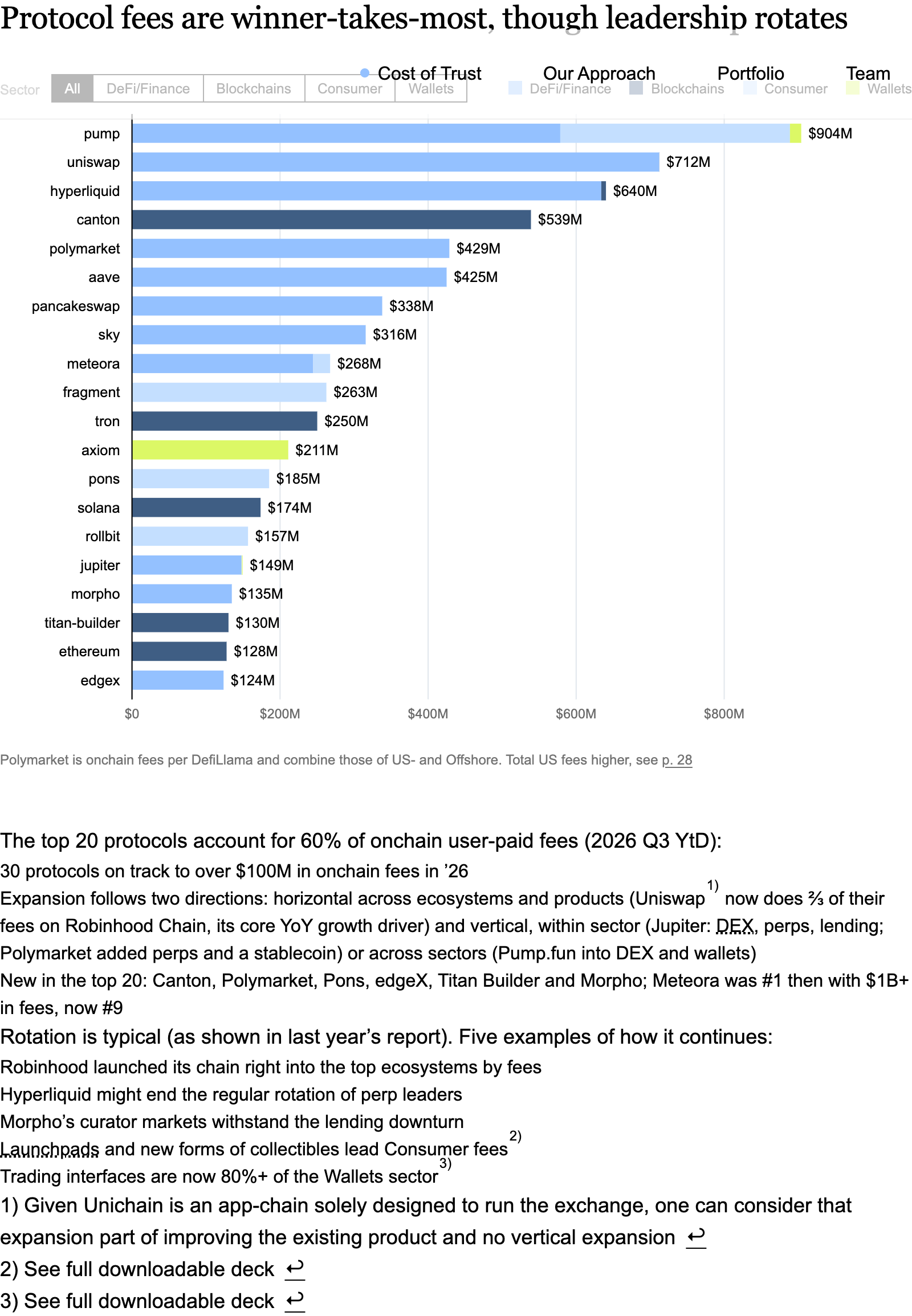
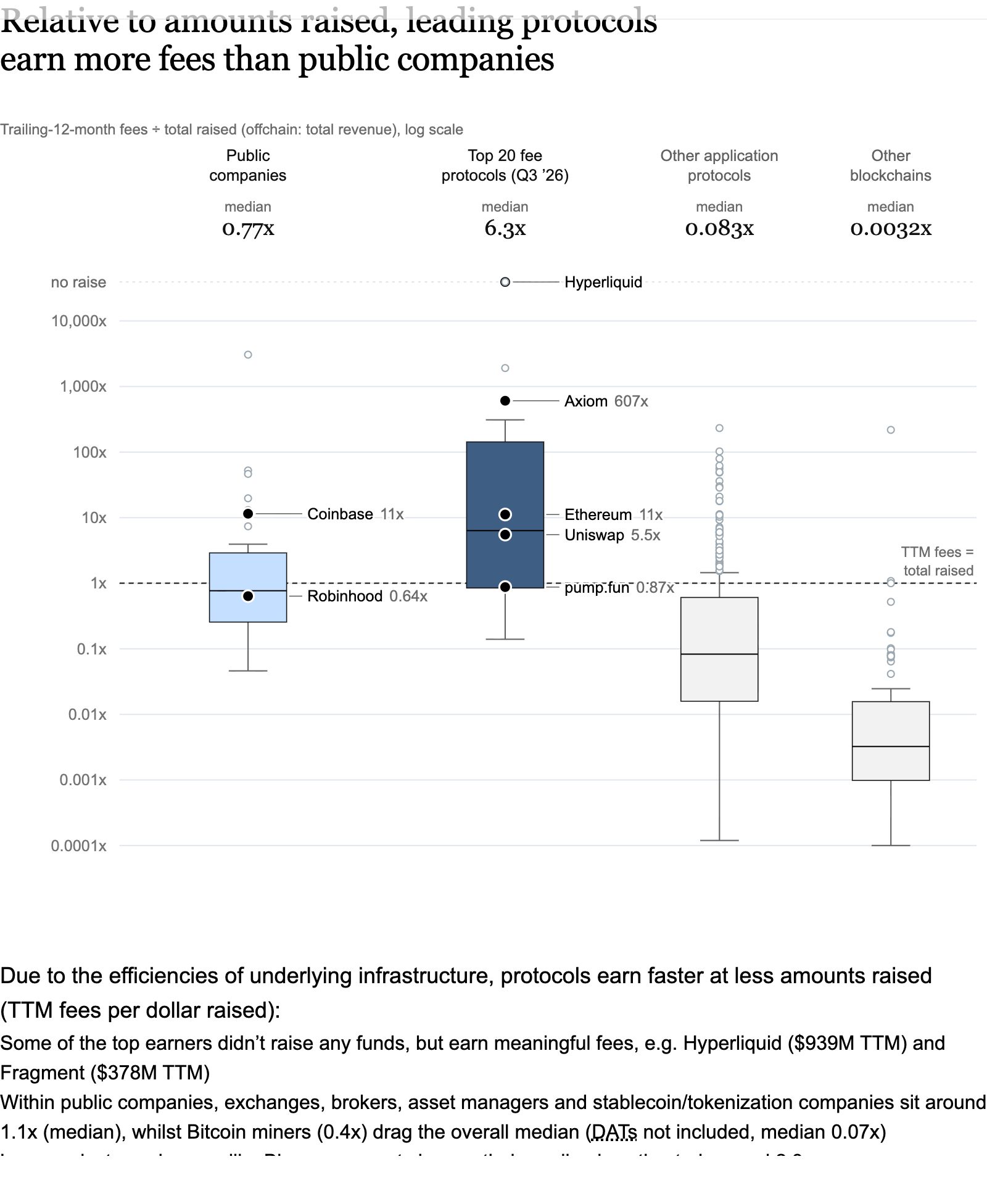
Publicly listed companies captured 16% of industry revenue in 2026, up from 7% in 2022, by 1kx’s accounting. Issued-token protocols accounted for 26% of total revenue in the first three quarters of 2026. Among on-chain protocols, the top 20 received 60% of fees paid directly by users. That concentration matters, but a protocol’s fees still need to be distinguished from the portion retained by the protocol and any amount distributed to its token holders.
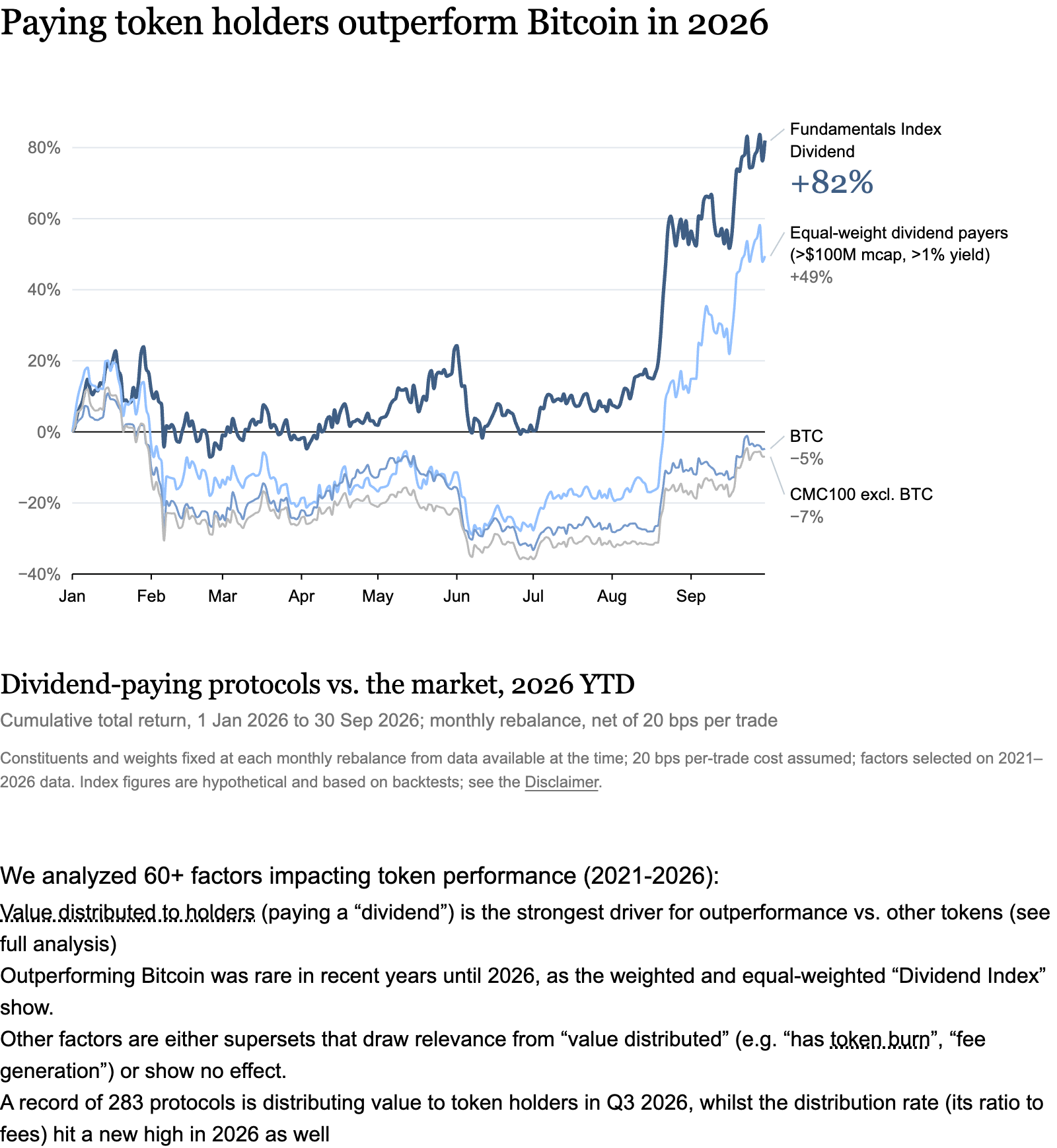
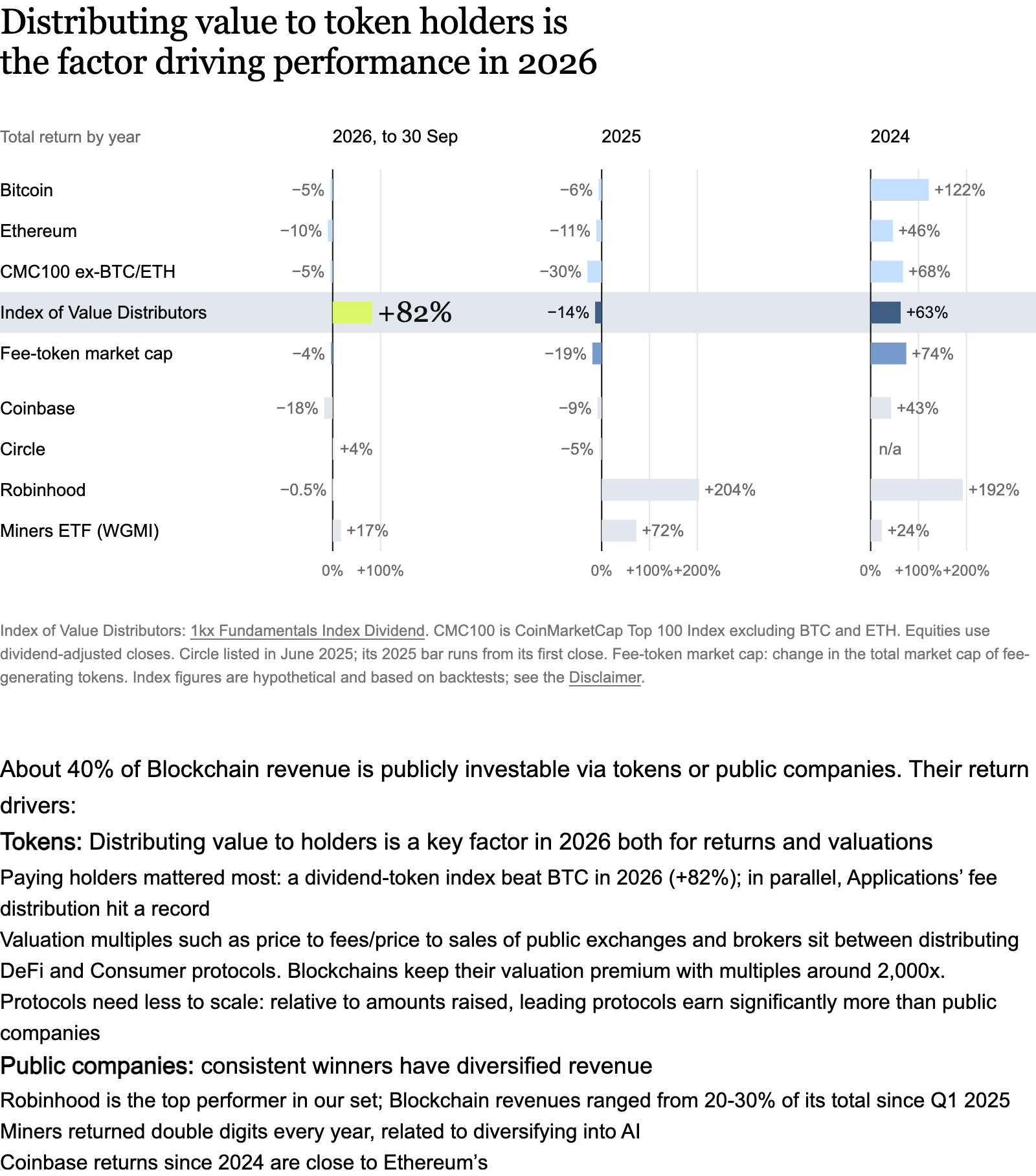
1kx reported that 283 protocols distributed cash flow to token holders by the third quarter of 2026. Its dividend-token indices—both market-cap-weighted and equally weighted—outperformed Bitcoin that year; the report described 82% year-to-date outperformance. Its factor analysis associated holder distributions with stronger token performance. That historical association is not a guaranteed return or proof that a token is cheap.
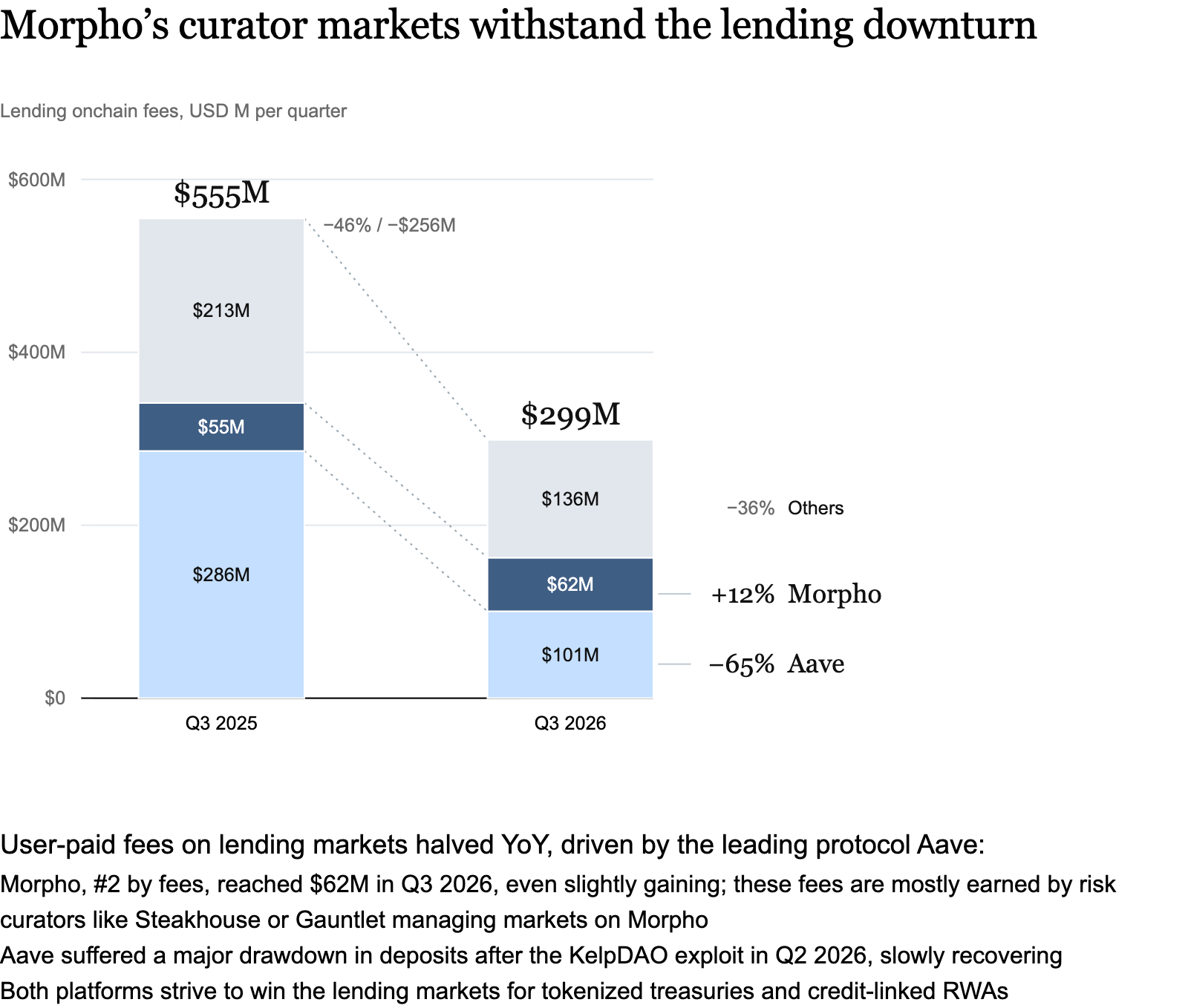
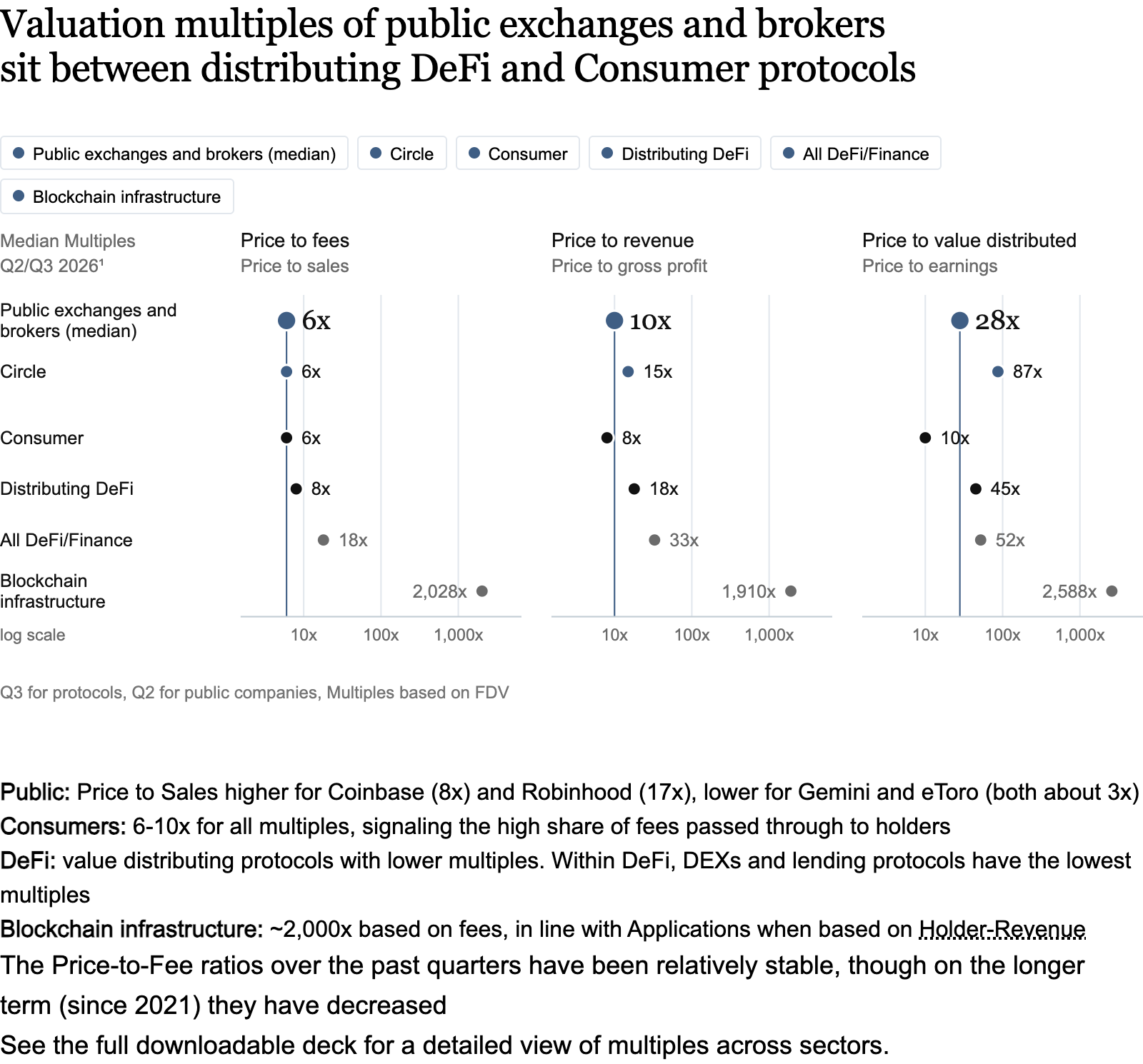
The distinction also matters when comparing multiples. The report put Coinbase at about 8 times sales, Robinhood at 17 times sales, and direct-fee multiples for base-layer infrastructure near 2,000 times. Sales and transaction fees are different denominators; neither multiple establishes how much value accrues to a particular token. A useful valuation comparison must first specify the revenue stream, the claims on it and the measure used.
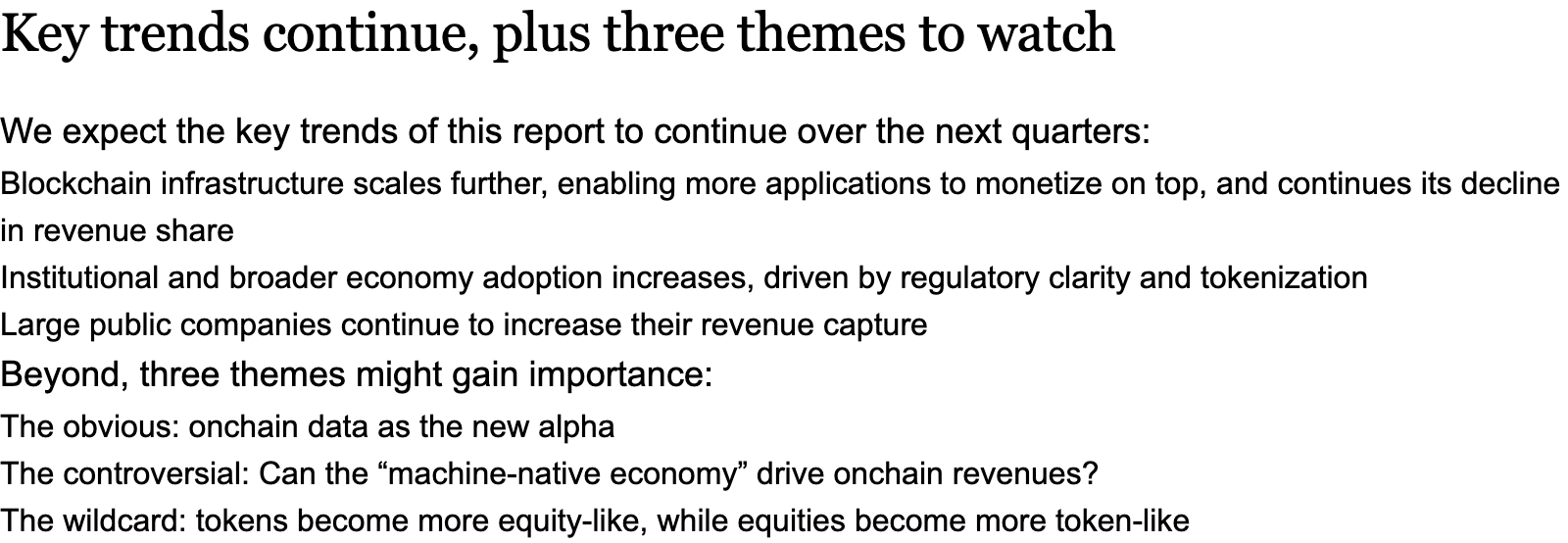
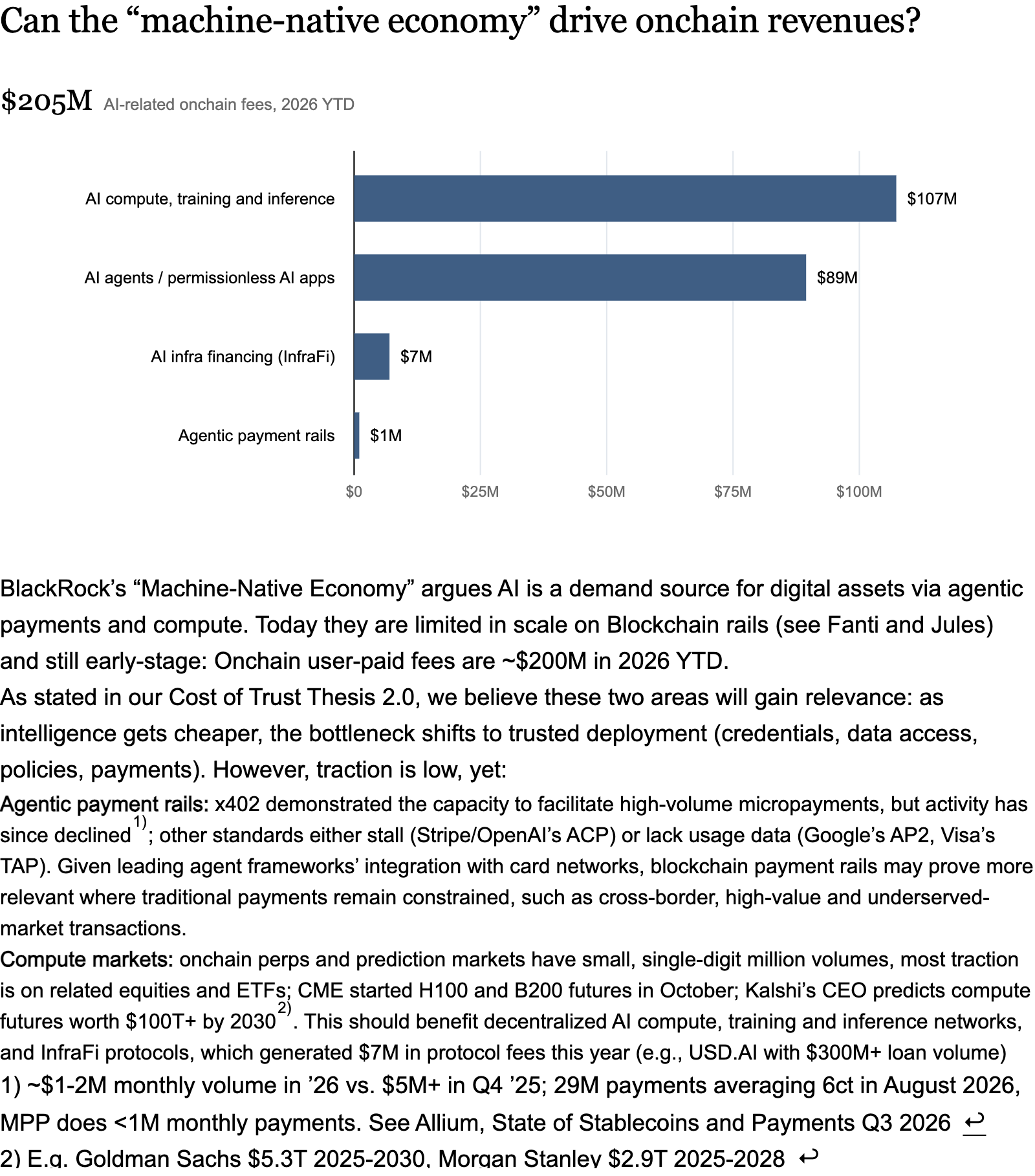
1kx expected further growth in institutional and real-economy revenue, but those expectations remained forecasts as of the original publication. Its reported $200 million in on-chain fees attributed to AI-related activity during the first three quarters of 2026 illustrates the same constraint: a potential use case is not yet evidence of large realized revenue.
Source: hellobtc.com (originally published 2026-10-30 20:42 UTC+8)