Historical research note: The original article by Pink Brains, translated by TechFlow, was published on November 9, 2026, at 19:16 China Standard Time. The figures below retain its reporting periods; they are not current measurements.
GPU-backed lending creates a valuation question for USD.AI’s CHIP token: how much of the interest paid by cloud operators becomes protocol revenue, and how much of that revenue reaches token buybacks? Loan volume alone cannot answer it.
The lending business
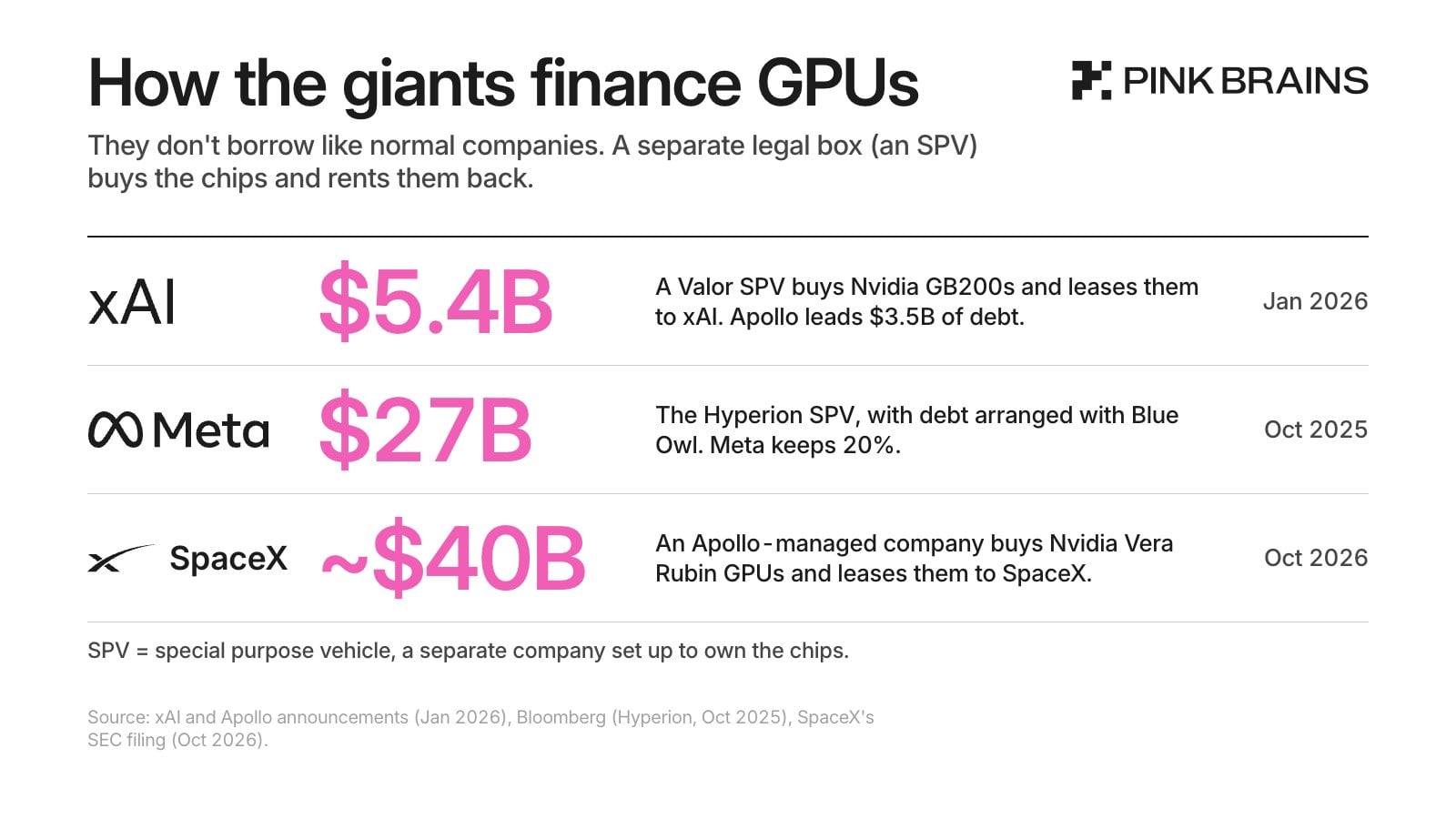
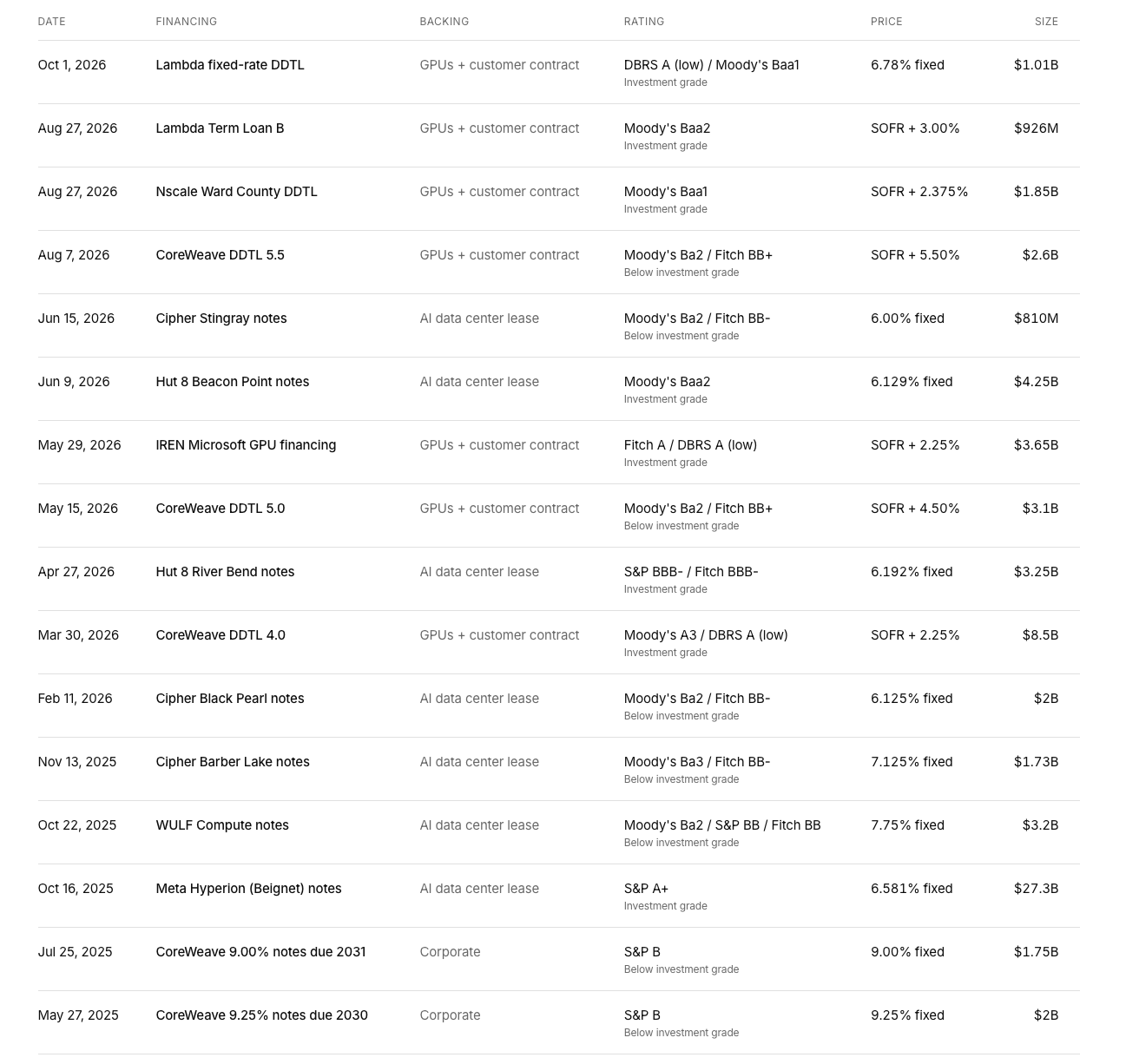
The source describes a financing gap between large GPU operators that can obtain bank credit and smaller operators for whom conventional financing may be costly or unavailable. Citing American Compute, it reports 110 publicly disclosed GPU and data-center financing transactions totaling $197 billion since 2023, with 92% of that funding raised in 2025 and 2026.
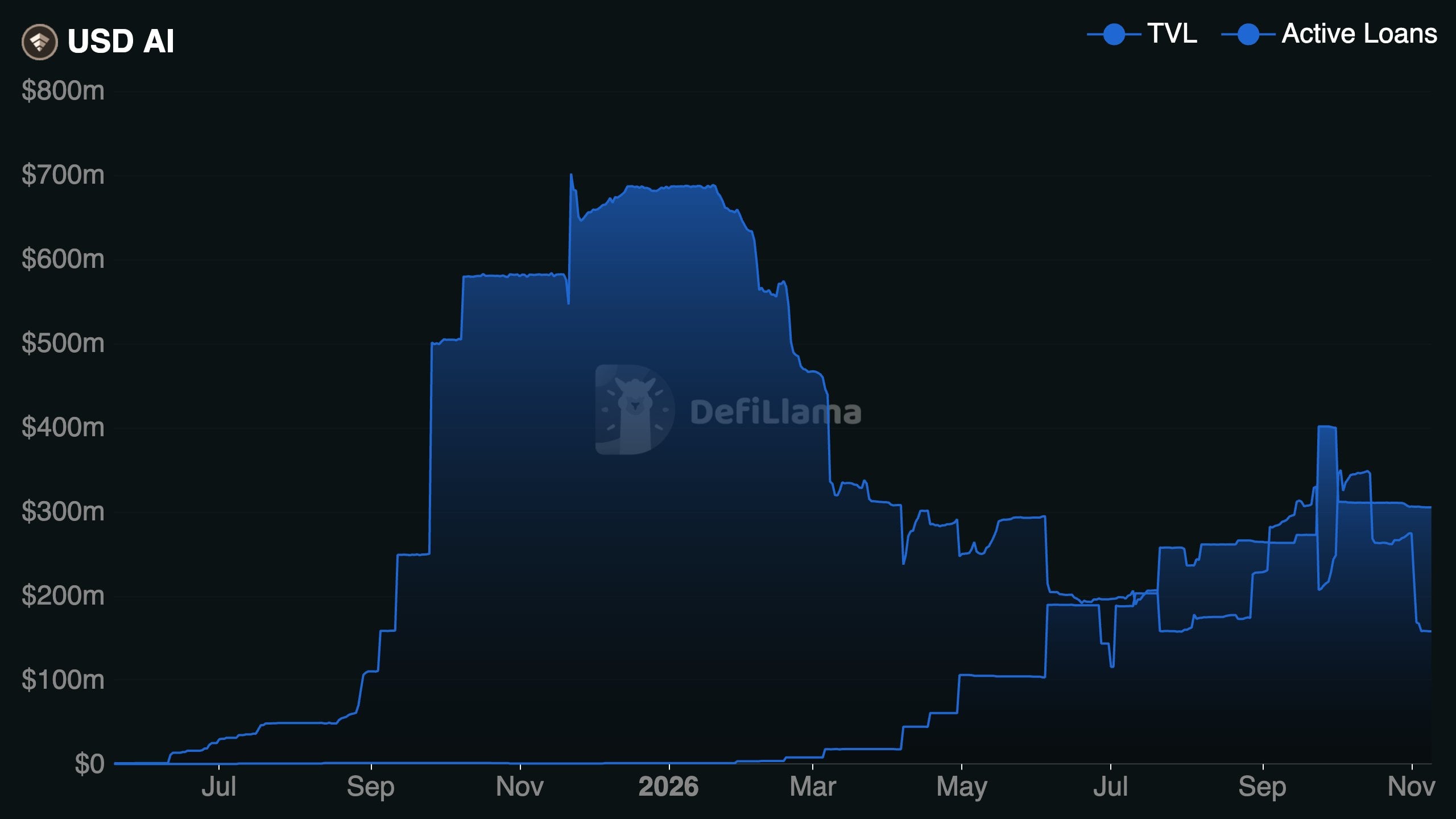
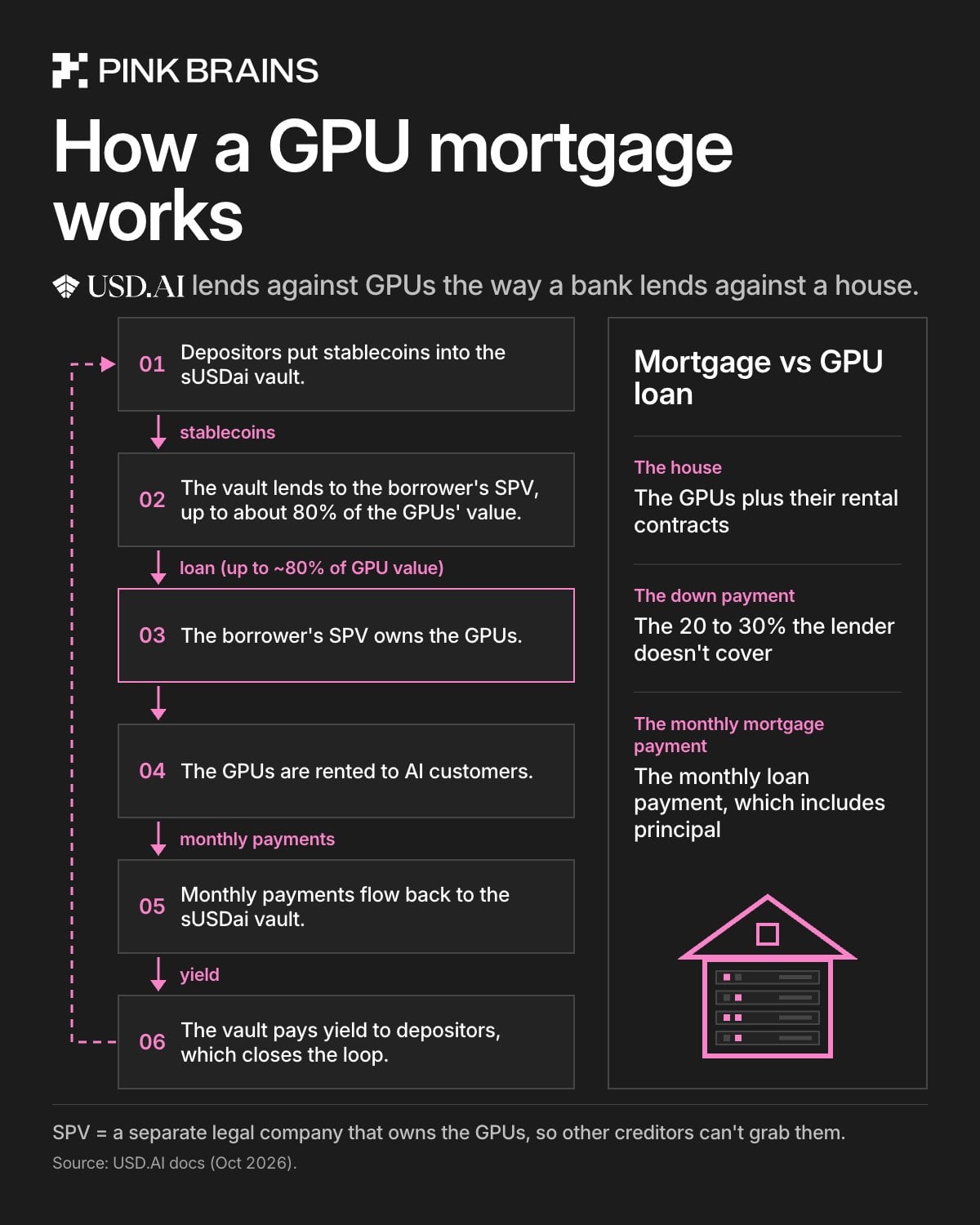
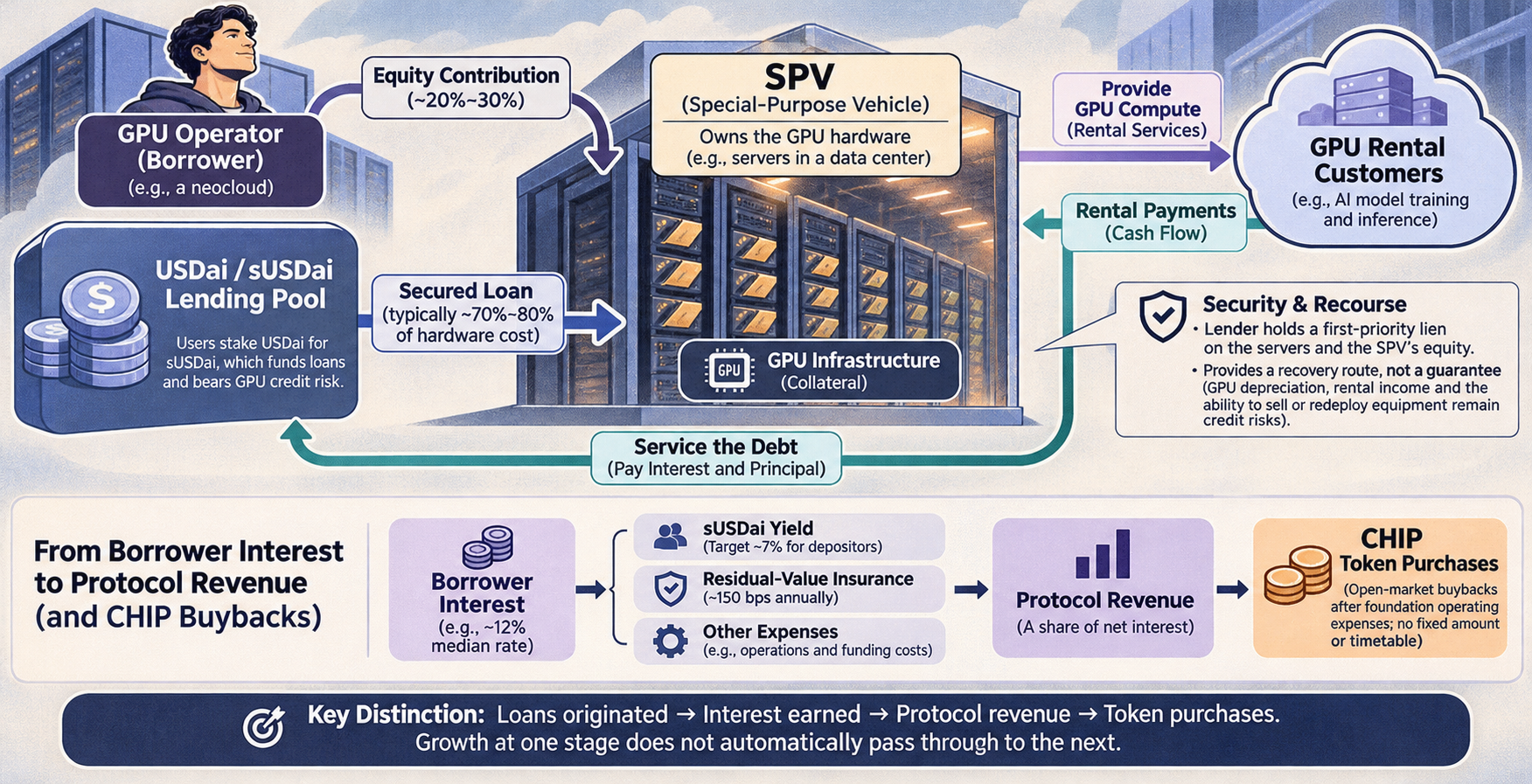
USD.AI lends against GPU infrastructure using special-purpose vehicles (SPVs) that hold the hardware. According to the article, loans typically cover 70%–80% of hardware purchase costs, with borrowers supplying the remainder. USD.AI holds a first-priority lien on the servers and the SPV’s equity. The structure provides a recovery route, not a guarantee: GPU depreciation, rental income and the ability to sell or redeploy equipment remain credit risks.
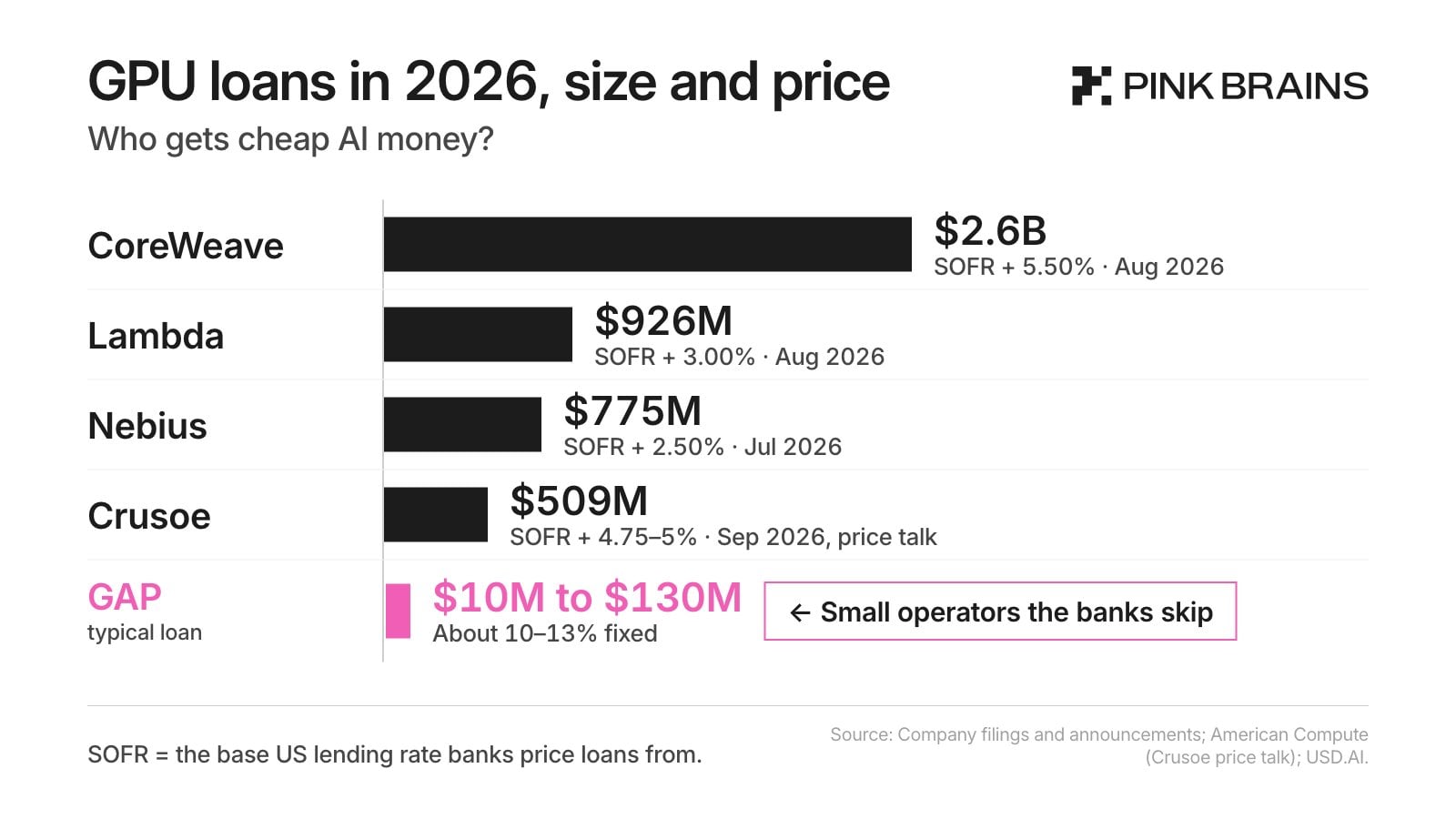
The article reports $531 million across 20 USD.AI loan originations. For 15 loans tracked from January through August 2026, executed rates ranged from 10% to 15%, with a 12% median. Those borrowing rates should not be mistaken for either protocol revenue or returns to CHIP holders.
From borrower interest to protocol revenue
Users can stake USDai for sUSDai, whose pool funds loans and bears GPU credit risk. The article reports a 7% target yield for the pool and a 6.53% annualized yield on November 1, before USD.AI added 127,927.66 USDai to bring it to 7%. Redemption requests are processed in 30-day batches, while loans generally last about three years. That schedule delays withdrawals; it does not eliminate the underlying maturity mismatch.
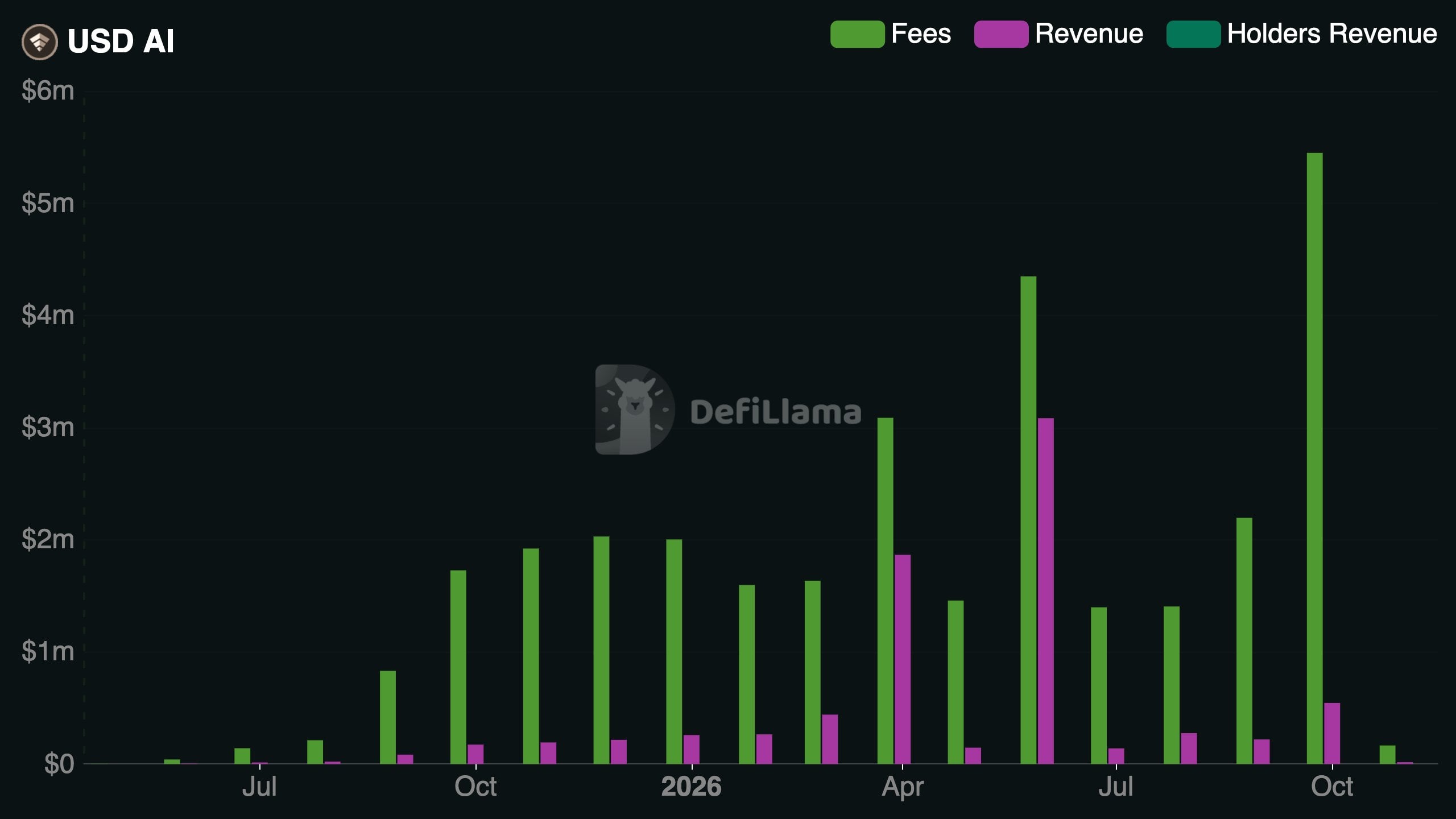
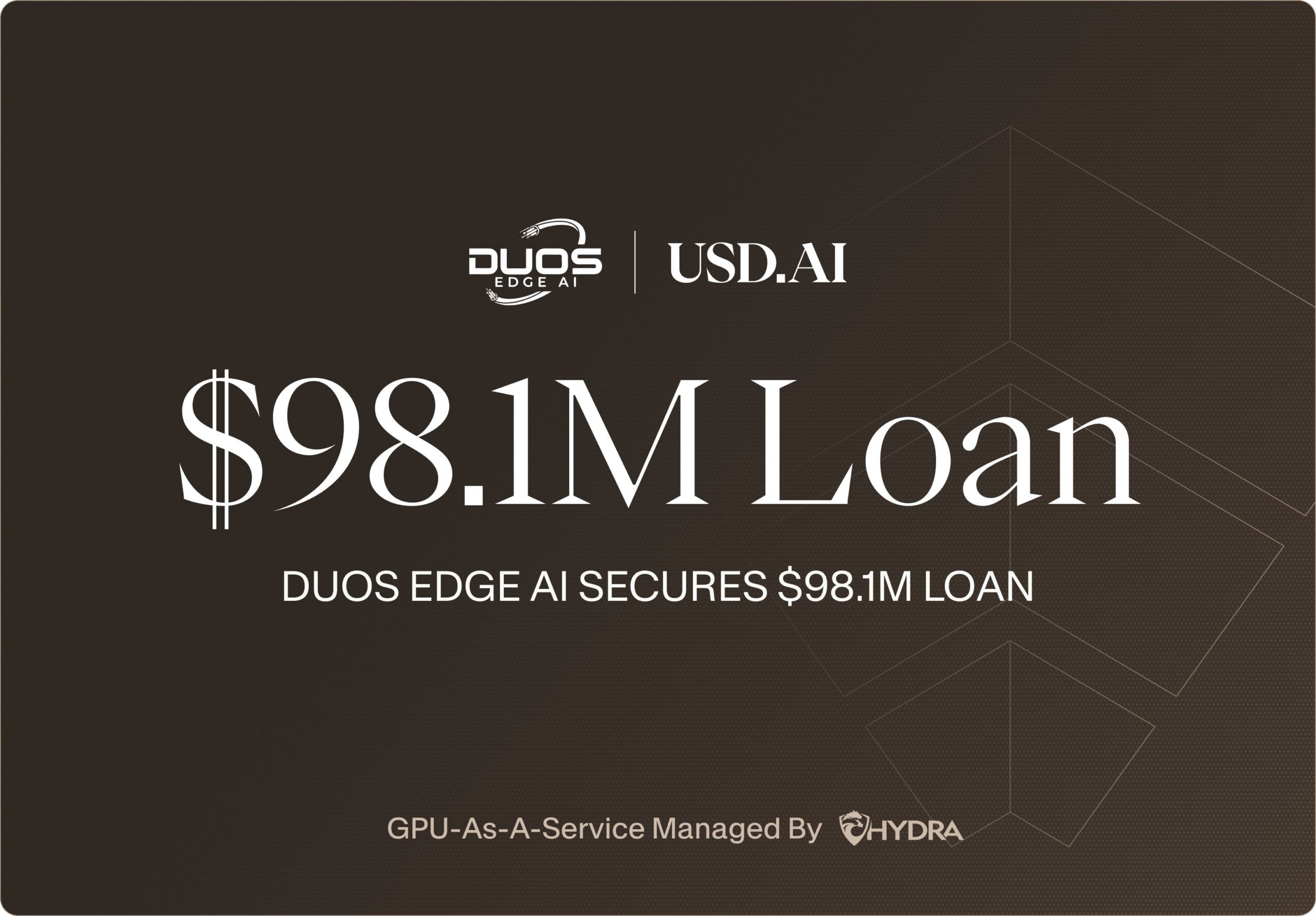
The reported difference between a roughly 12% median loan rate and a roughly 7% sUSDai yield is not wholly available for token buybacks. The article identifies a residual-value insurance charge of 150 basis points annually and a protocol share of net interest. Citing DefiLlama, it reports $4.87 million in total fees and $487,000 in protocol revenue for October, plus $24.75 million in gross revenue over the preceding year. These are different measures and periods, not interchangeable valuation inputs.
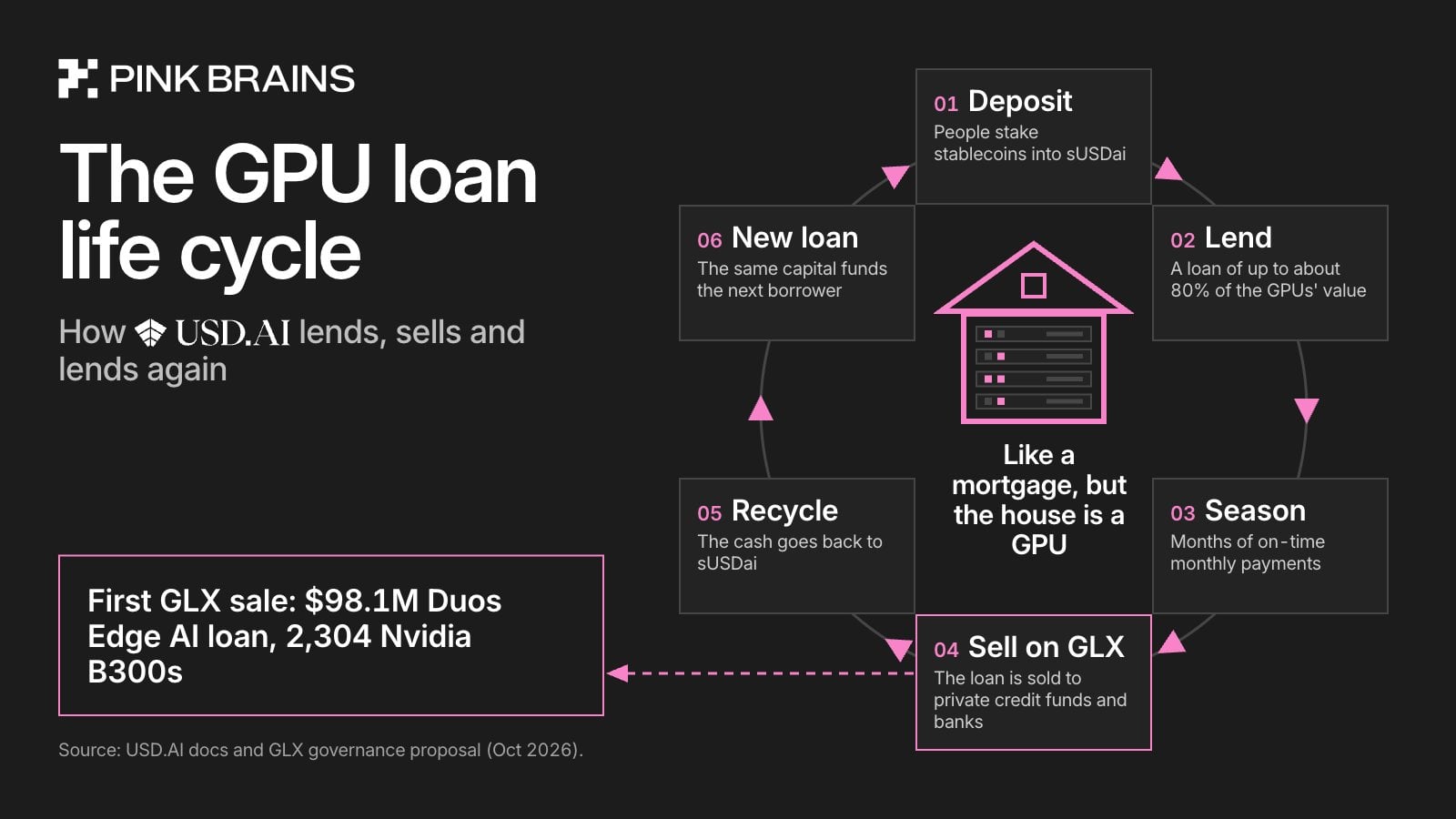
GLX, which the article says launched on October 1, offers a way to sell loans to outside buyers and recycle capital into new originations. It reports more than $200 million of GPU-backed assets circulated through GLX. Selling a loan can release funds for further lending, but also transfers its future interest payments. The source describes proposed governance terms for secondary sales, including a minimum sale price at par under normal conditions; those terms should not be treated as enacted rules.
The CHIP link—and its limits
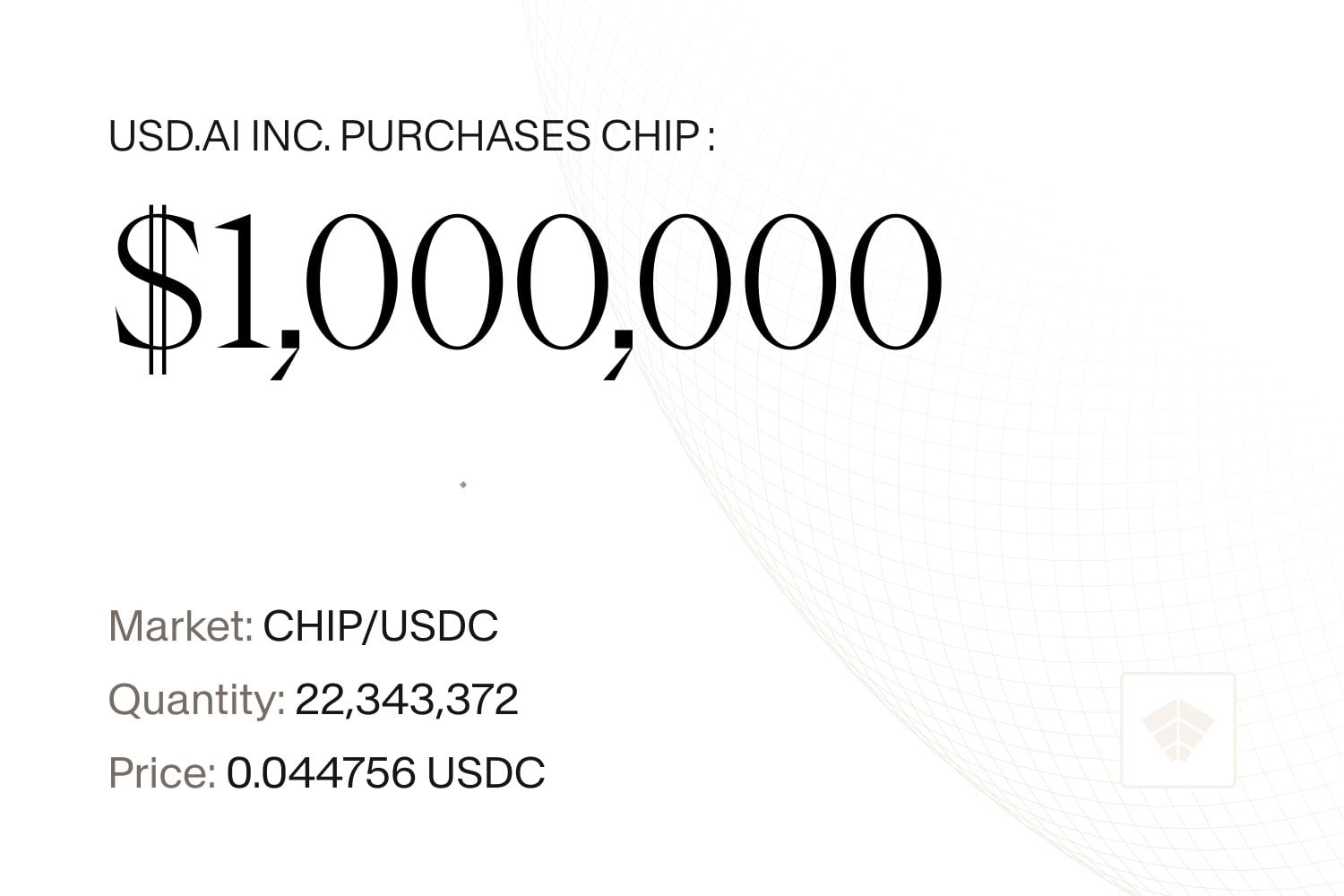
The article says USD.AI had begun routing sUSDai net-interest-spread income to open-market CHIP purchases after the CHIP Foundation’s basic operating expenses. It reports no fixed purchase amount or timetable. Separately, USD.AI Inc bought 22,343,372 CHIP for $1 million USDC on October 26 at an average price of $0.044756. That company purchase is distinct from a recurring protocol-funded buyback.
Using approximately 2 billion circulating tokens and a $0.0448 price on October 26, the article estimates a circulating market value near $90 million. Its estimate that annual buybacks could equal about 2.5% of circulating supply using past-year figures—or 6.5% using an annualized recent business pace—is conditional. It depends on lending activity, realized net interest, expenses and purchases actually made; it is not a fair-value calculation or a forecast of CHIP’s price.
The central distinction is between loans originated, interest earned, protocol revenue and token purchases. Growth at one stage does not automatically pass through to the next, particularly when hardware values, borrower credit and pool liquidity are uncertain.
Source: techflowpost.com (originally published 2026-11-09 19:16 UTC+8)