
Historical report: originally published November 6, 2026, at 17:24 (UTC+8). The launch dates and project plans below reflect what was reported then, not a current status update.
Elysium, a Kinetiq-built chain designed for applications around Hyperliquid, was scheduled to launch on Monday, November 9. For valuation purposes, the question was not simply whether its launchpads could generate trading volume. It was which fees they could retain, how those fees would be allocated, and whether the proposed mechanisms would create demand for KNTQ, HYPE or MONTRA.
The article reported that Ascend’s first-day test produced approximately $5.97 million in trading volume across 47,254 transactions, with 873 tokens deployed and $34,808 in protocol fees. Those are test-period activity figures—not a forecast of recurring revenue. It also reported that Montra had opened pre-trading and had two tokens with market capitalizations above $1 million at the time.
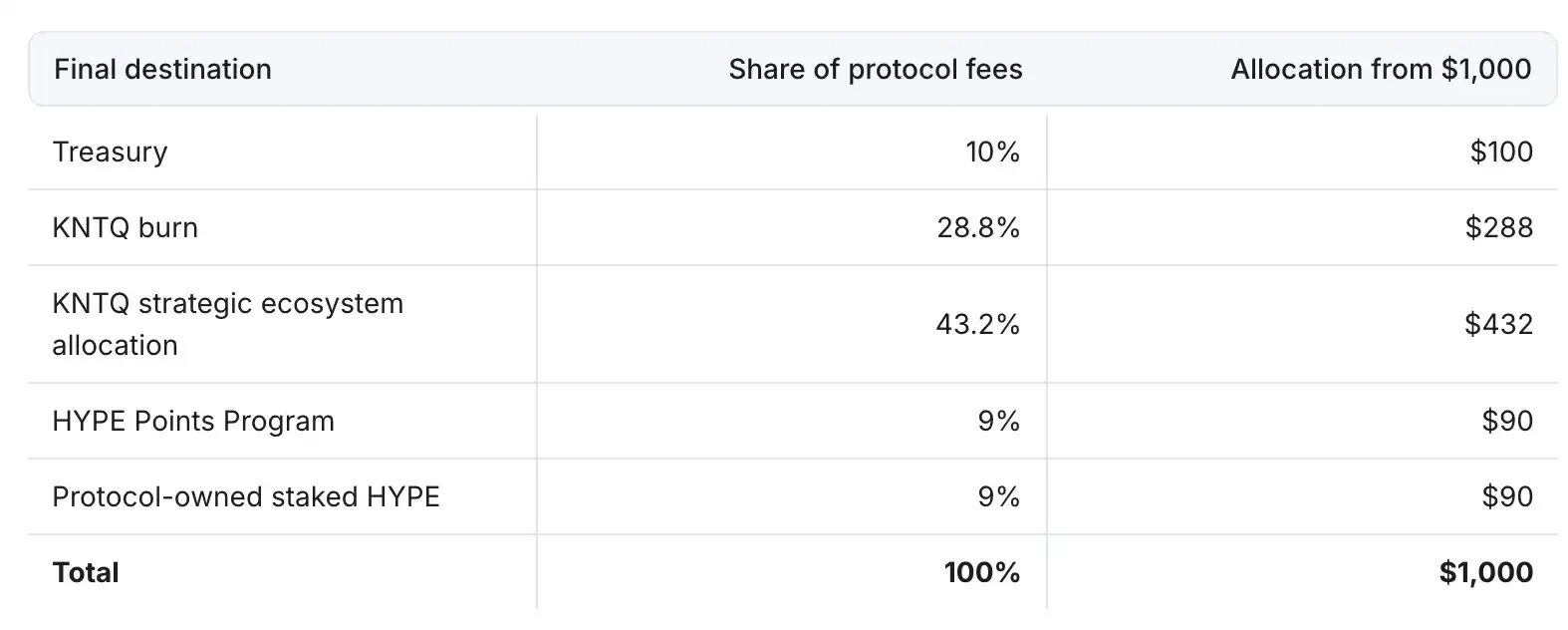
The proposed fee paths
Ascend said it would use KNTQ rather than issue a separate platform token. Under the allocation model described in its official documentation, each $100 of protocol fees would send $10 to a treasury, $72 toward KNTQ purchases and $18 toward HYPE purchases. Of the KNTQ bought, 40% would be burned; the remaining 60% would support ecosystem-token buybacks, an Ascend points program and protocol-owned liquidity. Purchased HYPE would be used for participant rewards and staking. The article’s prose does not quantify the split between those two HYPE uses.
These are fee-allocation rules, not a direct measure of token-holder earnings. KNTQ purchases and burns may affect token supply and demand, while treasury allocations, liquidity support and rewards serve different purposes. The reported test fees alone cannot establish the size or durability of any of those flows.
According to Kinetiq co-founder Omnia, Elysium would use 50% of sequencer revenue to buy back KNTQ. The article also said Ascend planned to put its share of Elysium sequencer revenue toward builder support, including grants and preparation for HyperCore spot listings. It did not provide a sequencer-revenue figure from which to value either arrangement.
Montra proposed a different structure: it retained its own protocol token, MONTRA. Its token-creation process was built on Uniswap v4 and allowed creators to direct their fee income to a team wallet, multiple recipients or token holders. Of Montra’s protocol fee share, its described buyback design allocated 70% to purchasing and burning MONTRA and 30% to its treasury. Montra also planned to allocate 25% of MONTRA’s total supply to an airdrop across five categories, each representing 5% of supply. That distribution plan is distinct from protocol revenue.
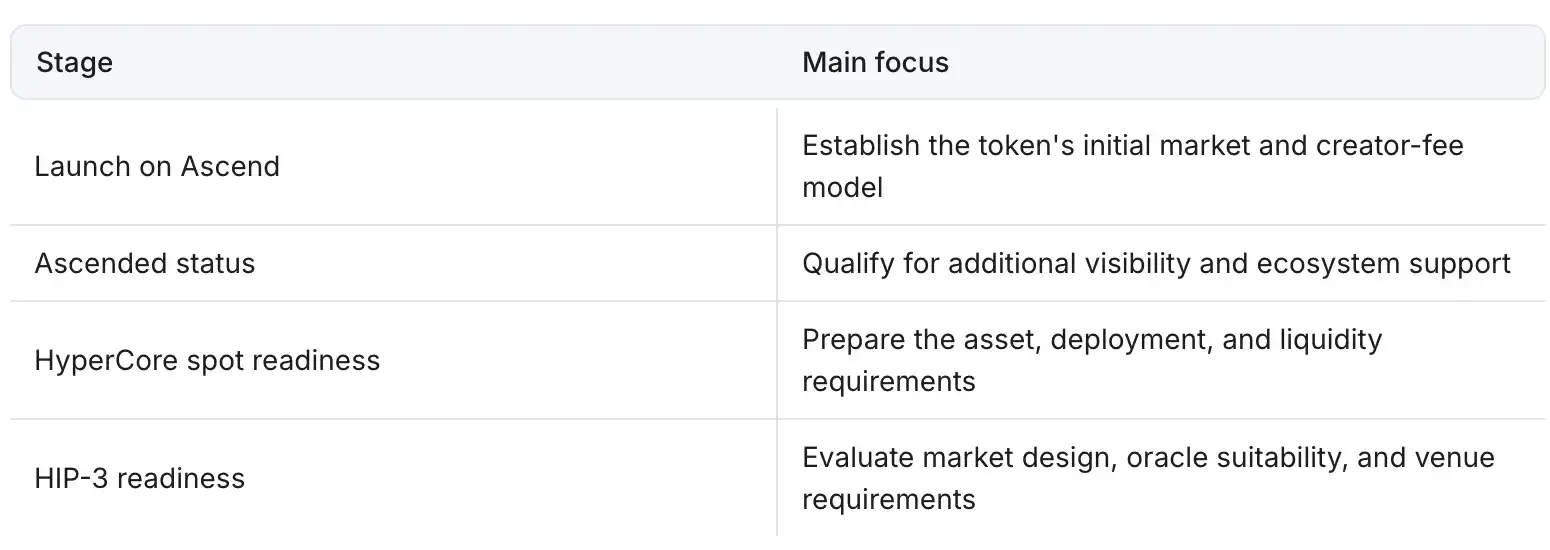
What remained unproven
Omnia described a path in which projects could build trading activity and liquidity on Elysium before seeking HyperCore spot listings and, potentially, HIP-3 perpetual markets. Ascend’s project-support system was intended to help eligible projects prepare for that path. Neither eligibility nor preparation guaranteed a listing.
As reported, Elysium aimed to provide more execution capacity for applications linked to Hyperliquid. Omnia said it would use the Arbitrum technology stack and Conduit’s G2 sequencer, target 100-millisecond blocks, charge gas in HYPE and settle to HyperEVM. Those design choices explain the proposed setting for the launchpads; they do not, on their own, establish sustainable trading demand or a token valuation.
Source: odaily.news (originally published 2026-11-06 17:24 UTC+8)