Historical report: the underlying article was published by 深潮 TechFlow on November 10, 2026, at 20:53 (UTC+8). The figures and plans below reflect that reporting date.
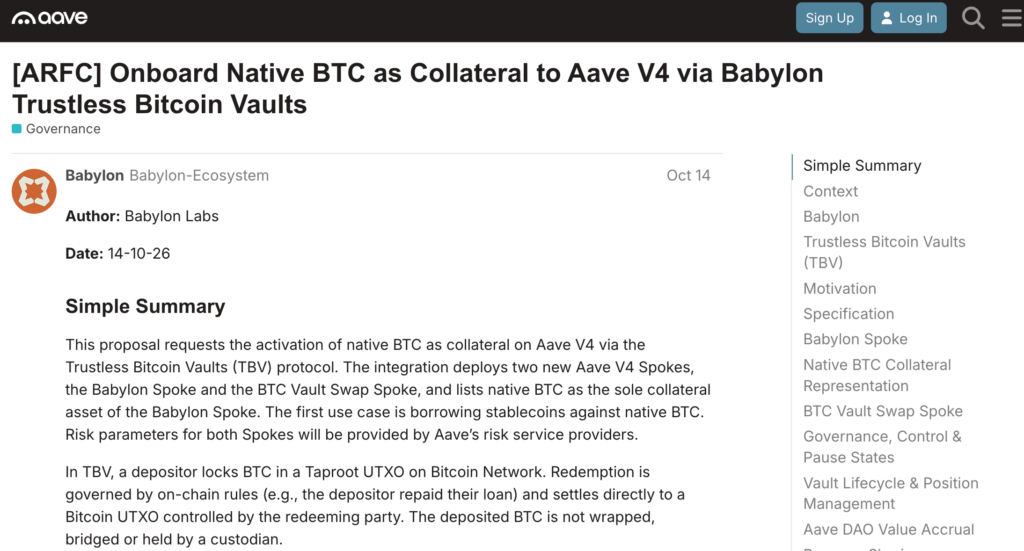
Aave DAO voted unanimously on November 9 to advance an ARFC proposal for using native bitcoin as collateral in Aave V4 through Babylon’s Trustless Bitcoin Vaults. This was not final approval for deployment: the proposal still had to proceed to an AIP on-chain execution vote. Its stated mainnet target was the end of 2026, with participation and size initially limited.
What the collateral would represent
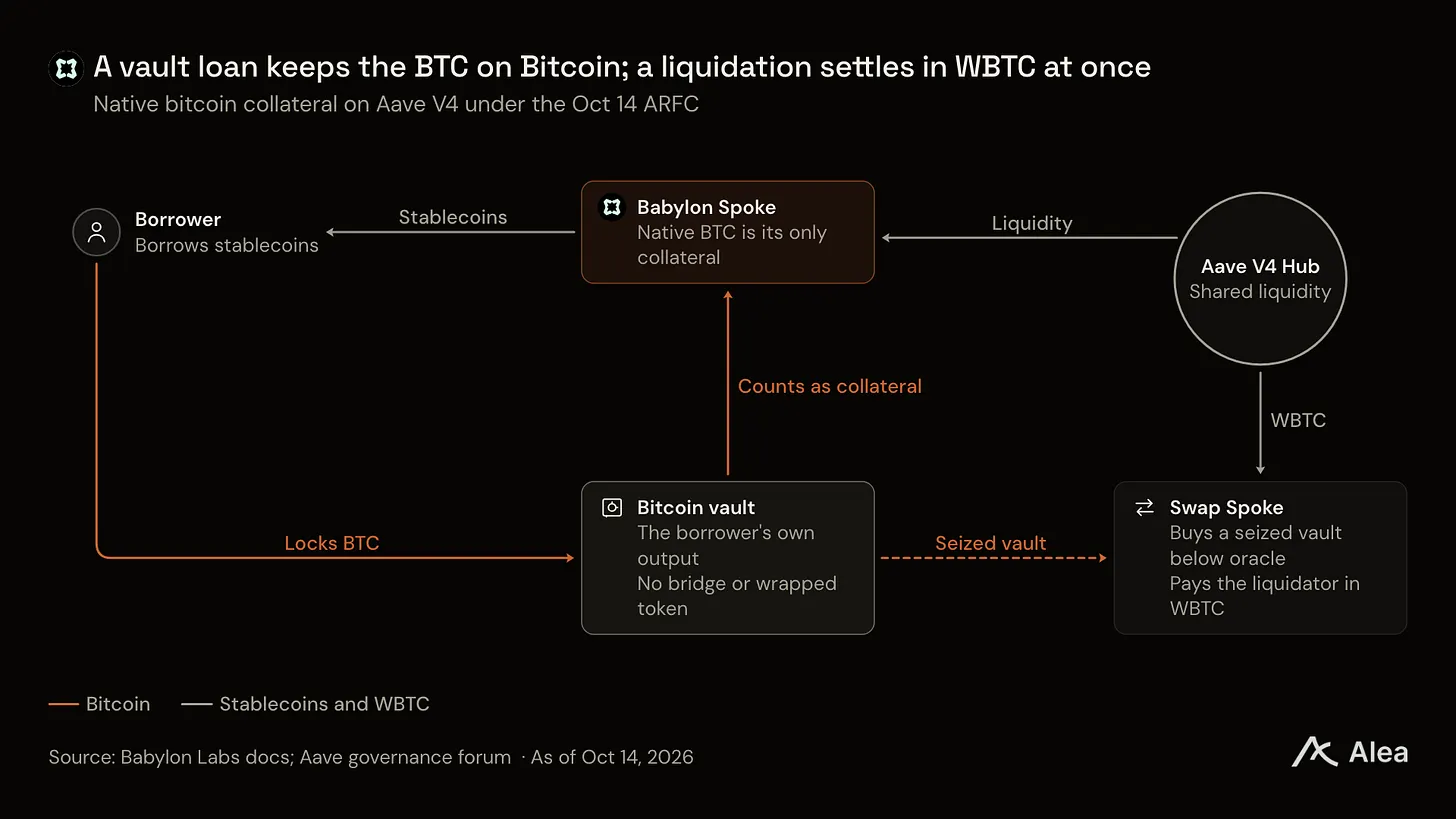
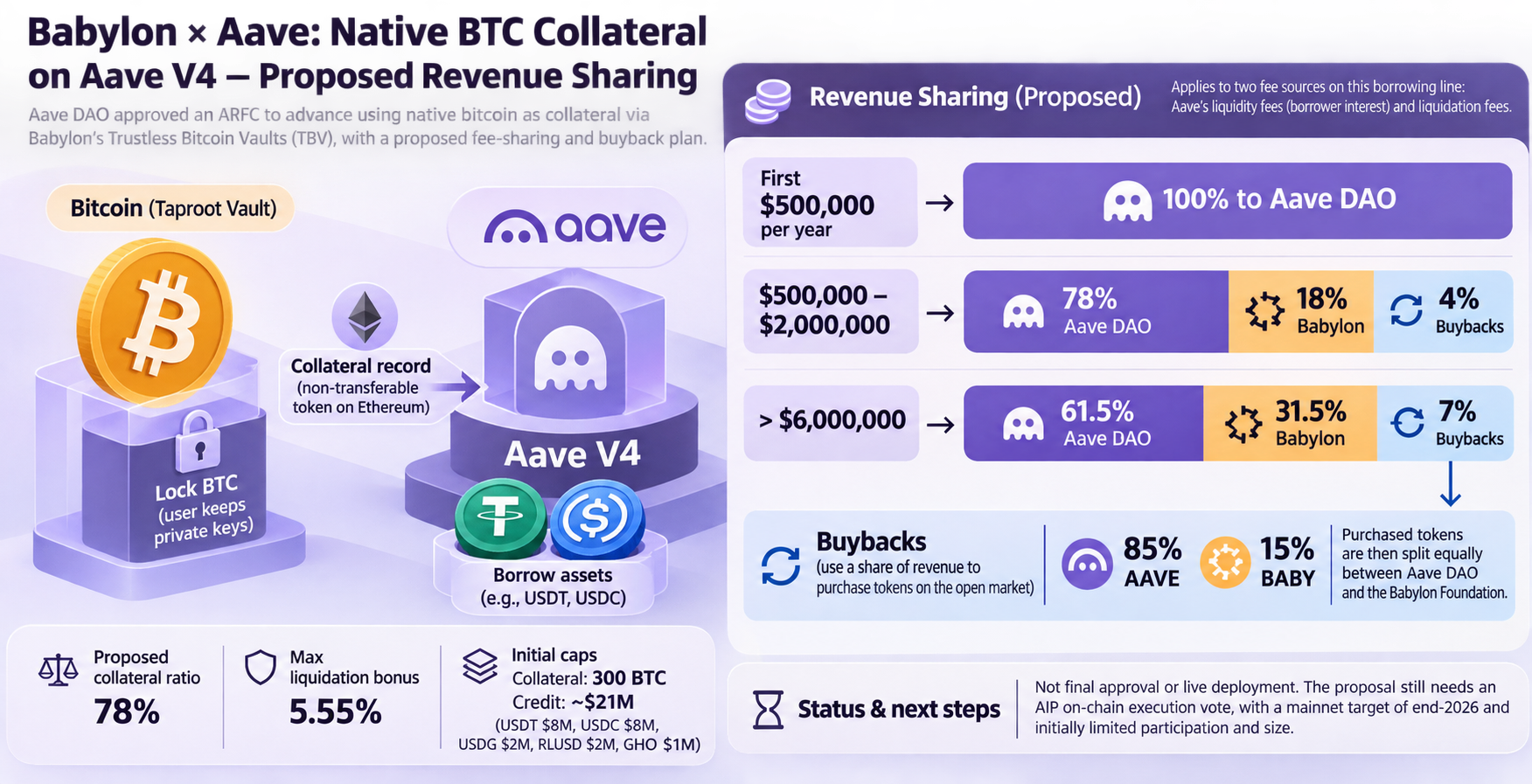
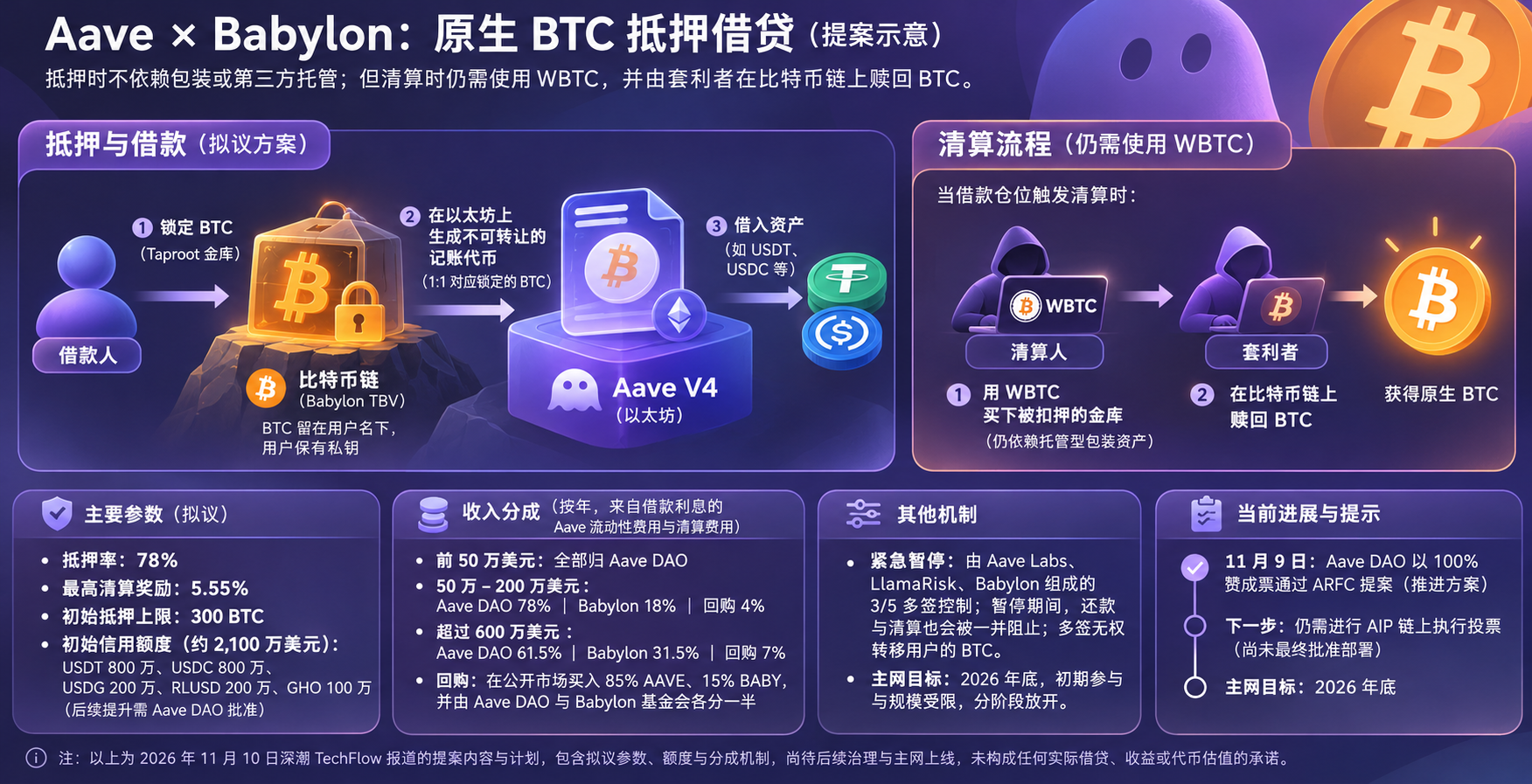
Under the proposal described on Aave’s governance forum, a borrower would lock BTC in a Taproot vault on Bitcoin while retaining control of their private keys. A non-transferable accounting token on Ethereum, matching the amount of locked BTC, would serve as the Aave V4 collateral record. Borrowers could then access assets including USDT and USDC without first wrapping their BTC or transferring it to a third-party custodian.
LlamaRisk proposed a 78% collateral ratio and a maximum 5.55% liquidation bonus for native BTC. These are proposed risk parameters, not evidence of live borrowing activity. The initial plan capped native-BTC collateral at 300 BTC and allocated about $21 million in credit across five assets: $8 million each for USDT and USDC, $2 million each for USDG and RLUSD, and $1 million for GHO. Later increases would require Aave DAO approval.
The revenue path—and its limits
The proposed sharing formula covers two fee sources on this borrowing line: Aave’s liquidity fees from borrower interest and liquidation fees. Aave DAO would receive the first $500,000 each year. On revenue between $500,000 and $2 million, the allocation would be 78% to Aave DAO, 18% to Babylon and 4% to token buybacks. For revenue above $6 million, the respective shares would be 61.5%, 31.5% and 7%.
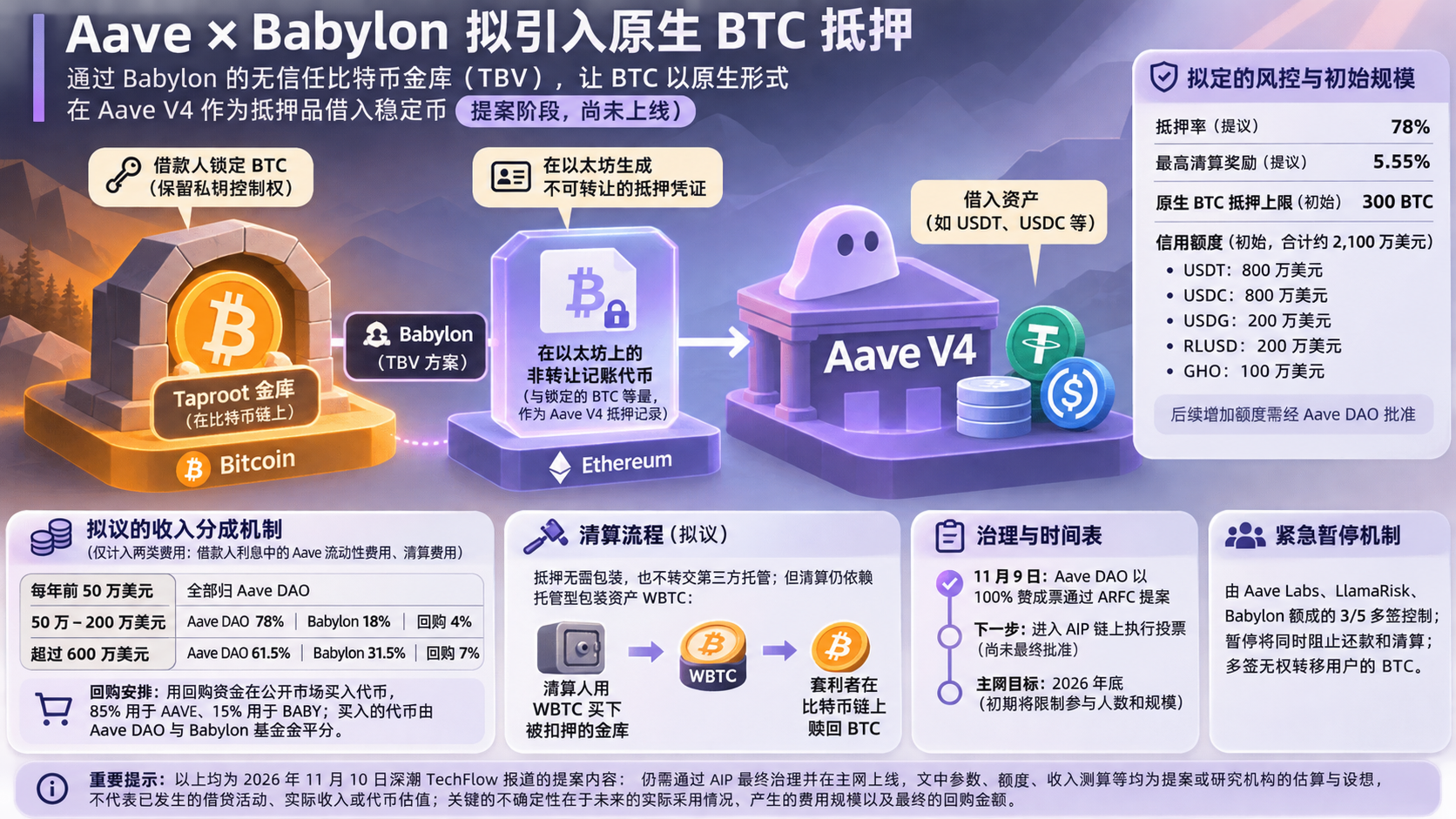
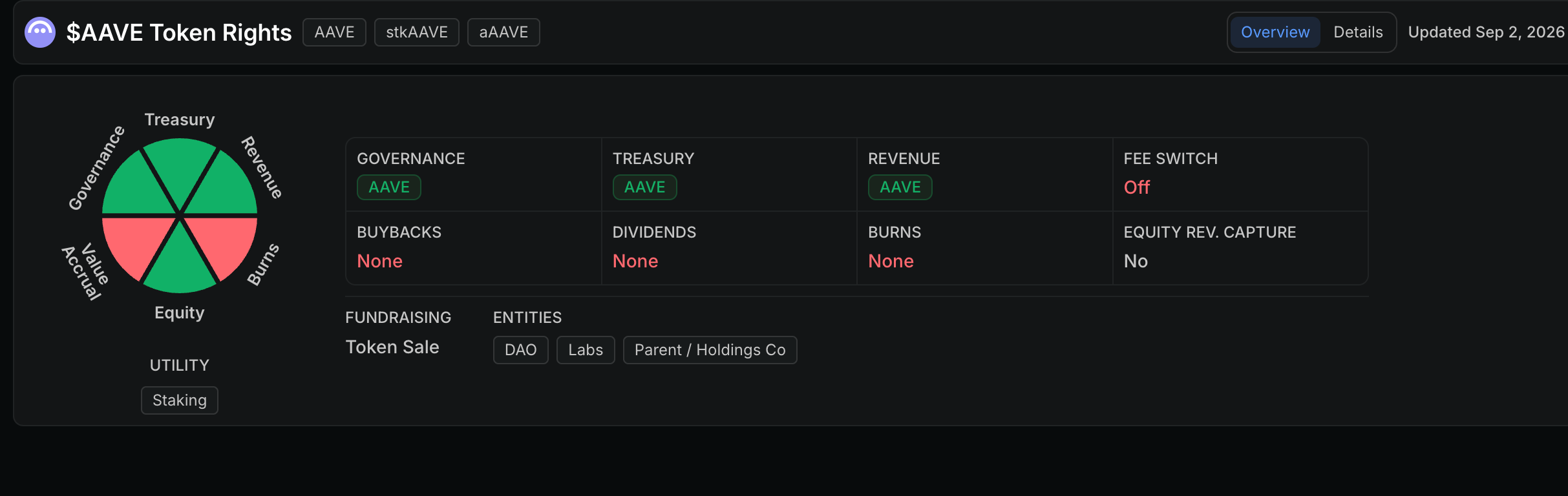
Buyback funds would purchase 85% AAVE and 15% BABY on the open market; the purchased tokens would then be split equally between Aave DAO and the Babylon Foundation. Alea Research estimated that, if annual revenue reached $10 million, roughly $6.92 million would go to Aave DAO, $2.52 million to Babylon and $560,000 to buybacks, including about $84,000 of BABY purchases. That is a scenario, not a revenue forecast or a token valuation. The source also notes that AAVE’s existing annual buyback budget had been reduced from $50 million to $30 million, while Alea Research estimated roughly 1.58 million new BABY tokens per day—worth about $7 million annually at third-quarter prices.
There is a further distinction between avoiding wrapped BTC when posting collateral and avoiding it throughout the system. The proposed liquidation process would have liquidators buy seized vaults with WBTC before arbitrageurs redeem the BTC on Bitcoin. Liquidation would therefore still depend on a custodial wrapped asset. The proposal also assigned emergency pause authority to a 3-of-5 multisignature arrangement involving Aave Labs, LlamaRisk and Babylon; a pause would block repayments and liquidations as well, though the multisignature could not transfer users’ BTC.
For valuation, the unanswered inputs were adoption, fees actually generated and the resulting buyback amounts—not the existence of a proposed revenue route alone. As of the original report, both final governance approval and mainnet operation remained ahead.
Source: techflowpost.com (originally published 2026-11-10 20:53 UTC+8)