Historical report: PANews published the original article on December 15, 2025, at 14:47 (UTC+8). The figures and proposals below reflect what the article reported at that time, not current Aave economics.
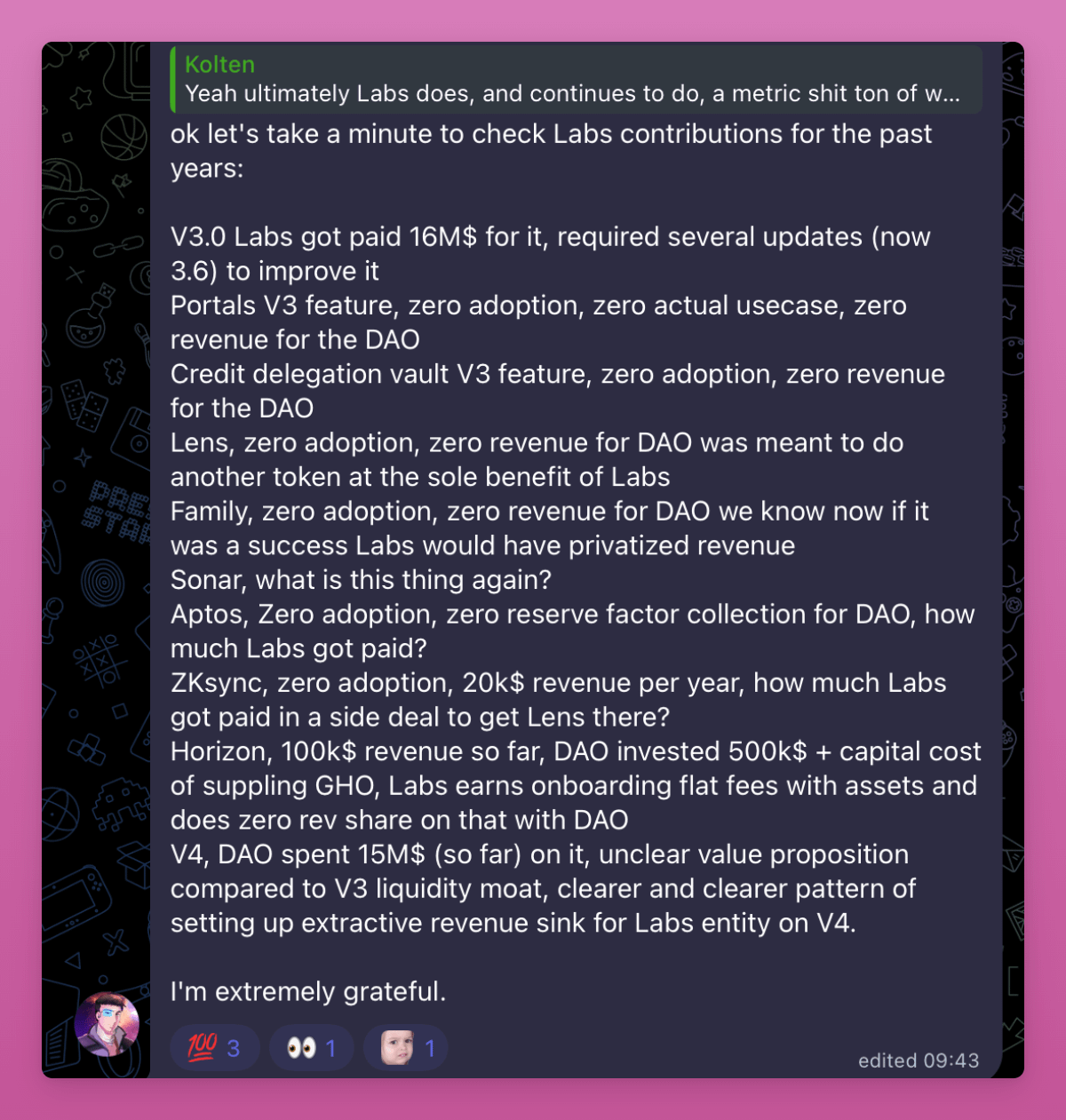
Aave’s governance dispute centers on a valuation question: when activity takes place through an Aave-branded product, which revenue reaches the DAO, and what—if anything—accrues to AAVE holders? The distinction matters because front-end fees, protocol revenue and token-holder value are not interchangeable.
The swap-fee dispute
On December 4, Aave Labs changed the default swap integration on its aave.com interface from ParaSwap to CoWSwap. The article says referral fees and positive-slippage surplus from the previous arrangement had flowed to the Aave DAO treasury. Aave documentation cited in the article put fees under the new integration at approximately 15–25 basis points.
Aave governance participant EzR3aL investigated the fee destination and concluded that the fees were going to an address controlled by Aave Labs rather than the DAO treasury. EzR3aL estimated that, if $200,000 per week were redirected, the DAO would forgo at least $10 million a year. That is a conditional estimate, not a measured annual loss.
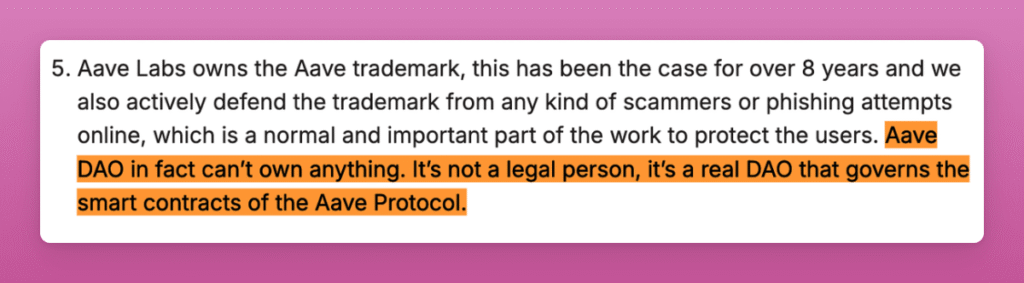
Aave Labs drew a boundary between the protocol and its interface. In its forum response, it said it operates the front end independently of protocol and DAO governance and considers the interface a product, not a protocol component. Aave founder Stani.eth said the earlier payments to the DAO had been a decision by Labs; the money could instead have been returned to users.
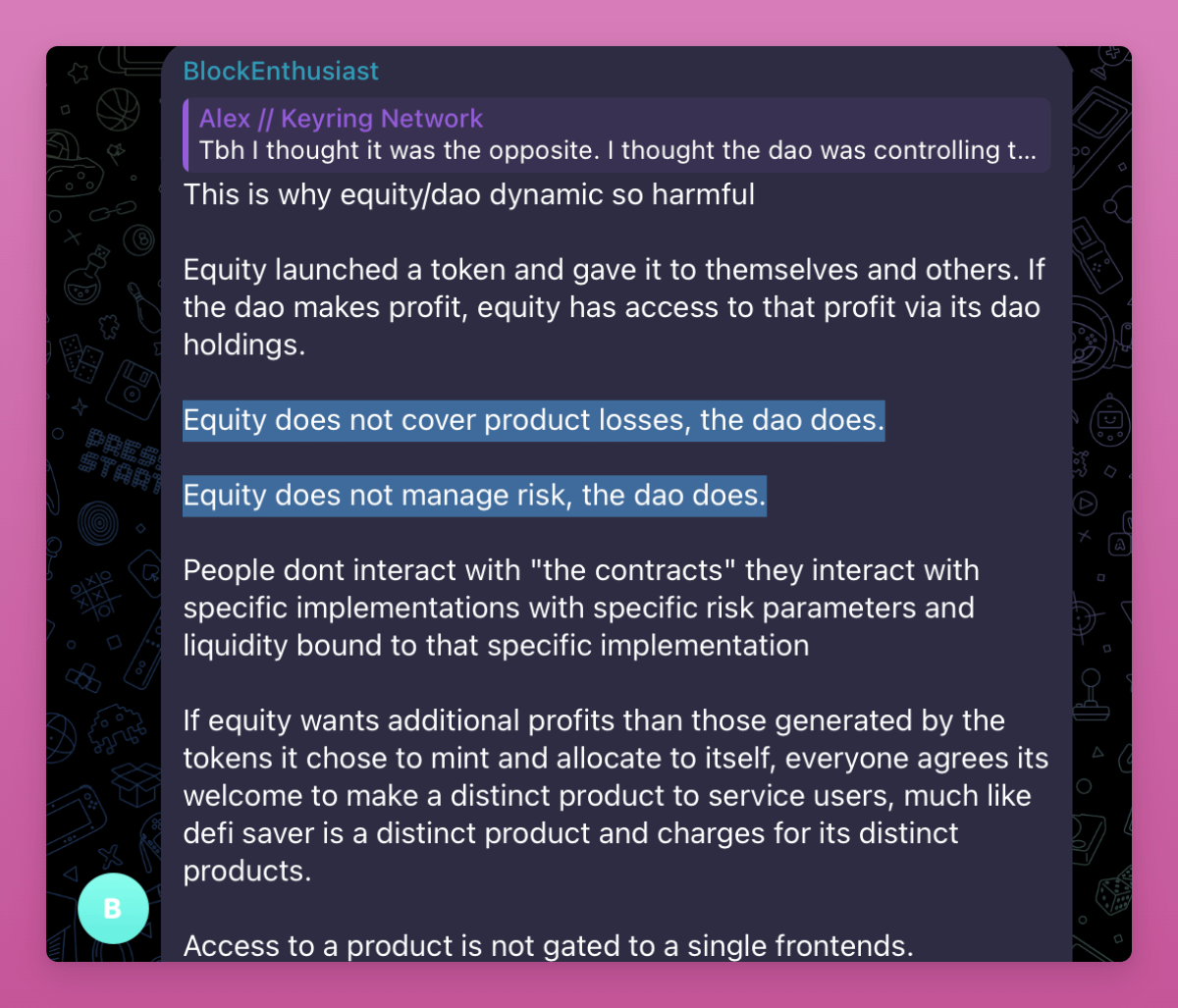
ACI founder Marc Zeller disputed the implications of that boundary. He argued that DAO-paid service providers owe duties to the DAO and AAVE holders, and said routing decisions could cost the DAO revenue. These are competing positions about control and economic entitlement, not an established finding that the DAO owns all front-end income.
Why other products entered the argument
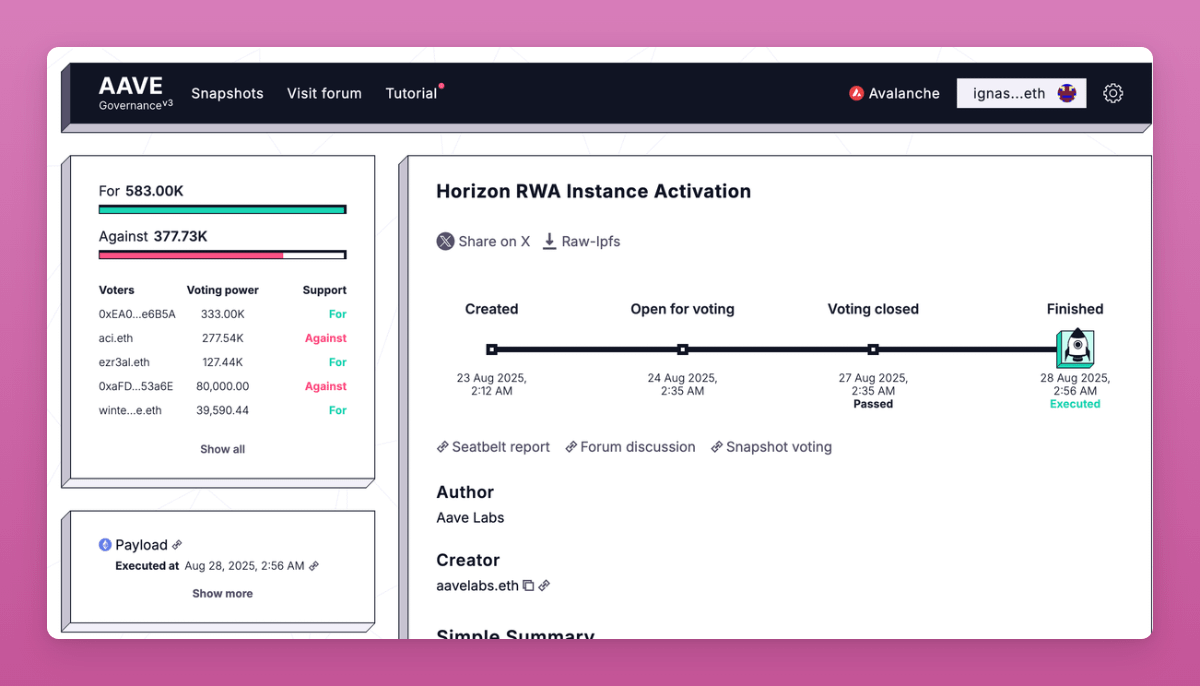
The article connected the swap dispute to Horizon, Aave Labs’ RWA-focused deployment. It says an initial proposal for a separate token was dropped after opposition, while Horizon subsequently launched despite concerns over the division of responsibilities between Labs and the DAO. Citing figures attributed to Zeller, the article reported roughly $100,000 in Horizon gross revenue against $500,000 in DAO incentives—a roughly $400,000 gap between those two figures, before other costs or benefits. Zeller also raised concerns about the economics of GHO deployed to Horizon. The supplied article does not establish a comprehensive net-return calculation.
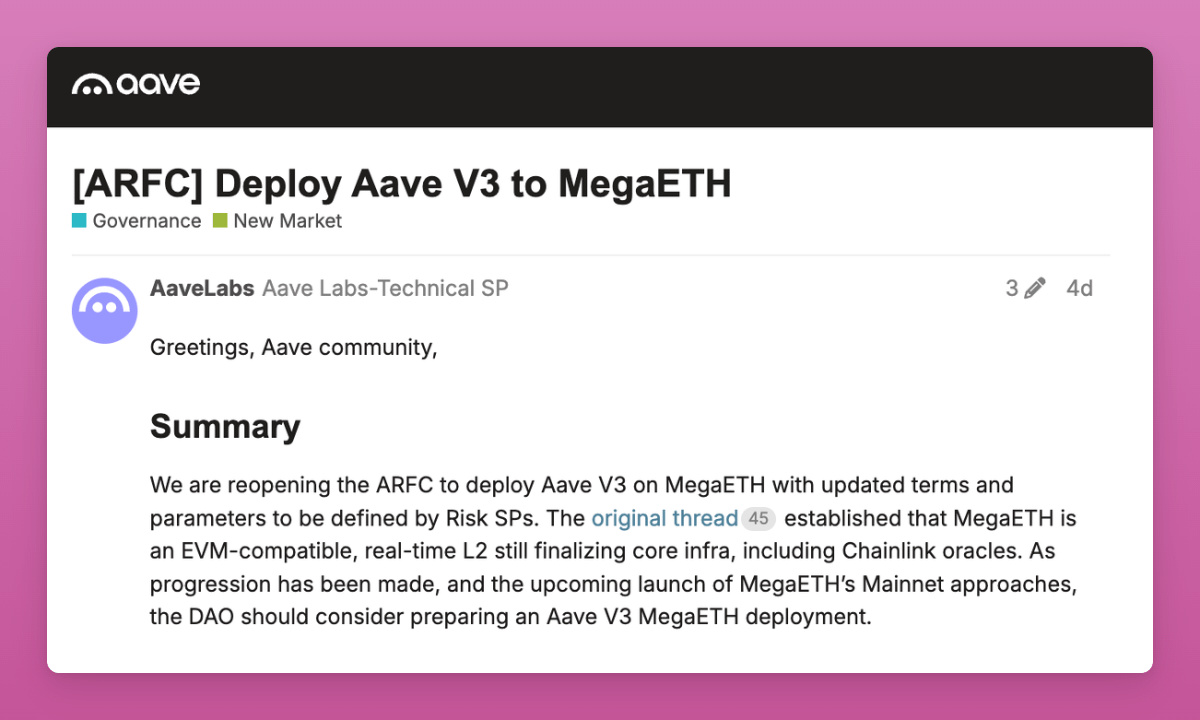
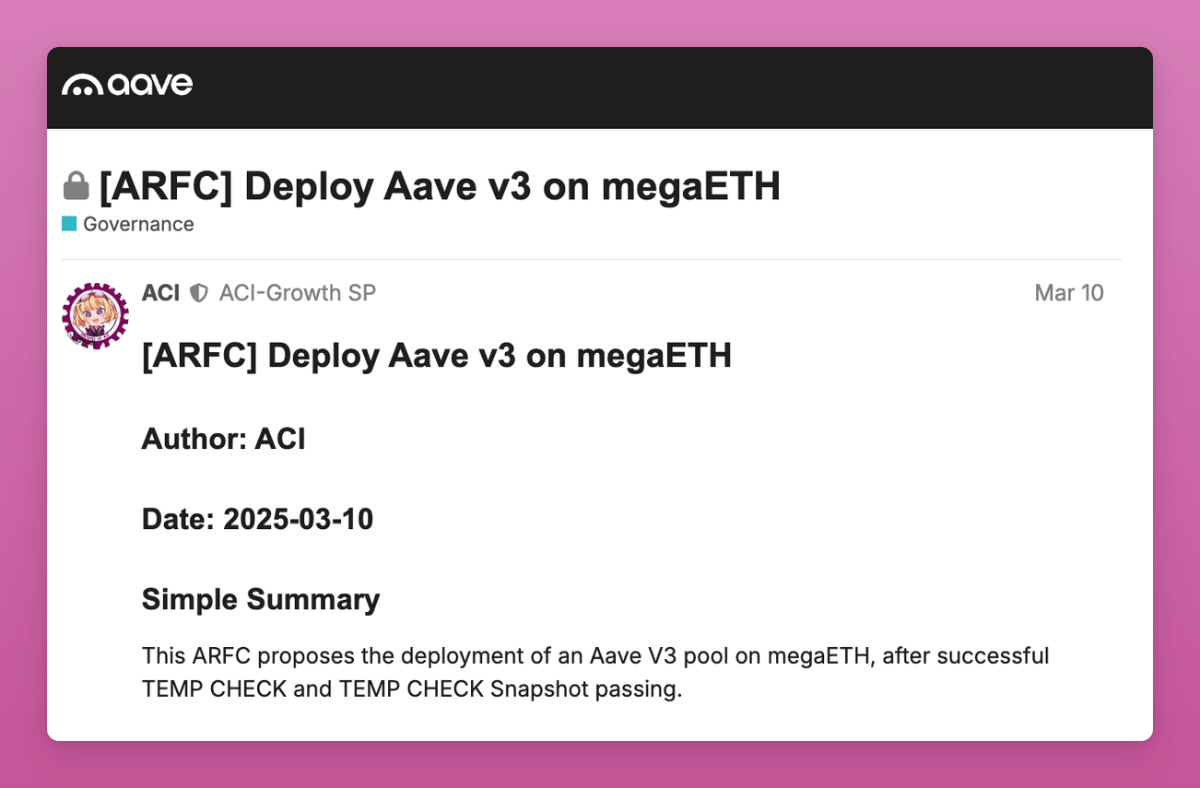
A separate proposal to deploy Aave V3 on MegaETH said Aave Labs would receive 30 million MegaETH points, which might be distributed as incentives under a DAO go-to-market strategy. The article did not say that distribution had occurred. Zeller said ACI had already proposed a MegaETH deployment and objected to how Labs advanced its proposal while that discussion was ongoing.
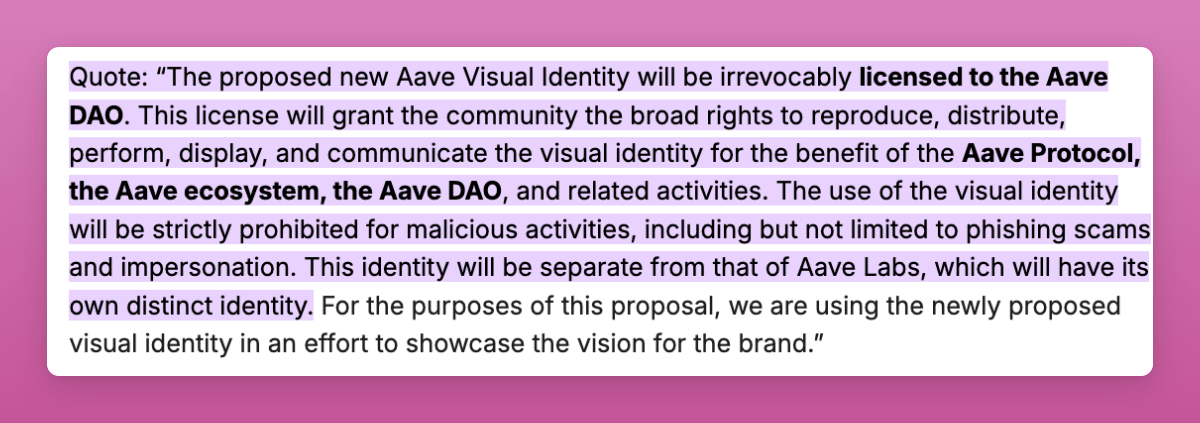
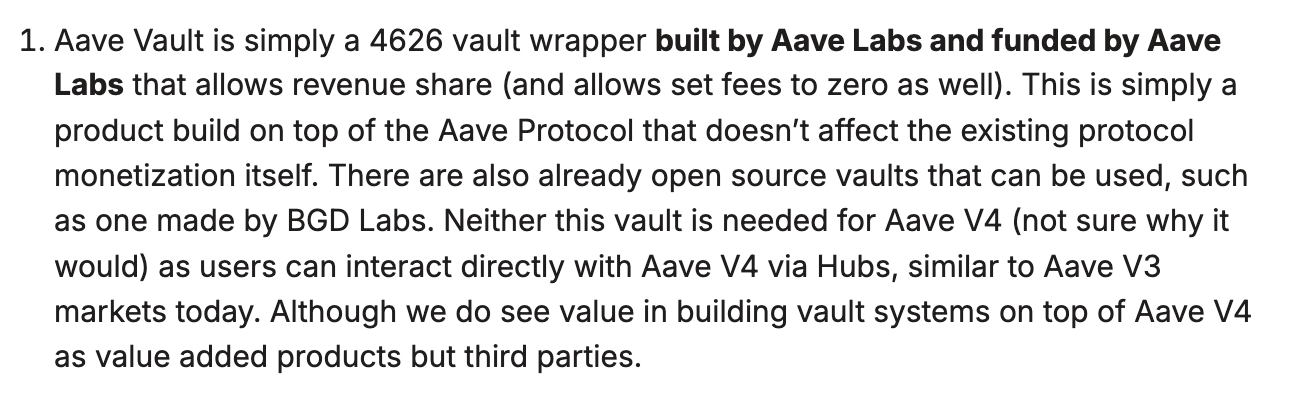
The article also examined Aave Labs’ ERC-4626 vault wrappers. Labs described them as optional products built and funded by Labs, rather than required protocol components. The author’s concern was forward-looking: if such a product became the default route into Aave V4, fees at that product layer could matter even where users remained able to access the underlying protocol directly.
The valuation limit
None of these figures, on its own, values AAVE. The reported swap fees concern an interface; the Horizon comparison covers selected revenue and incentive figures; and the MegaETH points were part of a proposal. Assessing token-holder value would require clarity about which entity receives each payment, what costs it bears and how—or whether—any resulting value reaches AAVE holders. As of the original reporting date, that allocation remained the subject of dispute.
Source: panewslab.com (originally published 2025-12-15 14:47 UTC+8)