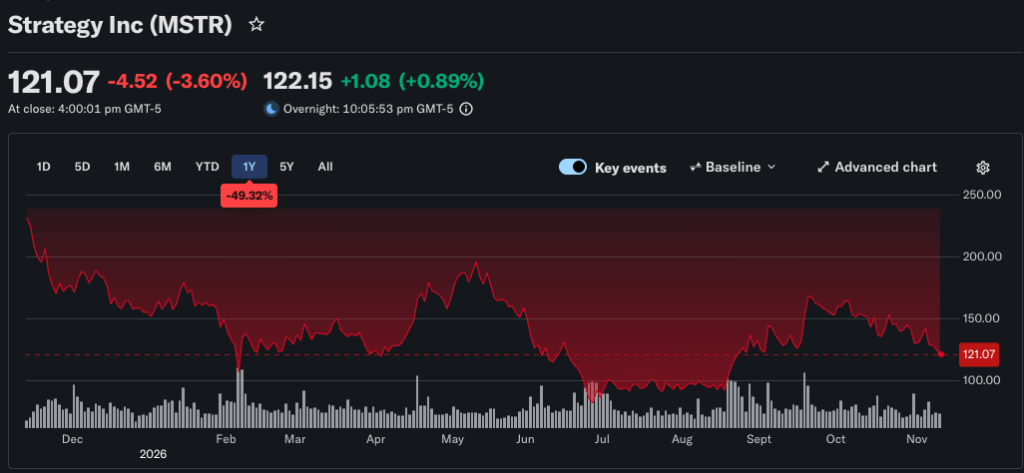
Original reporting: November 11, 2026, at 15:29 Beijing time. MSCI’s final list had not been published when this account appeared.
Strategy’s possible removal from MSCI indexes presents two different questions: how much index-tracking money might sell MSTR shares, and whether a lower share price would constrain the company’s future Bitcoin purchases. Neither an index removal nor an estimate of stock sales establishes that Strategy must sell Bitcoin.
The index decision
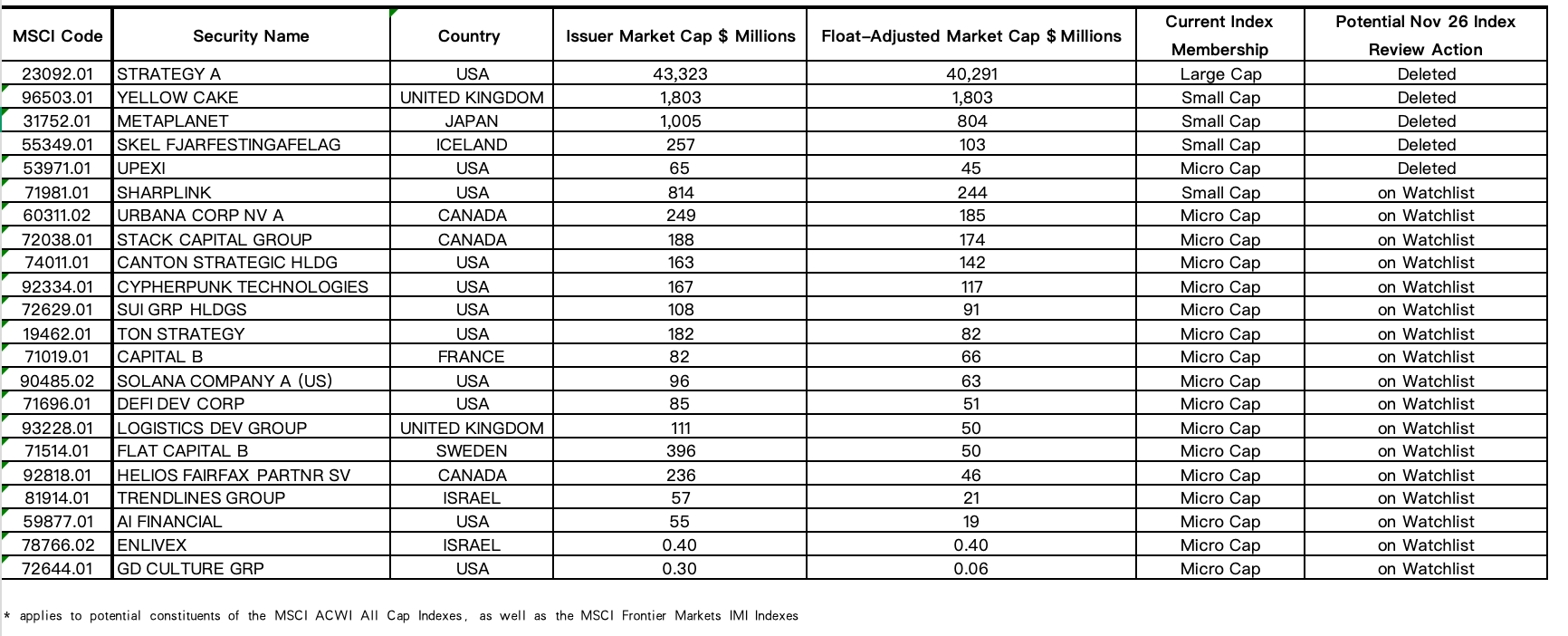
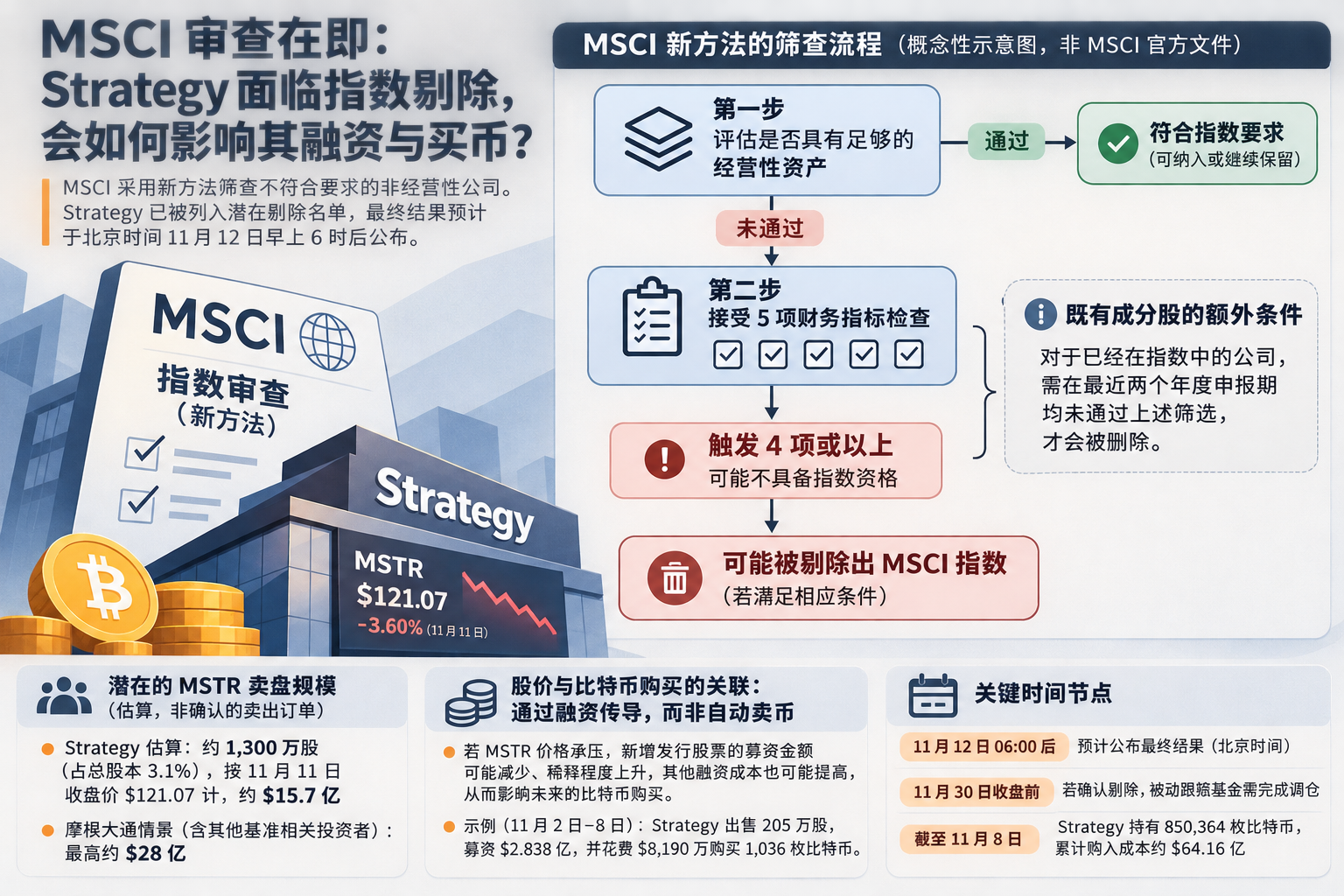
MSCI’s new screening method, set to apply from its November index review, examines whether listed companies have sufficient operating assets. Companies that fail that initial screen face five further financial tests, including measures concerning operating expenses, operating cash flow, fair-value changes and reliance on external financing. Triggering at least four tests could make a company ineligible. An existing constituent must fail the screening in both of its two most recent annual reporting periods before removal.
Strategy was among five companies preliminarily marked for removal; the others were Metaplanet, Upexi, Yellow Cake and SKEL. Eleven additional crypto-related companies were placed on a watch list. MSCI said its method addresses companies whose financial characteristics resemble investment vehicles, not just crypto holders. Strategy objected, citing its software business and its treatment of Bitcoin as an operating segment in its financial reports. The final result was expected after 06:00 Beijing time on November 12, with any resulting rebalancing due by the November 30 close.
The estimated MSTR selling
Strategy estimated that passive funds tracking the relevant index held about 13 million MSTR shares, or 3.1% of its shares outstanding. At MSTR’s November 11 closing price of $121.07, that represented roughly $1.57 billion. A JPMorgan scenario that also included other benchmark-linked investors put potential withdrawals as high as $2.8 billion. These are estimates with different scopes, not confirmed orders to sell: full-replication funds and funds using other tracking approaches need not trade identically.
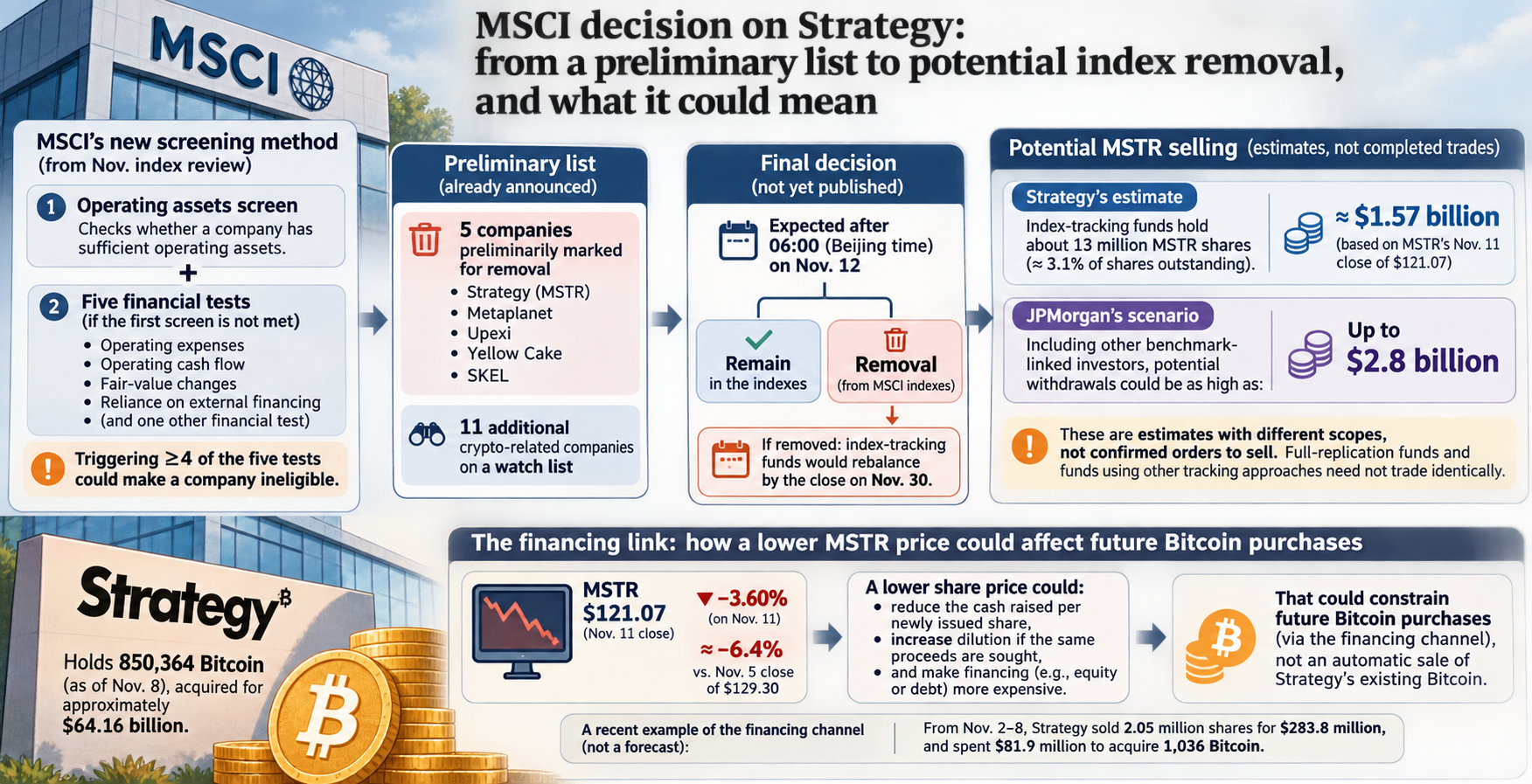
MSTR closed down 3.60% on November 11 and was about 6.4% below its November 5 close of $129.30. Those prices alone cannot establish how much of the move reflected expectations about MSCI.
The link to Bitcoin purchases
The potential transmission runs through financing, not an automatic sale of Strategy’s holdings. A lower MSTR price could reduce the cash raised per newly issued share and increase dilution if the company sought the same proceeds. More expensive financing could also affect future purchases. From November 2–8, Strategy sold 2.05 million shares for $283.8 million and spent $81.9 million to acquire 1,036 Bitcoin—an example of the financing channel, not a forecast of what it would do after the index decision.
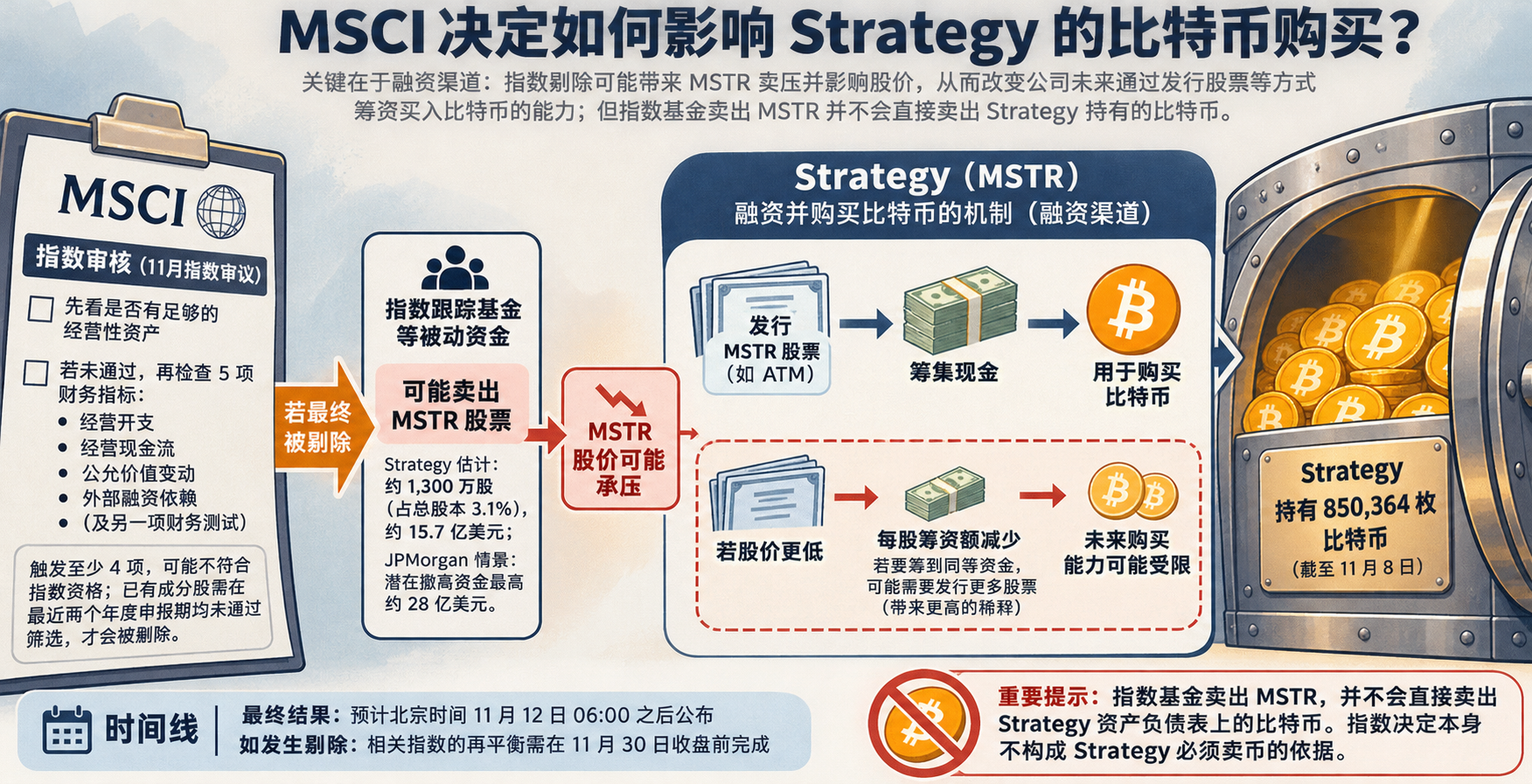
Strategy reported holding 850,364 Bitcoin as of November 8, acquired for approximately $64.16 billion in total. Index funds selling MSTR would not themselves sell Bitcoin held on Strategy’s balance sheet. Any effect on Bitcoin would depend on additional decisions by the company or other investors; the index decision alone provides no basis for calculating a Bitcoin price impact.
Source: panewslab.com (originally published 2026-11-11 15:29 UTC+8)