
Originally published November 13, 2026, at 16:37 (UTC+8). The figures and forecasts below reflect the original article’s reporting at that time.
Crypto protocols had generated a reported $11.68 billion in on-chain revenue year to date. The original author estimated that the annual total could reach roughly $13.9 billion if November and December matched October’s pace. That is a revenue forecast, not a measure of profit or token-holder returns.
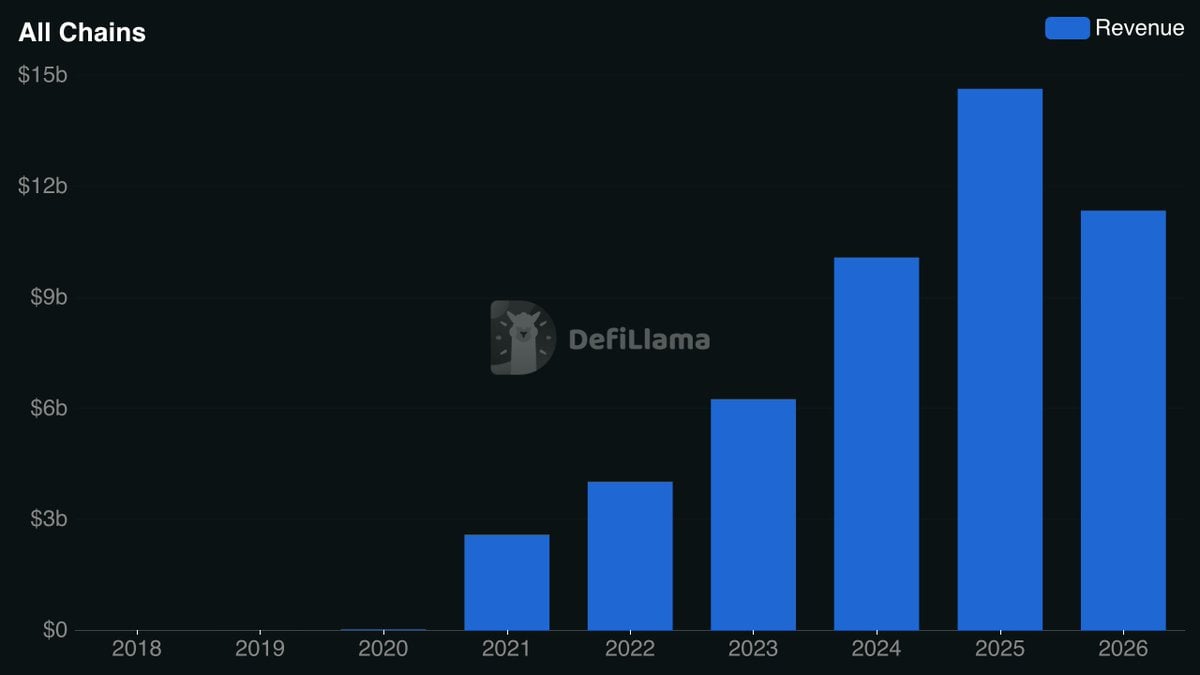
The valuation question is what happens after a protocol earns revenue. Most tokens do not give holders legal ownership of the underlying business or its profits. A protocol can therefore grow without creating a corresponding claim for its token. Buybacks offer one possible link: a team uses funds to purchase tokens, then burns them, locks them or holds them in its treasury. Those outcomes are not economically identical, and purchases alone do not establish a token’s fair value.
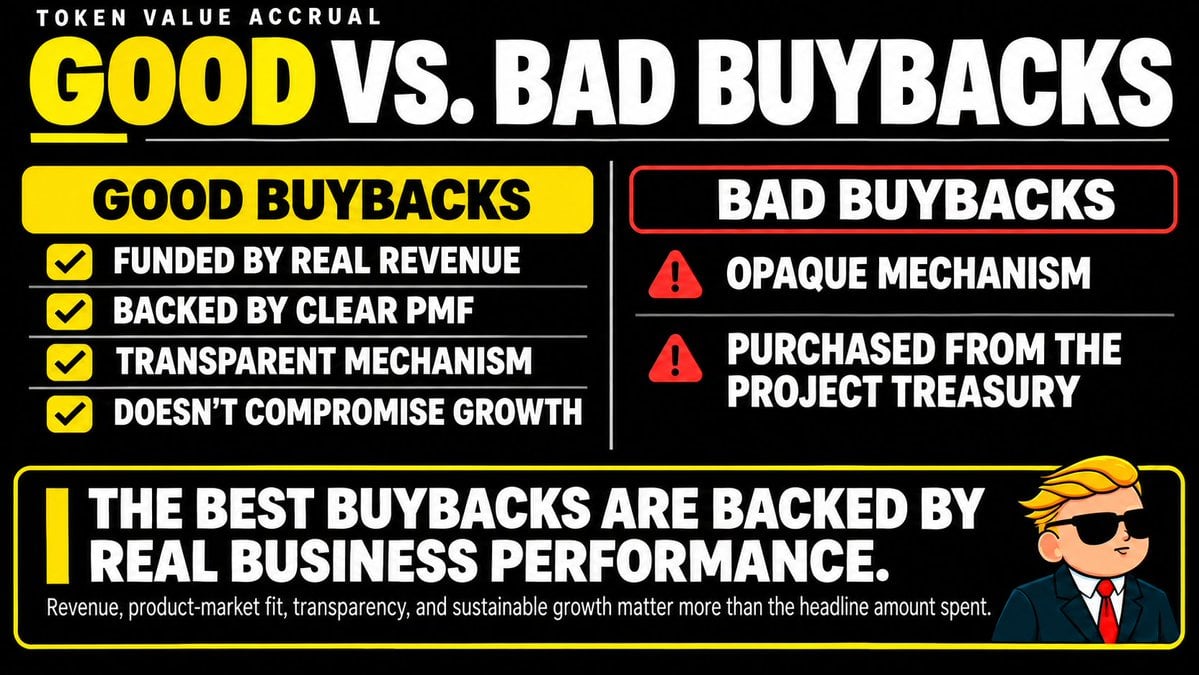
What the buyback comparisons show—and do not show
In 2025, 28 major crypto projects spent more than $1.4 billion on buybacks, according to the original article. Only three of the ten largest buyback projects—AAVE, HYPE and SKY—outperformed Bitcoin that year. The result is a warning against treating buyback expenditure as a price target.
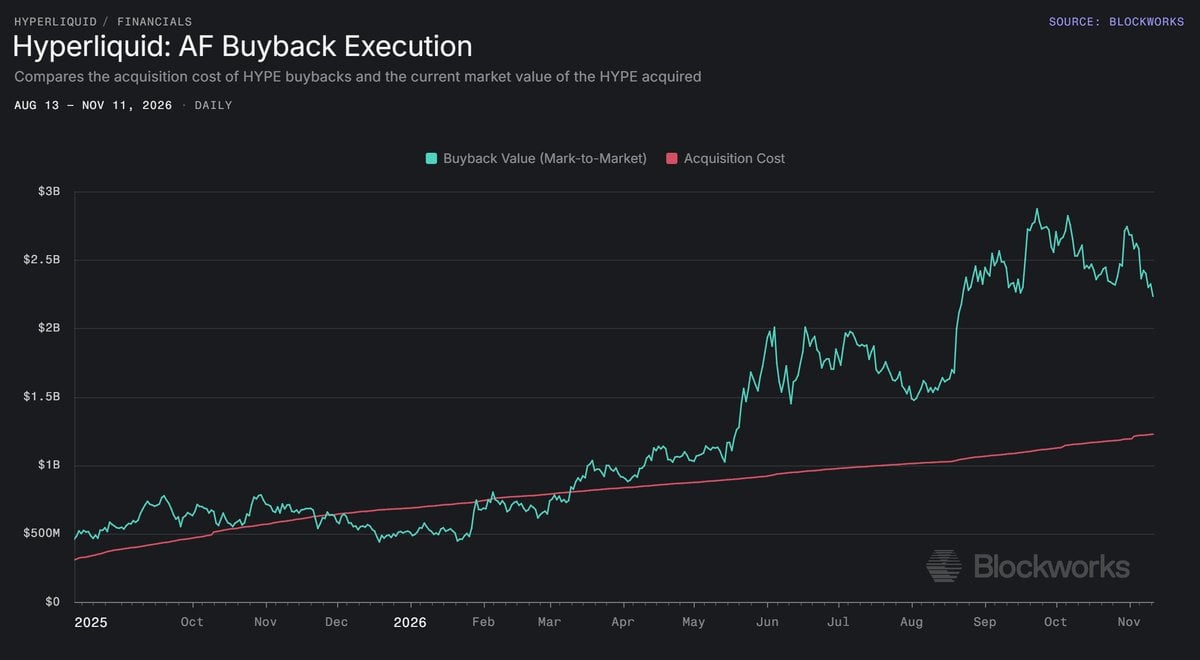
For 2026, the article reported more than $900 million spent on token buybacks and related burn mechanisms, led by Hyperliquid at more than $505 million and Pump.fun at more than $269 million. Related burns should not automatically be counted as open-market purchases.
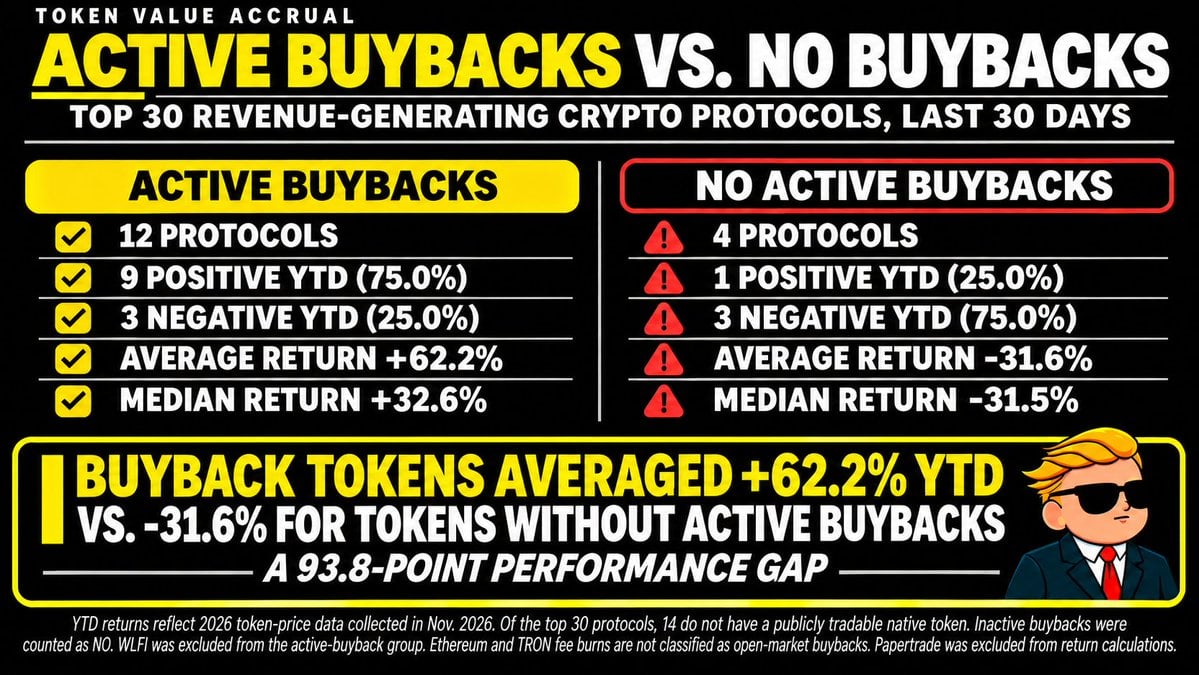
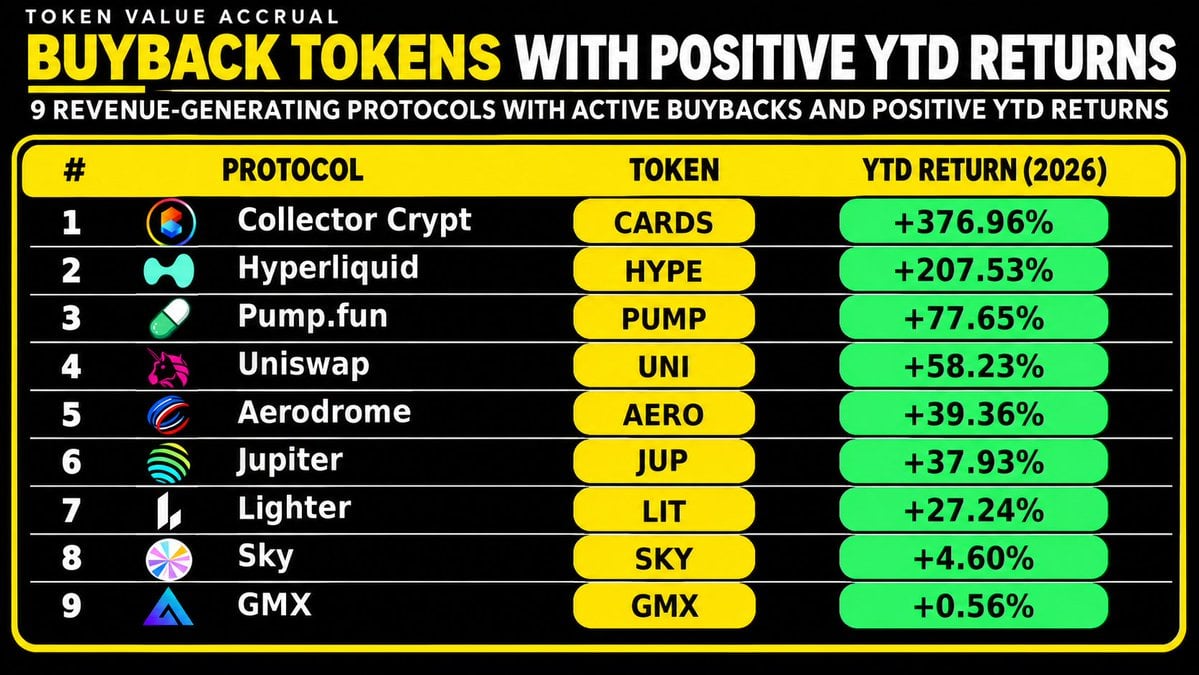
The author also examined the 30 protocols with the highest revenue over the preceding 30 days. Fourteen had no publicly tradable native token. Of the remaining 16, twelve were classified as having active buybacks: nine had positive year-to-date token returns and three had negative returns, for an average of +62.2% and a median of +32.6%. Among the four without active buybacks, one had a positive return and three had negative returns; their average was −31.6% and their median −31.5%. The difference between the group averages was 93.8 percentage points.
Those are descriptive comparisons, not evidence that buybacks caused the return gap. The article says returns used token prices collected in November 2026. Its non-buyback group included projects that had discontinued buybacks; World Liberty Financial was excluded because its program had only recently started. Ethereum and Tron’s automatic fee burns were not treated as open-market buybacks, and Papertrade was excluded because its token launched in October 2026 and lacked conventional spot trading.
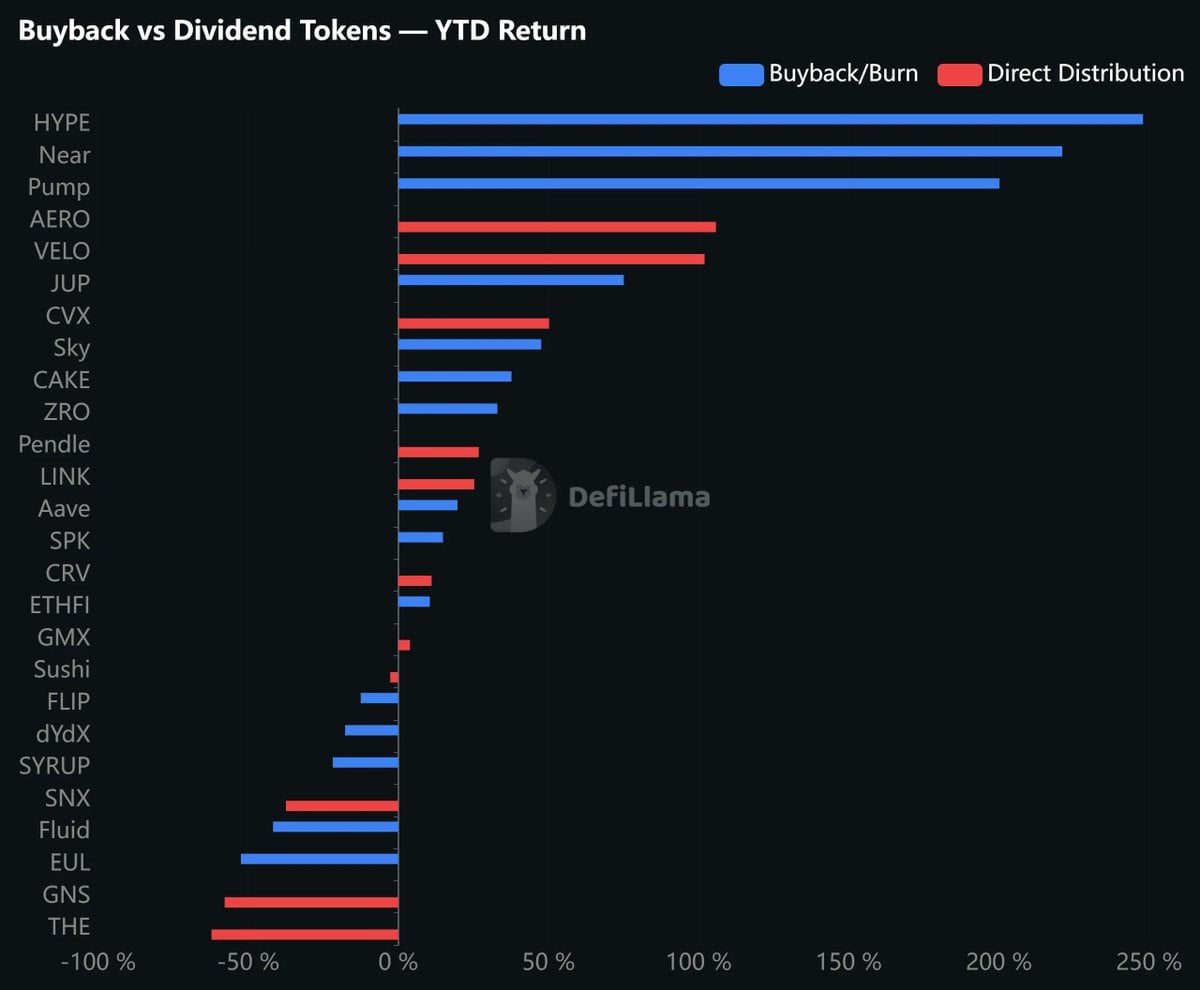
A separate DefiLlama analysis published in September 2026, as cited by the original author, reported year-to-date median returns of 19.7% for buyback tokens versus 11.1% for tokens with direct distributions. Market-cap-weighted returns were 190% and 29%, respectively. These are comparisons across different tokens and mechanisms, not a controlled test of which mechanism is superior.
The inputs that matter to token value
The article’s proposed checks begin with the source and durability of buyback funding: whether purchases come from recurring business revenue rather than treasury depletion, and whether the business has demonstrated sustained demand. Execution also needs to be verifiable, including where purchased tokens go. Finally, spending on buybacks must be weighed against reinvestment and financial resilience.
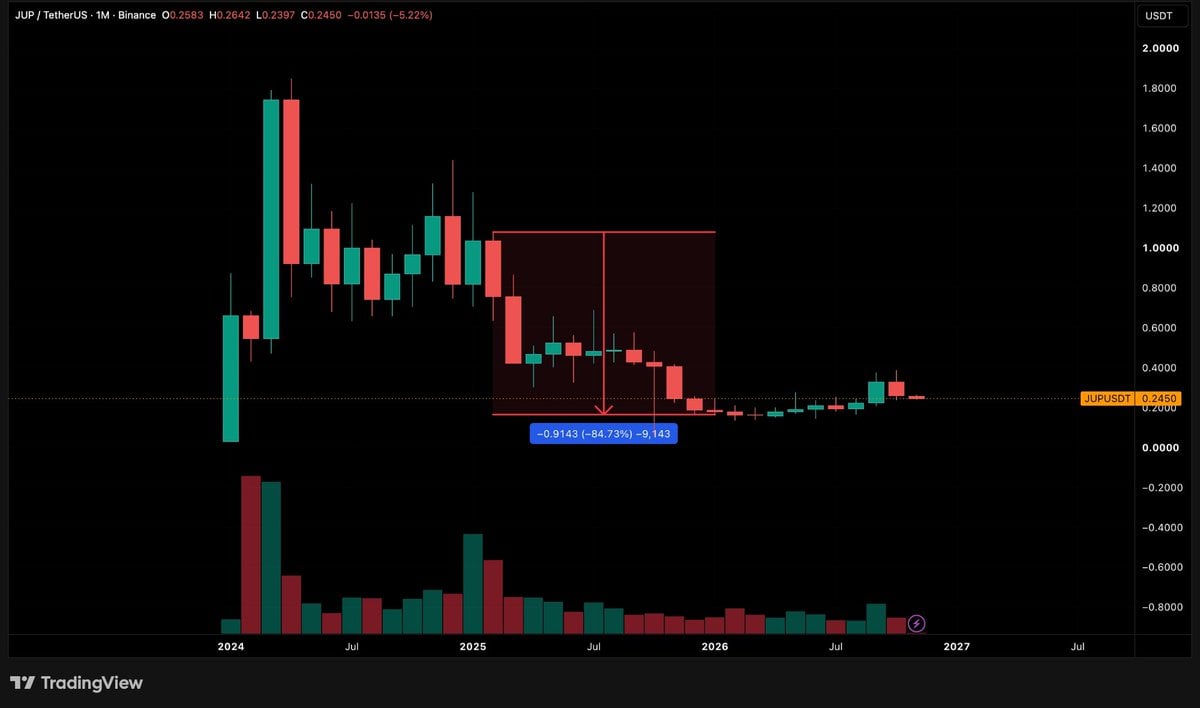
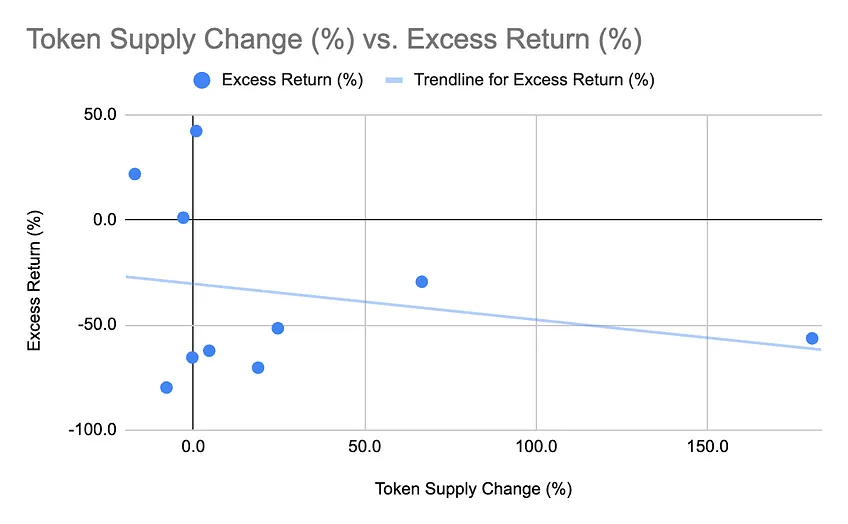
Two further inputs can overwhelm a purchase program. Market conditions can produce selling pressure larger than a protocol’s buy orders; the author uses Jupiter’s buybacks during a broad Solana-ecosystem downturn as an example. New token supply from unlocks, emissions or other distributions can likewise exceed the amount absorbed by buybacks. The article cites research by Bill Hsu finding a negative relationship between supply growth and relative market performance among major buyback projects. A fixed share of revenue spent at any token price may also be less efficient than purchases that account for valuation and other uses of capital.
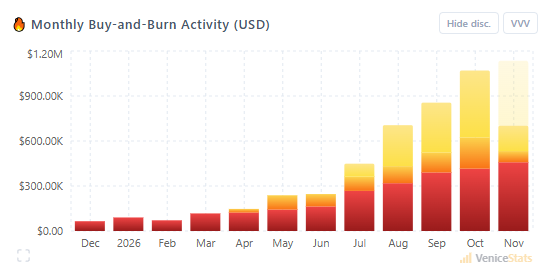
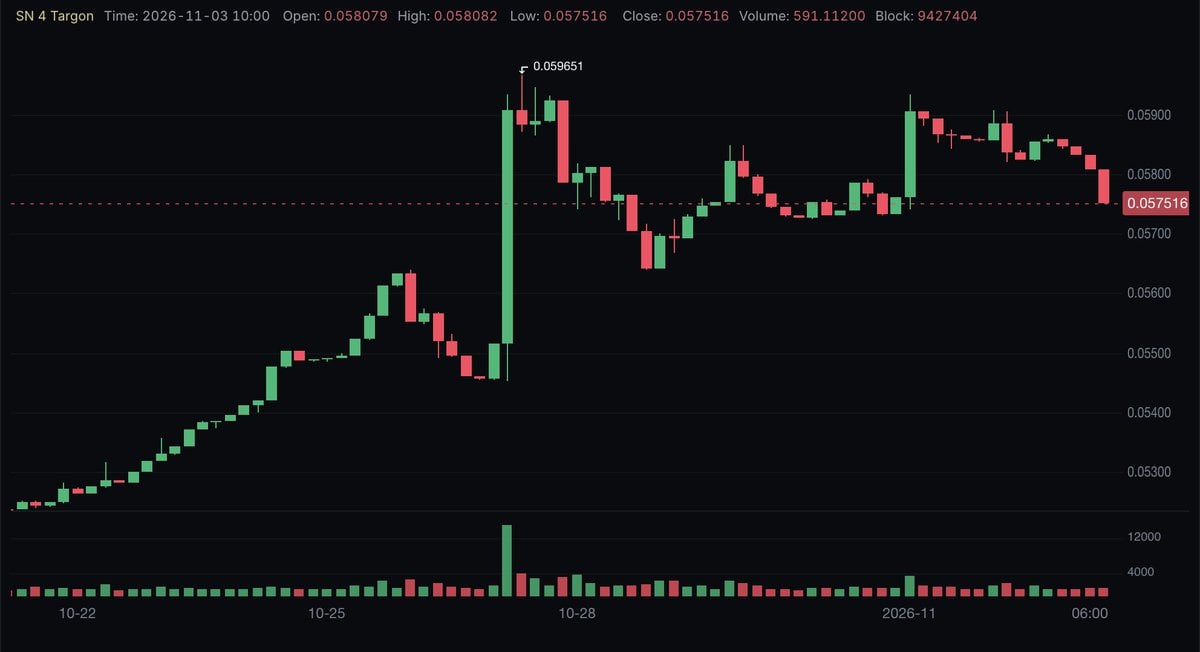
The distinction between reported activity and potential token accrual is visible in the article’s examples. World Liberty Financial had recently begun using part of the income associated with USD1 reserves for WLFI buybacks; the author put that income at an annualized more than $150 million, not a guaranteed annual buyback amount. Venice reported approximately $1.07 million of VVV burned in October 2026; its approximately $1.14 million November figure was a projection as of publication, not a completed monthly result. Citing SubConnect’s Bittensor revenue index, the article said that, as of August 2026, 14 of 24 subnets with external revenue used it to buy back Alpha tokens. These examples involve different businesses and token mechanisms and should not be valued with a single assumed conversion rate from revenue to token demand.
Revenue establishes that customers pay for a product. Assessing a token requires additional evidence: how much revenue remains available after business needs, how much is actually committed to purchases, whether purchases reduce effective supply, and whether issuance or selling pressure offsets them. The 2026 return comparisons make buybacks worth examining, but they do not answer those questions on their own.
Source: techflowpost.com (originally published 2026-11-13 16:37 UTC+8)