Original reporting by Jae, PANews, published September 16, 2026, at 18:55 UTC+08:00.
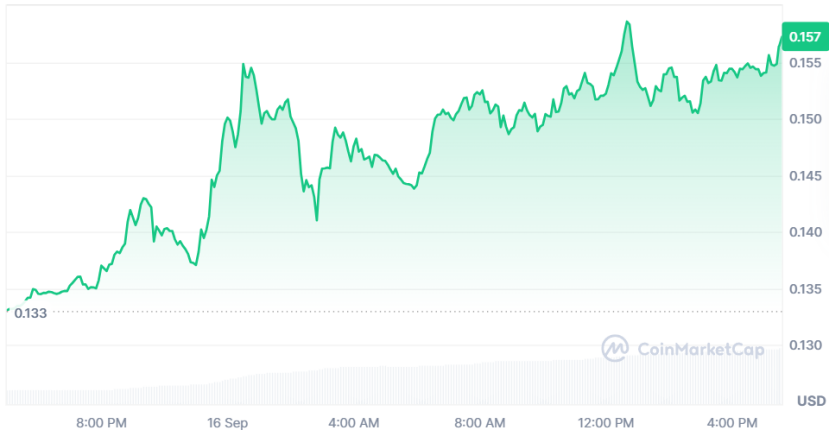
Standard Chartered’s first report on Arbitrum set a $10 ARB target for the end of 2030. Against the roughly $0.15 market price cited by PANews, that implies a price nearly 70 times as high. The valuation question is not only whether Arbitrum can generate more revenue, but whether that revenue can accrue to ARB holders.
The infrastructure thesis
Rather than valuing Arbitrum solely as a Layer 2 competing on transactions, fees and activity, Standard Chartered framed it as a technology provider to financial institutions building on-chain networks. Its thesis depends partly on a much larger tokenization market: the bank projected total on-chain tokenized assets rising from about $34 billion to $4 trillion by the end of 2028, including tokenized equities growing from under $3 billion to $750 billion. Those are forecasts, not realized demand for Arbitrum’s technology.
The bank also cited an ARB market-cap-to-fees ratio of about 1.3 and said the multiples assigned to major Layer 1 assets such as Ethereum and Solana can be up to 25 times higher. A higher comparable multiple, however, would not by itself establish that ARB holders receive a claim on Arbitrum’s revenue. Arbitrum also faces competition for institutional and tokenization business from Base, Optimism, Solana and Avalanche.
Revenue streams and a sensitive forecast
PANews described four streams in Standard Chartered’s analysis: Arbitrum One transaction fees, with an estimated gross margin of about 97%; returns on roughly $100 million of non-ARB DAO treasury assets, reported at $200,000–$250,000 a month; Timeboost priority-access auction fees; and Arbitrum Expansion Program (AEP) payments. Under the AEP terms described in the report, qualifying third-party networks built with Arbitrum Orbit pay 10% of protocol net revenue to the ecosystem, with 8% directed to the DAO treasury and 2% to a developer fund.
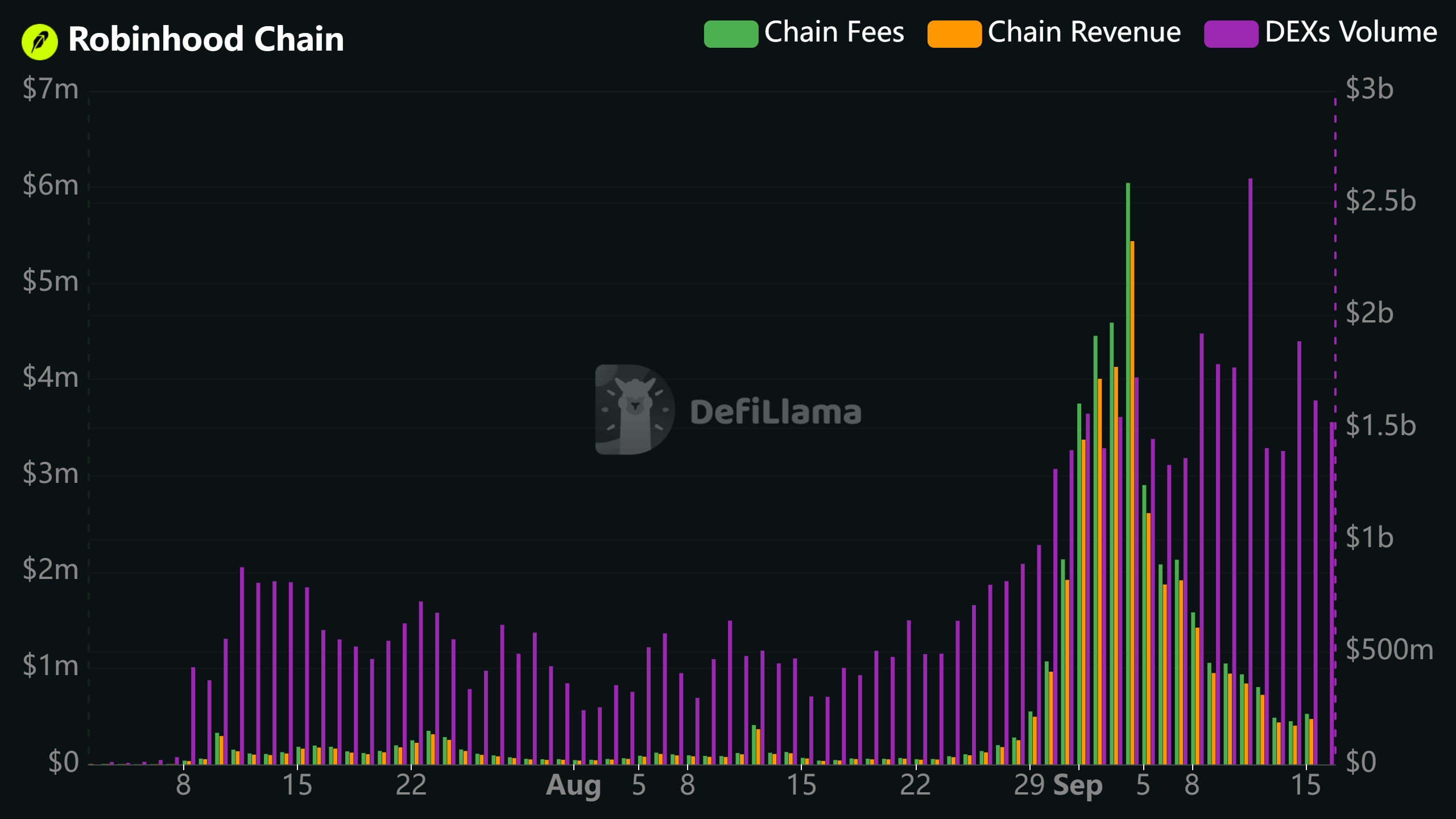
Standard Chartered cited Robinhood Chain as an example, saying its AEP payments made up 35% of Arbitrum DAO revenue in its first month. Using an estimated $2.8 million in average daily Robinhood Chain fee revenue for the first two weeks of September, the bank projected Arbitrum’s September AEP revenue could reach about $5 million—more than five times its level before the chain’s launch.
PANews disputed the durability of that run rate. It reported that Robinhood Chain’s daily fees fell more than 90% from a September 4 peak of $6.04 million to around $500,000 by mid-September, while the seven-day average dropped below $1 million. PANews said DEX volume did not fall proportionately and attributed the fee decline chiefly to cheaper blockspace and lower gas costs. On that reading, extrapolating the earlier fee average risks overstating monthly AEP revenue.
DAO income is not an ARB payout
PANews identified a separate limit to the token valuation case: ARB is a governance token, and the transaction fees and AEP payments discussed flow to DAO-controlled funds, not as distributions or cash dividends to holders. A possible future buyback-and-burn mechanism was discussed as a scenario, but PANews reported no formal governance proposal or timetable.
Supply matters as well. PANews reported a total ARB supply of 10 billion, about 6.68 billion in circulation, and an approximately 92.6 million ARB unlock—worth roughly $14 million—scheduled for September 16. Those figures describe the supply pressure at the time of publication, not current circulation or a future unlock.
The $10 target therefore rests on several distinct steps: growth in institutional use of Arbitrum technology, sustained ecosystem revenue, a valuation multiple that reflects that business, and a means for ARB itself to capture value. More protocol or DAO income alone does not complete that chain.
Source: panewslab.com (originally published 2026-09-16 18:55 UTC+8)