Historical research, originally reported on November 12, 2026, at 09:57 (UTC+8). Alea Research, in a report translated by TechFlow, examined whether growth in Kamino’s tokenized-asset lending markets was translating into protocol income—and what, if anything, that meant for KMNO holders.
Deposits grew, but market types diverged
Kamino’s tokenized-asset markets recorded $147 million in net inflows in Q3 2026, including $134 million into ten markets opened during the quarter. Its crypto-asset and synthetic-dollar markets together recorded $215 million in outflows. The report separately attributed $410 million of growth in asset value to price appreciation; that figure is not a measure of net deposits.
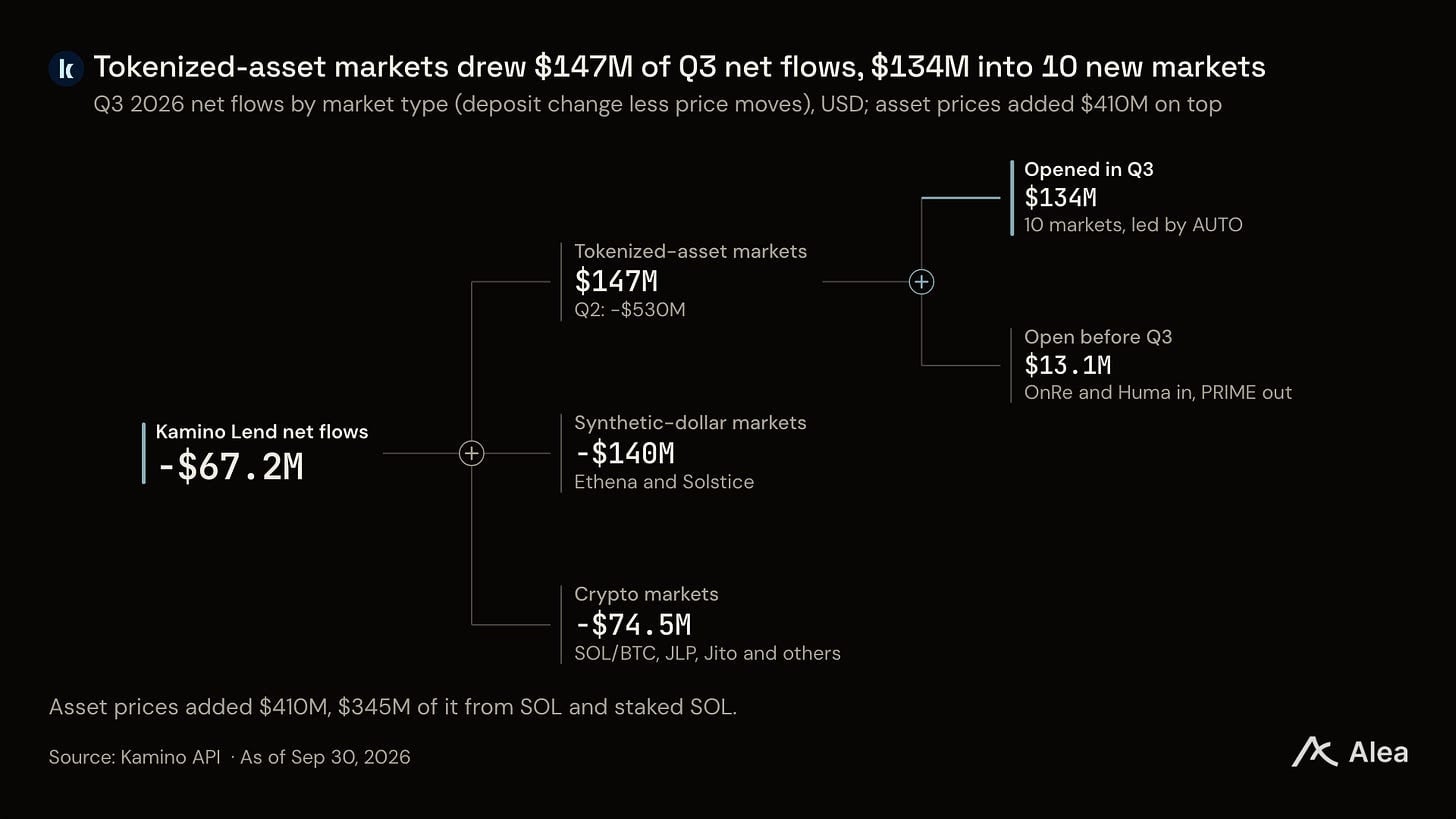
Among dollar-collateral markets open throughout the quarter, OnRe deposits grew by $92.5 million and Huma’s PST deposits by $62.5 million, while Figure’s PRIME market contracted by $125.5 million. Alea Research linked deposit interest to the spread between collateral yields and borrowing costs, but that relationship does not establish that the spread alone caused each flow.
Borrowing interest is not token-holder income
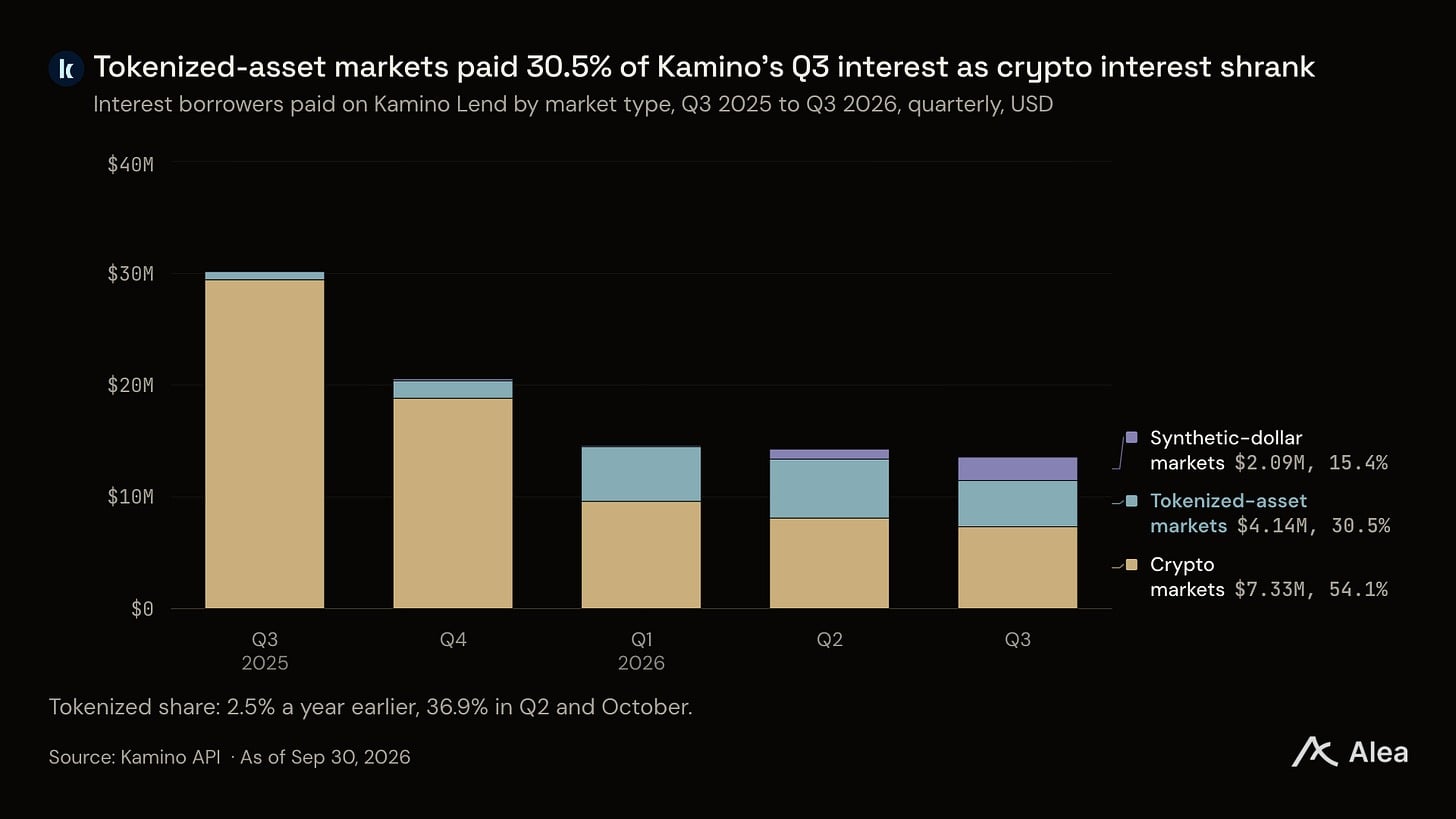
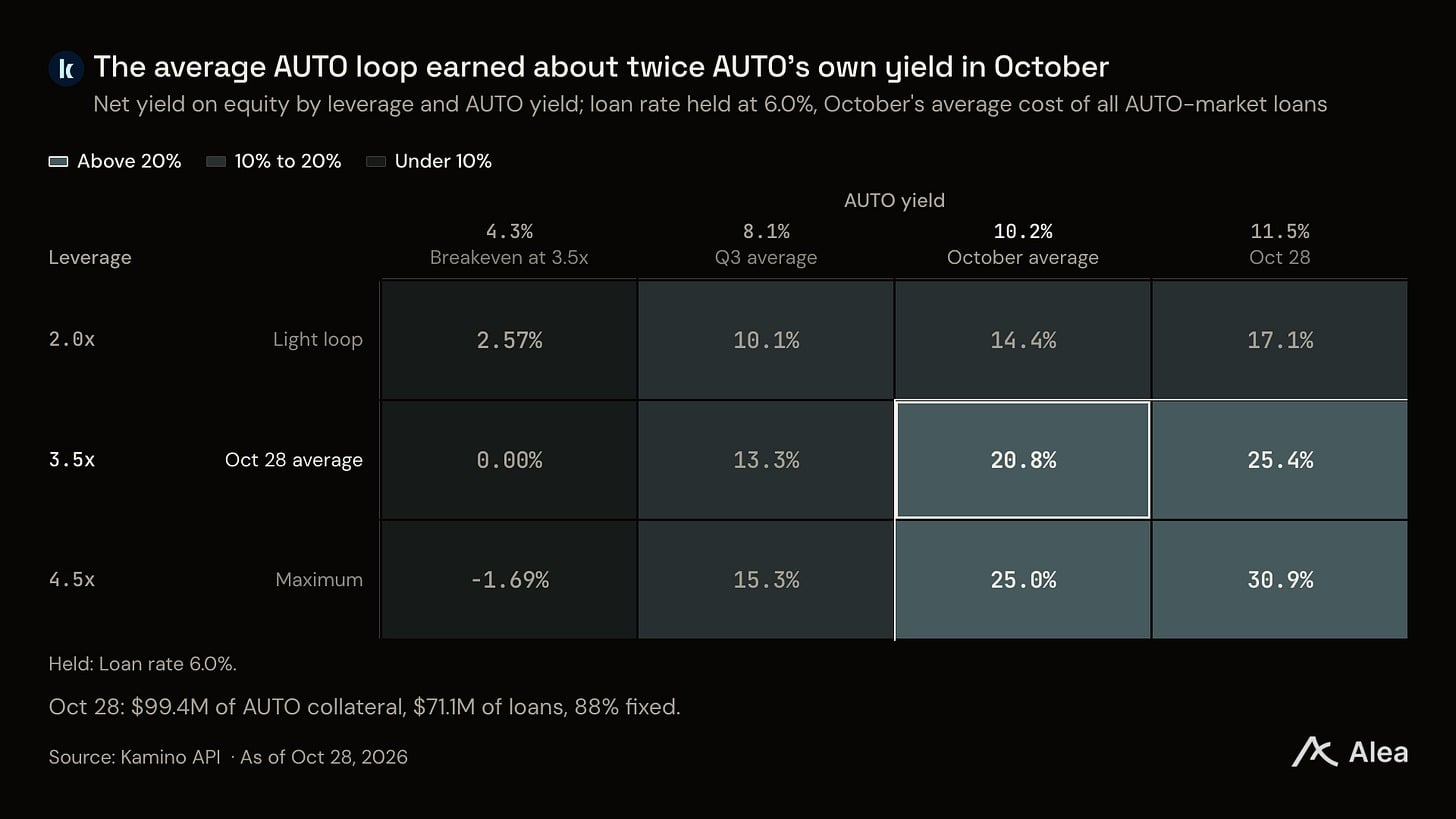
Tokenized-asset markets generated 30.5% of Kamino’s Q3 borrowing interest, compared with 36.9% in Q2 and 2.5% a year earlier. Across Kamino, the report calculated $13.56 million in Q3 borrowing interest and $1.55 million retained by the protocol, versus $14.28 million and $1.61 million, respectively, in Q2. Its interest calculation uses each reserve’s daily outstanding borrowing balance multiplied by its rate; the retained-income figures exclude liquidation fees.
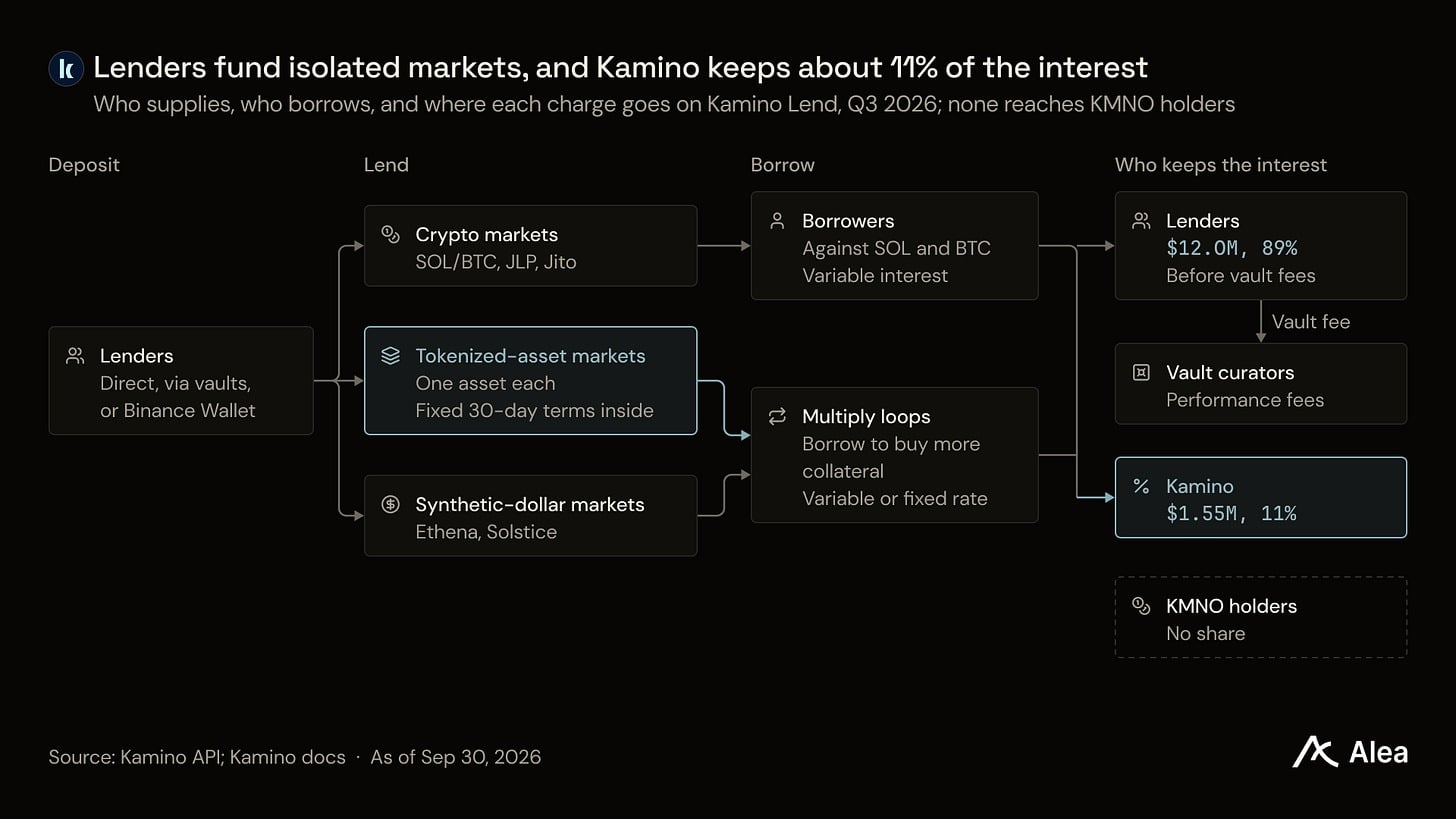
Those measures describe lending activity and protocol income, not KMNO distributions. According to the report, retained interest was not being paid to KMNO holders. Staking KMNO increased users’ token-reward multipliers rather than providing a dividend. CEO Michael Weisz had said that further token value-capture plans would be announced, but the report did not identify an enacted distribution mechanism.
Fixed rates and the limits of a carry calculation
Kamino launched fixed-rate borrowing on September 21. Outstanding fixed-rate loans reached $21.5 million by September 30 and $73.7 million by October 28, when they represented 8.5% of platform loans. Alea Research reported that the first $12 million of maturing loans renewed at their original rates for another 30-day period. Under the described mechanism, renewal at the same rate depends on no lender requesting redemption.
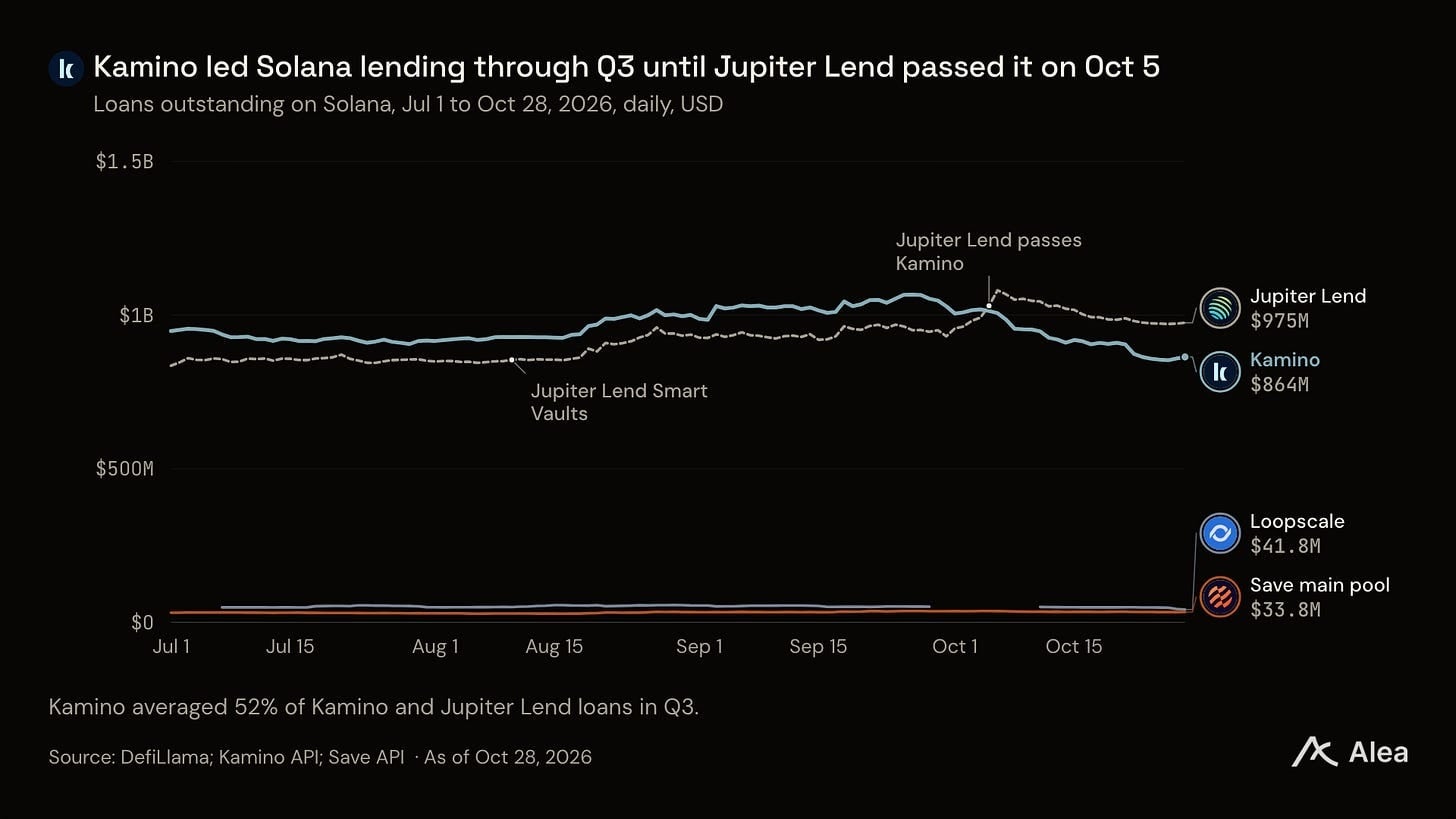
The report’s AUTO example is a modeled return, not realized investment performance. At the October 28 average leverage of 3.5×, an assumed 6.0% borrowing cost and AUTO’s reported 10.2% average October yield produced a calculated 20.8% net return, excluding fees and price changes. The modeled break-even asset yield was 4.3%. A fixed borrowing rate does not fix the underlying asset yield: if that yield falls below the 6.0% borrowing cost, the leveraged position would underperform holding AUTO without leverage.
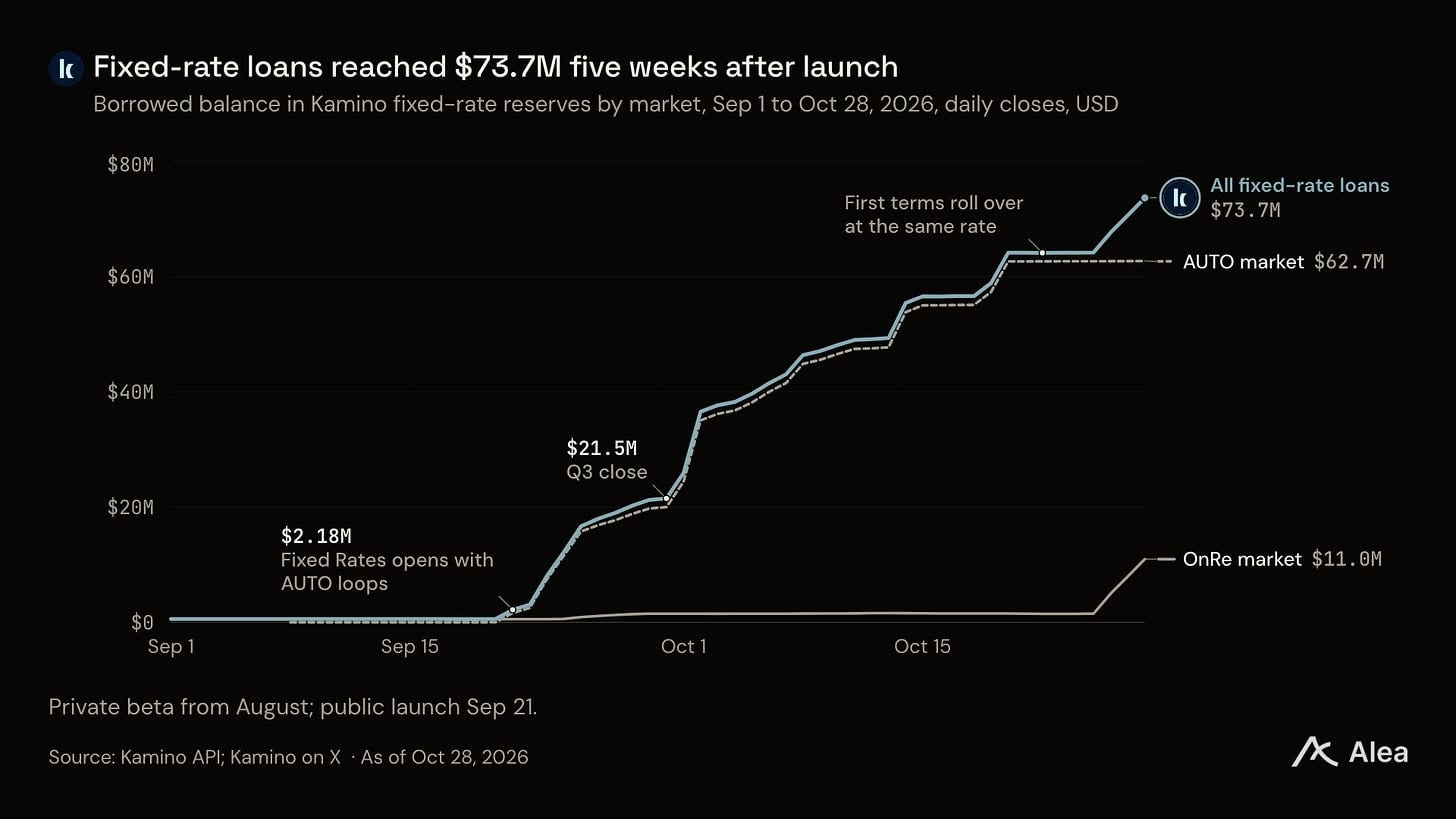
For a revenue sensitivity—not a valuation target—the report assumed a 6.0% average borrowing rate and a 10% Kamino take rate. At $150 million, $250 million and $400 million in fixed-rate loans, respectively, it estimated about $0.9 million, $1.5 million and $2.4 million in annual incremental protocol income. That assumed take rate should not be confused with the approximately 11% of borrowing interest the report said Kamino retained in its observed figures. Neither calculation establishes cash flows to KMNO holders.
Alea Research disclosed that team members, including researchers involved in the analysis, might hold tokens discussed in its report.
Source: techflowpost.com (originally published 2026-11-12 09:57 UTC+8)